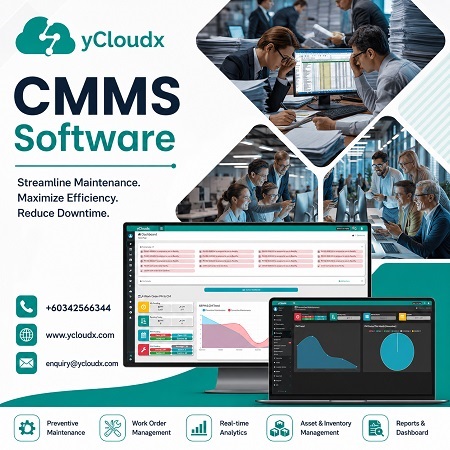
Maintenance teams now face rising pressure to keep systems running without pause. They must act fast and plan with care to avoid delays. In this space, CMMS software helps teams steer tasks, track assets, and cut errors with ease. Tools like yCloudx also support this shift by bringing clear order to daily work. As a result, teams move with purpose and handle tasks with confidence. This change not only lifts speed but also builds a strong base for steady and reliable maintenance in modern workplaces.
New Way to Manage Work Orders
Work orders once filled paper files and caused delays. Now, teams create and track tasks in one place. This shift saves time and avoids confusion.
Key Changes You Can See
- Teams log requests in seconds
- Staff assign tasks with clear steps
- Systems track progress in real time
As a result, teams stay on track. They fix issues before they grow. In turn, this builds trust and keeps systems stable.
Smarter Asset Tracking and Control
Every machine needs care. ERP Malaysia tracking each one can feel hard. This is where digital tools step in.
What Improves with Better Tracking
- Teams view asset history with ease
- Systems flag faults at an early stage
- Staff plan service based on real data
Because of this, teams make sound choices. They act with clear facts, not guesswork. Over time, assets last longer and perform well.
Better Planning with Preventive Maintenance
Fixing problems after failure costs time and money. So, teams now focus on prevention.
How Planning Gets Better
- Systems set service schedules
- Teams follow clear plans
- Alerts signal upcoming tasks
As a result, breakdowns drop. Work becomes smooth and steady. In addition, teams gain more control over daily tasks.
Moving Towards Predictive Maintenance
Preventive steps help, yet teams now push further. They aim to foresee faults before they appear. This shift marks a new stage in maintenance.
How Prediction Supports Teams
- Systems study past data to spot patterns
- Tools warn teams about likely failures
- Staff act before machines stop
Because of this, teams shift from reaction to foresight. They handle risks with care. This keeps systems strong and steady.
Clear Data for Faster Decisions
Data plays a key role in modern maintenance. Yet raw data alone brings little value. Teams need clear insights.
What Data Can Do
- Show trends in machine health
- Highlight weak points in systems
- Guide teams to act fast
Because of this clarity, leaders decide with confidence. Therefore, they see what works and what needs to change. This keeps operations strong.
Mobile Access for Field Teams
Work no longer stays tied to desks. Field teams need tools on the move. Mobile access meets this need with ease.
Benefits of Mobile Use
- Staff view tasks on handheld devices
- Teams update job status on site
- Photos and notes are attached to work orders
- Managers track work from any place
As a result, work flows without delay. Teams stay linked even in remote areas. This improves speed and accuracy.
Strong Team Coordination
Good teamwork drives success. However, poor communication slows progress. Digital systems close this gap.
How Teams Work Better Together
- Staff share updates in one space
- Managers assign roles with ease
- Teams avoid task overlap
As a result, work feels smooth and clear. Each person knows their role. This builds a strong and focused team.
Inventory and Spare Parts Management
Spare parts play a vital role in maintenance. Without them, repairs stall. Proper tracking solves this issue.
Improves in Inventory Control
- Teams track stock levels in real time
- Systems alert when parts run low
- Staff avoid overstock and waste
- Orders stay planned and timely
Because of this, repairs move without delay. Teams keep stock at the right level. This saves both time and effort.
Compliance and Safety Assurance
Safety rules guide every workplace. Teams must follow them without fail. Digital tools help meet these needs with ease.
Compliance Gets Easier
- Systems store safety records in one place
- Teams follow set checklists
- Managers track audits and reports
- Alerts remind staff of key tasks
As a result, teams meet rules with care. They reduce risk and build a safe space for all.
Cost Control and Resource Use
Every business seeks to cut waste. Maintenance plays a big role in this goal.
Where Savings Come From
- Less unplanned downtime
- Fewer urgent repairs
- Better use of spare parts
- Clear budget tracking
In turn, teams use resources with care. They avoid waste and plan with purpose. Over time, this lifts overall performance.
Easy Integration with Other Systems
Modern workplaces use many tools. These systems must work together. Integration makes this link smooth.
What Integration Brings
- Data flows across platforms with ease
- Teams avoid repeated data entry
- Systems share updates in real time
- Work stays aligned across departments
Because of this, teams save time and avoid errors. They work as one unit, not in silos.
User-Friendly Interfaces for All Teams
Complex tools slow work. Simple design improves use. Teams need systems that feel easy from the start.
Why Simplicity Matters
- Staff learn the system with ease
- Errors drop during daily use
- Tasks feel clear and direct
- Teams adopt tools with less effort
As a result, work flows without stress. Teams focus on tasks, not tools.
Real-Time Alerts That Spark Quick Action
Teams need fast signals to tackle issues before they grow. Real-time alerts help staff spot problems and act immediately. These alerts guide teams and keep work on track. As a result, systems stay stable and safe.
How Alerts Support Daily Work
- Systems catch faults the moment they appear
- Teams receive clear task updates
- Staff jump on issues without delay
- Alerts cut missed tasks
Final Thought
Maintenance will keep evolving as new needs shape how teams work each day. Teams now seek tools that bring clarity, speed, and control to every task. In this journey, cmms software will guide teams to handle assets with care and stop sudden failures. Solutions such as yCloudx also help teams stay organised and focused on key goals. As a result, teams will handle work with ease and plan ahead with clear insight. This steady shift will shape a future where maintenance feels simple, smooth, and well managed.
FAQs
1. How does a maintenance system help daily work?
A maintenance system helps teams shape tasks, track jobs, and fix issues on time. It keeps all details in one place, so staff avoid confusion and finish work with better speed and clear focus.
2. Can small teams use maintenance tools with ease?
Yes, small teams can use these tools with ease. Simple layouts guide users through each step. As a result, teams grasp tasks fast, handle work with care, and improve results without extra support.
3. How do these systems reduce equipment breakdowns?
These systems help teams plan regular checks and spot faults early. Alerts push staff to act before problems grow. In turn, machines run longer, and teams avoid sudden stops in daily work.
4. Do maintenance systems improve teamwork?
Yes, they help teams share updates and track progress in one space. Each member sees tasks clearly and knows their role. This builds strong coordination and helps teams finish work without delays.