


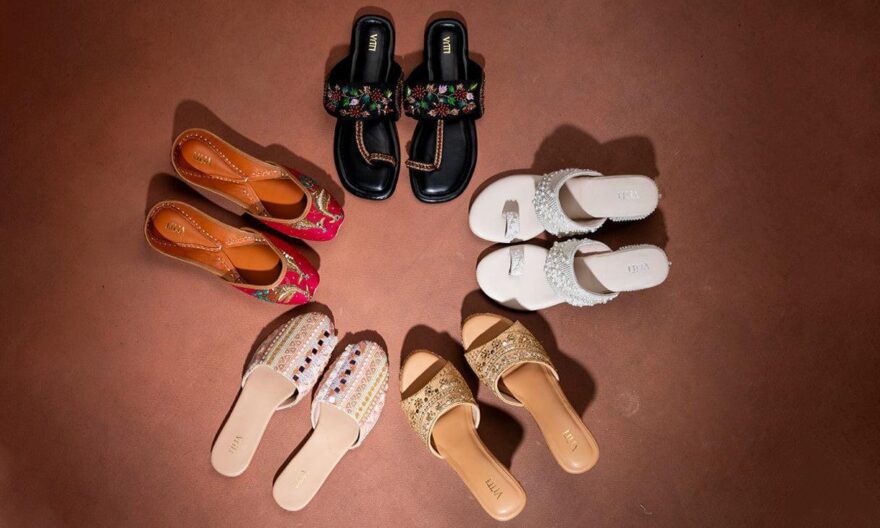
A Punjabi jutti for women is a flat, handcrafted shoe rooted in North Indian heritage, traditionally made with embroidered fabric or leather and embellished with zari, sequins, beads, or mirror work. Comfortable, elegant, and culturally significant, it is a versatile footwear choice for weddings, engagements, and bridal ceremonies — pairing equally well with lehengas, sarees, and sharara sets.
There is a moment at every Indian wedding — usually somewhere between the baraat and the dance floor — when you realise the bride with juttis is still going strong while everyone in heels has quietly disappeared. That is not a coincidence. The Punjabi jutti ladies have worn for centuries was never designed to be endured. It was designed to be lived in, danced in, and celebrated in.
For brides, bridesmaids, and wedding guests, choosing the right pair of punjabi jutti women styles has become as intentional as choosing the lehenga itself. This guide breaks down every occasion, every style, and exactly what to look for — so your feet carry you through every moment in comfort and grace.
What Makes a Punjabi Jutti Different from Other Indian Footwear?
The jutti is often grouped with other Indian flat shoes, but it has a distinctive identity. Its silhouette is closed-toe with a slightly pointed or rounded front, a flat or lightly cushioned sole, and an open or closed back depending on the style. The upper is where the artistry lives — hand-embroidered with techniques that include phulkari threadwork, zardozi, gota-patti, aari work, and mirror embellishment.
Unlike Kolhapuri sandals, which are open and typically leather-forward, or mojaris, which follow a slightly different cut from Rajasthan, the Punjabi jutti carries the specific embroidery vocabulary of Punjab. And unlike heels, it gives you eight hours of function without compromise.
Punjabi Jutti Styles Compared: Which One Is Right for Your Occasion?
Not all juttis are built the same. The occasion, outfit, and your personal comfort threshold should all shape which style you choose.
| Jutti Style | Best For | Key Features | Pairs With |
| Zardozi Bridal Jutti | Wedding day, reception | Gold/silver threadwork, heavy embellishment, regal finish | Red lehenga, silk saree, bridal sharara set |
| Pastel Phulkari Jutti | Mehendi, Haldi, Sangeet | Soft hues, delicate thread embroidery, lighter weight | Pastel anarkali, floral lehenga, palazzo kurta sets |
| Mirror Work Jutti | Sangeet, engagement night | Sequin and mirror accents, high glam factor | Gota-patti lehengas, mirror-embroidered dupattas |
| Pearl & Bead Embellished Jutti | Engagement, cocktail function | Pearl clusters, gold bead detailing, subtle luxury | Sharara sets, indo-western outfits, draped sarees |
| Velvet Brocade Jutti | Winter weddings, evening receptions | Velvet base, brocade panels, rich jewel tones | Silk lehengas, velvet blouses, structured anarkalis |
| Minimalist Embroidered Jutti | Wedding guest, daytime functions | Subtle embroidery, neutral base, everyday-wearable | Printed kurta sets, chikankari suits, fusion wear |
How to Choose a Punjabi Jutti for Your Wedding Day
Brides spend months selecting their lehenga, jewellery, and makeup, and then choose footwear in the final week. That approach almost never ends well. Your wedding jutti deserves the same consideration — here is how to think through it properly.
Match the Weight of the Embellishment to the Event
Heavy zardozi and full gold threadwork are stunning but have a specific home: the main wedding ceremony and reception. For Mehendi or Haldi, where you will be seated close to the ground, moving between guests, and potentially getting coloured powder on everything, a lighter pastel phulkari jutti is far more practical. Save the showstopper for when the showstopper moment arrives.
Prioritise Cushioning for Long Events
Wedding functions run long. The Anand Karaj, Pheras, or even a two-hour Sangeet night requires a jutti with adequate sole cushioning. Look for double-padded insoles or memory foam lining — these details are not visible from the outside but make an enormous difference by hour four. Many premium handcrafted juttis now incorporate cushioned bases without altering the flat silhouette.
Coordinate Colour Intentionally, Not Perfectly
Matching your jutti exactly to your lehenga can look contrived. A more sophisticated approach is to pull one accent colour from your outfit — perhaps the border embroidery or dupatta work — and echo that in your jutti. A red lehenga with gold zardozi pairs beautifully with gold or champagne juttis. A blush pink sharara works with rose, ivory, or even a contrast cobalt jutti if your jewellery bridges the two.
Punjabi Jutti for Each Wedding Ceremony: A Function-by-Function Guide
Roka / Kurmai (Engagement)
The engagement is typically more intimate — a family gathering with photographs, rituals, and the ring ceremony. Pearl-embellished or bead-work juttis in rose gold, champagne, or powder pink are ideal. They photograph beautifully and strike the right balance between dressed-up and effortless.
Mehendi Ceremony
Go for open-back juttis or mule-style versions here — your hands will be occupied and henna may be drying, so anything you can slip on and off without bending down is a practical win. Choose vibrant colours: mustard yellow, coral, or emerald green to complement the festive energy.
Haldi
Keep it simple. A cotton or fabric jutti in a colour you are not attached to, with minimal embellishment. Turmeric stains everything, and your bridal juttis should not be at risk during this ceremony.
Sangeet Night
This is the occasion where mirror-work and sequin juttis earn their place. You will be dancing, performing, and photographed from every angle. A jutti with high reflective embellishment catches light beautifully on the dance floor and holds up better to movement than heeled alternatives.
Wedding Day (Pheras / Anand Karaj)
Your finest pair. Zardozi, gold thread, and rich embellishments belong here. Also consider: the floor texture of the ceremony venue matters. Marble mandaps can be slippery — look for juttis with rubber-grip soles or add a non-slip pad underneath. A small detail that prevents a very big moment from going wrong.
Reception
Reception evenings call for a second pair — brides who switch into a different jutti for the reception often find themselves more comfortable during the long standing and greeting portion of the night. A velvet or brocade jutti in jewel tones pairs well with reception lehengas or sarees and reads as distinctly evening-appropriate.
Punjabi Jutti for Wedding Guests and Bridesmaids
The punjabi jutti ladies wear as wedding guests has evolved significantly. Where guests once defaulted to heels for every function, the comfort-first mindset that now defines bridal fashion is filtering through to guests as well.
- Bridesmaids: Coordinate without matching exactly. If the bridal colour palette is maroon and gold, bridesmaids in dusty rose or antique gold juttis create a cohesive visual without looking uniformed.
- Evening guests: Mirror-work or sequin juttis pair well with evening ethnic wear and eliminate the need to carry flat shoes as backup.
- Daytime functions: Printed or hand-painted juttis add personality without being overdressed for Haldi or Mehendi attendance.
How to Care for Your Wedding Jutti
Handcrafted juttis require a little more attention than machine-made footwear, and given the investment — both financial and sentimental — that care is worth taking.
- Store in a soft muslin cloth bag, never in plastic, which traps moisture
- Stuff the toe area lightly with tissue paper to maintain the shape between uses
- Clean embroidery gently with a soft dry brush — no water, no chemicals near beadwork or mirror work
- If the sole gets damp, let it dry naturally at room temperature away from direct sunlight
- For heavily embellished pairs, have them re-padded by a cobbler after extended use — the base compresses over time
Finding the Right Fit: Sizing Advice for Handcrafted Juttis
Traditional juttis run slightly narrow compared to standard shoe sizing. If you are between sizes, size up. The fabric and material softens and shapes to your foot with a short break-in period — most wearers find that one to two hours of home wear before the event eliminates any stiffness. If you have wider feet, look specifically for brands offering cushioned or expanded toe-box fits, which give you the aesthetic of a classic jutti without the pressure points.
Where Tradition Meets Craftsmanship
At the intersection of Indian heritage and contemporary design, House of Vitti India brings together handcrafted Punjabi juttis that are made to carry you through every wedding moment with intention. Their collection of Punjabi juttis for women spans bridal-weight embellishment to everyday elegance — each pair crafted with the kind of detail that shows in photographs and feels even better in person. Explore the full collection at houseofvitti.com/collections/punjabi-juttis.
Frequently Asked Questions
What type of Punjabi jutti is best for a bride on her wedding day?
For the main wedding ceremony, a zardozi or gold threadwork jutti with a cushioned insole is ideal. It combines visual richness with the comfort needed for long ceremonies. Look for double-padded soles and a non-slip base if the venue has marble or polished flooring. Heavy embellishment pairs naturally with bridal lehengas, silk sarees, and sherwani-matching bridal sets.
Can I wear the same punjabi jutti for multiple wedding functions?
Technically yes, but it is not always advisable. Haldi and Mehendi are high-risk functions for staining and scuffing. Reserve your finest pair for the wedding day and reception. A more affordable or casual jutti in a festive colour is the practical choice for pre-wedding ceremonies. Many brides invest in two pairs — one for pre-events, one for the main day.
How do I match a punjabi jutti with my engagement outfit?
Rather than matching exactly, pull a secondary colour from your engagement outfit — typically found in the embroidery, border, or dupatta — and echo it in your jutti. Pearl or bead-embellished juttis in rose gold, champagne, or ivory are universally flattering for engagement occasions and photograph well in both daytime and indoor settings.
Are punjabi juttis comfortable enough for all-day wedding wear?
Yes, provided you choose a pair with adequate cushioning. Modern handcrafted juttis increasingly incorporate memory foam insoles or double-padded bases that significantly improve all-day comfort. Break them in at home for an hour or two before the event. For very long ceremonies, consider carrying a small blister pad or insole insert as backup.
What is the difference between a jutti and a mojari?
Both are traditional Indian flat shoes with embroidered uppers, but they differ in origin and silhouette. Juttis originate from Punjab and typically feature a closed toe with North Indian embroidery styles like phulkari or zardozi. Mojaris come from Rajasthan and often have a more pronounced pointed toe and Rajasthani craft influences. Both are appropriate for weddings, but juttis are more commonly associated with Punjabi bridal wear.
How should I store my bridal jutti after the wedding?
Store handcrafted juttis in a soft muslin or cotton cloth bag to allow airflow and prevent moisture buildup. Stuff the toe lightly with acid-free tissue to hold the shape. Keep away from direct sunlight, which can fade embroidery and fabric. Avoid plastic bags or sealed boxes, which trap humidity and can damage embellishments and the base material over time.
