

A toilet is one of those fixtures nobody thinks about until it stops working properly. Then suddenly it’s the only thing on your mind water running long after you’ve flushed, a weak flush that needs two or three tries, or a damp patch creeping out from the base onto the bathroom floor. None of these are just cosmetic annoyances. Left alone, they waste water, drive up utility bills, and in some cases lead to real water damage on the floor below.
This guide looks at the most common toilet bowl problems homeowners run into, what usually causes them, what a proper fix actually involves, and how to tell whether it’s something you can handle yourself or a job that calls for proper toilet bowl repair. Whether you’re dealing with a first-time issue or a repair that keeps coming back, understanding what’s actually happening underneath the surface makes it much easier to choose the right fix instead of guessing.
The Toilet Problems Homeowners Run Into Most
Most toilet issues fall into a handful of recurring categories, and each one has a slightly different cause behind it.
A toilet that keeps running. If you can hear water trickling into the tank minutes (or hours) after a flush, the internal flapper valve has likely worn out and isn’t sealing properly anymore. This is one of the most common and most wasteful issues, since it can quietly run up your water bill for weeks before anyone notices.
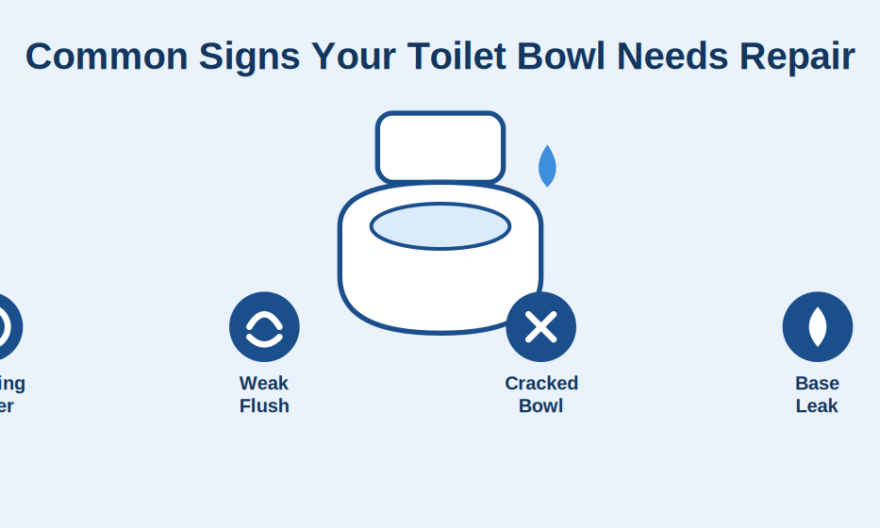
A weak or incomplete flush. When waste doesn’t clear on the first try, the issue is usually a partial blockage in the trapway, a worn flush valve, or mineral buildup restricting water flow from the rim jets.
Water pooling around the base. This is one of the more serious signs, since it usually points to a failing wax ring seal between the toilet and the drain pipe, or a crack somewhere in the porcelain itself. Either way, water finding its way onto the floor rather than down the drain needs attention quickly.
A cracked or chipped bowl. Hairline cracks can be hard to spot at first, but they tend to widen over time and eventually start leaking. A cracked bowl isn’t something that gets better on its own — it only gets worse.
Persistent odour even after cleaning. If the smell keeps returning no matter how often the bowl is scrubbed, the seal around the base or the wax ring underneath may no longer be airtight, letting sewer gas escape into the bathroom.
A toilet that rocks or feels unstable. This usually means the mounting bolts have loosened or the wax ring seal has broken down, both of which need correcting before the movement damages the flange underneath.
What’s Really Causing the Problem?
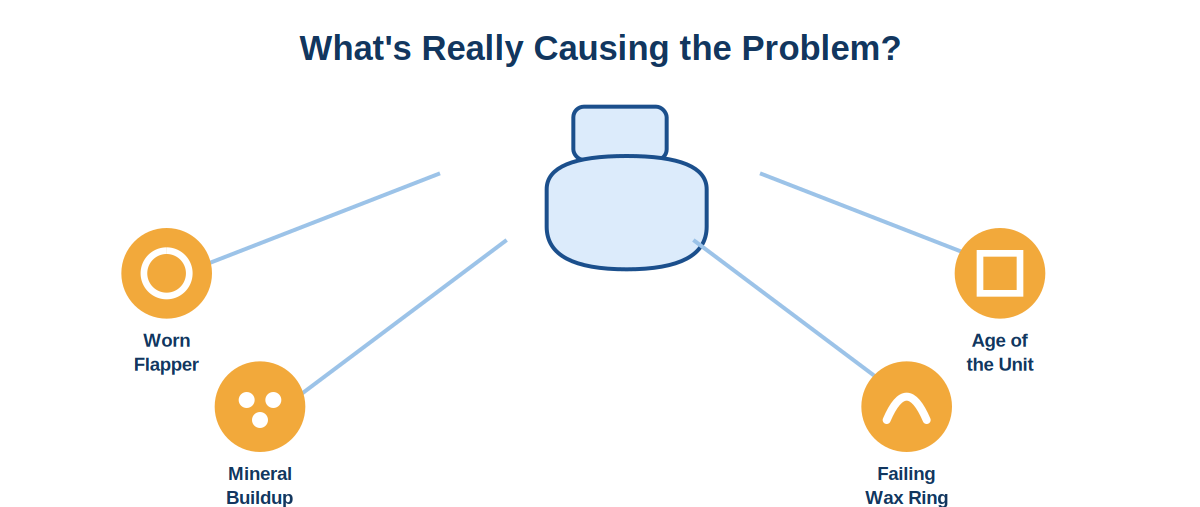
Most of these issues trace back to a small number of root causes, and knowing which one applies to your toilet makes a real difference to how it should be fixed.
Worn internal components: Flappers, fill valves, and flush valves degrade with age and constant use, especially in Singapore’s humid climate, where rubber seals tend to perish faster than in drier conditions.
Mineral buildup: Hard water deposits gradually restrict flow through the rim jets and trapway, weakening flush performance over time. This tends to happen gradually, so most people don’t notice until the flush has become noticeably weaker.
A failing wax ring: This seal between the toilet base and the drain pipe doesn’t last forever, and once it fails, leaks at the base are almost guaranteed. It’s also one of the least visible causes, since the problem sits underneath the toilet rather than somewhere you’d normally check.
Age of the unit: Toilets installed many years ago simply wear out. At some point, repeated small repairs become less practical than addressing the underlying issue properly, whether that means resealing the base or replacing the unit altogether.
Incorrect installation: A toilet that wasn’t seated or bolted down correctly in the first place tends to develop rocking, leaking, or seal issues much sooner than it should, even if it’s a relatively new unit.
DIY Fix or Call a Professional?
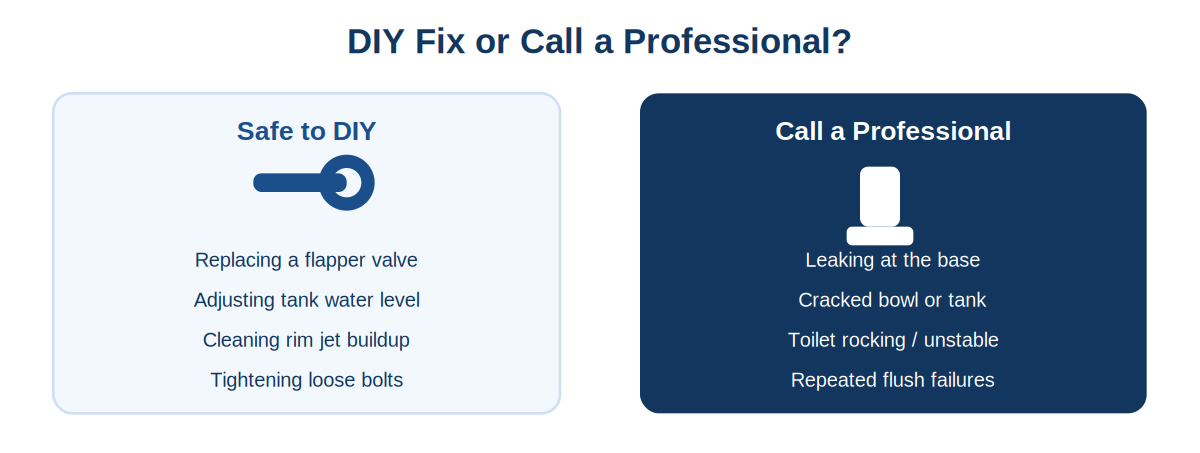
Some toilet issues are genuinely manageable without calling anyone. A running toilet caused by a simple flapper issue, for instance, can often be solved by replacing the flapper valve, which is an inexpensive part available at most hardware stores. Adjusting the water level in the tank or cleaning visible mineral buildup near the rim are also reasonable DIY tasks that don’t require special tools or experience.
That said, several situations call for a professional rather than a trial-and-error approach:
- Water at the base of the toilet — this almost always points to the wax ring seal, and replacing it requires removing the entire toilet, which risks cracking the porcelain or damaging the flange if done incorrectly.
- A crack anywhere in the bowl or tank — once porcelain cracks, it doesn’t seal back up; the unit typically needs replacing rather than patching.
- Persistent flushing problems after replacing basic parts — if a new flapper or fill valve hasn’t solved the issue, there may be a deeper blockage or a problem with the trapway that needs a proper inspection.
- A toilet that continues to rock after re-tightening the bolts — this usually means the flange itself is damaged, which is not a straightforward fix.
Attempting a full toilet removal and reseal without experience is one of the more common ways a small leak turns into a bigger repair bill, since a poorly reseated toilet can crack the base, damage the flange, or fail to seal at all the second time around.
What a Professional Repair Actually Involves
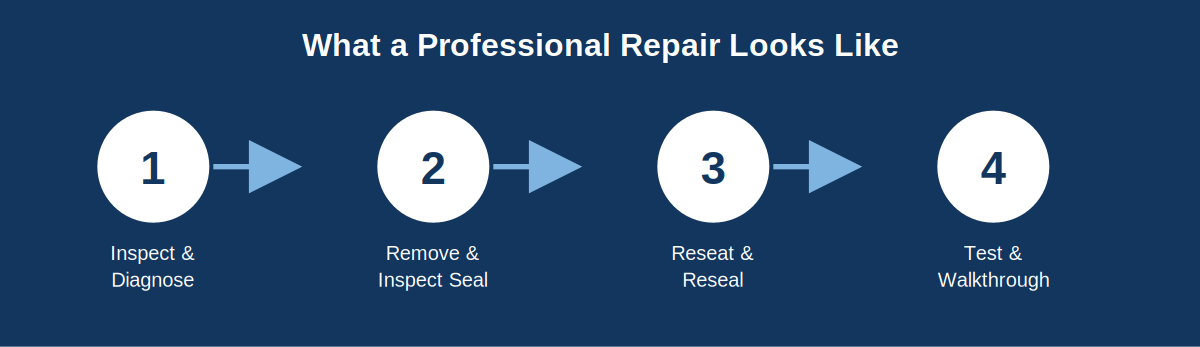
It helps to know what a proper repair visit typically looks like, so you know what to expect and can tell a thorough job from a rushed one.
- Inspection and diagnosis. A technician checks the flapper, fill valve, flush mechanism, and the base seal to pinpoint exactly what’s failing, rather than assuming it’s the first obvious issue.
- Removal and seal inspection. If the problem points to the base, the toilet is carefully disconnected and lifted so the wax ring and flange underneath can be properly assessed.
- Reseating and resealing. A new wax ring or seal is fitted, the toilet is reseated squarely on the flange, and the mounting bolts are tightened evenly so the unit sits flush and stable.
- Testing and walkthrough. Several test flushes confirm there’s no rocking, leaking, or weak flush remaining, and a good technician will explain what was replaced and why before wrapping up.
A rushed job often skips step two entirely, assuming the seal is fine without checking — which is exactly how a “fixed” toilet ends up leaking again within a few weeks.
Maintenance Tips to Extend Your Toilet’s Lifespan
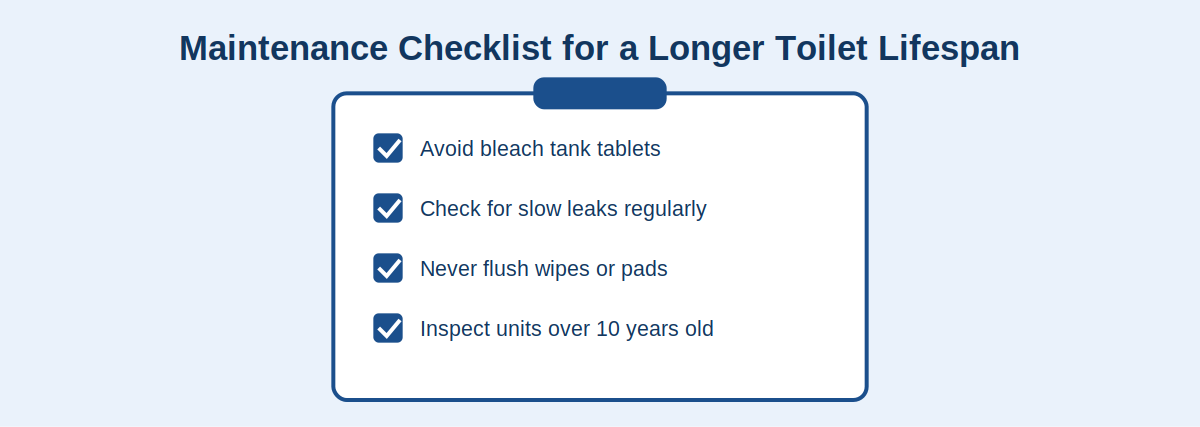
A little routine care goes a long way toward avoiding repeat repairs:
- Avoid using in-tank cleaning tablets that contain bleach, since they can degrade rubber seals and flapper valves faster than normal wear would.
- Check periodically for slow leaks by adding a few drops of food colouring to the tank and seeing if colour appears in the bowl without flushing.
- Don’t flush anything other than waste and toilet paper — wipes, cotton pads, and similar items are common causes of blockages further down the line.
- Have the unit inspected if it’s more than a decade old, even if it seems to be working fine, since seals and internal components degrade well before they fail completely.
- Keep an eye on the base for any dampness after cleaning the bathroom floor, since early detection of a base leak is far cheaper to fix than water damage to the flooring underneath.
When to Call in Professional Help
If your toilet is showing more than one of the signs mentioned earlier, or a DIY fix hasn’t held for more than a few days, it’s worth having someone experienced take a proper look rather than continuing to patch the same issue repeatedly. A professional can quickly tell whether the fix is as simple as a new flapper or fill valve, or whether the wax ring, flange, or the bowl itself needs replacing and doing that assessment correctly the first time is what actually saves money in the long run, rather than paying for repeat visits on the same problem.
Conclusion
A running toilet, a weak flush, or a bit of water at the base might not seem urgent on any single day, but each of these problems tends to get worse rather than better the longer they’re left alone. Knowing the difference between a quick DIY fix and a job that needs a proper base reseal or flange repair is really what protects your bathroom floor, your water bill, and your toilet’s lifespan all at once. When two or more signs show up together, that’s usually the moment to stop troubleshooting and get it looked at properly.
For homeowners in Singapore dealing with a toilet that won’t stop running, keeps leaking at the base, or has lost its flushing power, K. Heng Plumbing’s toilet bowl repair service covers everything from minor valve replacements to full toilet reseating and installation, with the same visit typically resolving the issue for good.
Frequently Asked Questions
1. Why does my toilet keep running after I flush?
This is almost always caused by a worn flapper valve that no longer seals properly, letting water continuously trickle from the tank into the bowl. Replacing the flapper usually solves it.
2. Is it normal for water to collect around the base of a toilet?
No — water at the base typically means the wax ring seal underneath has failed or the bowl has a hidden crack, and it should be looked at promptly to avoid water damage to the flooring.
3. Can a weak flush be fixed without replacing the whole toilet?
Often, yes. A weak flush is commonly caused by mineral buildup in the rim jets or a worn flush valve, both of which can usually be cleaned or replaced without needing a full unit swap.
4. How long does a professional toilet bowl repair usually take?
Most repairs, including a full reseal or valve replacement, are completed within a single visit of a couple of hours, depending on whether the base seal needs replacing.
5. Should I replace my toilet instead of repairing it?
If the bowl or tank has a crack, or the unit is very old and requiring frequent repairs, replacement is often more cost-effective long-term than continuing to patch the same fixture.