


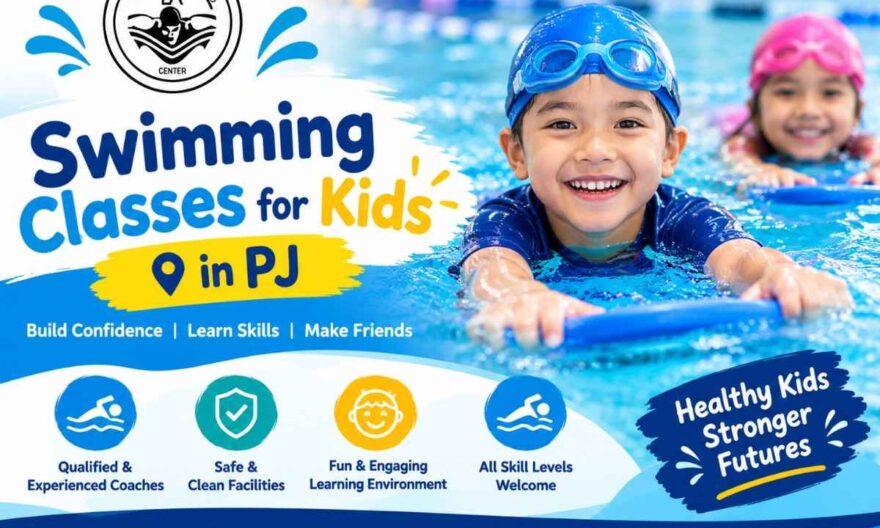
When choosing a swimming class PJ for your child, look for qualified instructors, structured age-appropriate progression, strong water safety protocols, and small class sizes. A good swim school balances technical skill-building with confidence development. The right programme will assess your child’s current ability and place them in a level that challenges without overwhelming them.
Petaling Jaya has a growing number of swim academies, but not all programmes are built equally. As a parent, knowing what separates a quality swim school from an average one makes a real difference — not just in how fast your child learns, but in how safe and confident they feel in the water.
Why Swimming Lessons Matter More Than Most Parents Realise
Drowning remains one of the leading causes of accidental death among children in Malaysia. According to the National Aquatics Council of Malaysia (NACM), a significant proportion of drowning incidents involve children under the age of 14, many of whom had limited or no formal swim training. Enrolling your child early in structured kids swimming lessons in PJ is one of the most practical safety decisions you can make.
Beyond safety, learning to swim builds body coordination, lung capacity, and discipline. Children who learn in structured environments also develop better water confidence — a skill that carries into adolescence and adulthood.
What Age Should Children Start Swimming Lessons?
Most child development professionals and swim educators recommend introducing water familiarisation from as early as 6 months old, though formal stroke instruction typically begins around 3 to 4 years of age. At this stage, children have developed enough motor control to follow basic instructions and coordinate movement in water.
Here is a general breakdown by age group:
- 6 months – 3 years: Parent-and-child water familiarisation classes. Focus is on comfort, floating, and submersion tolerance.
- 3 – 5 years: Pre-school swim classes. Introduction to basic kicks, arm movements, and breath control.
- 6 – 12 years: Structured stroke development. Freestyle, backstroke, breaststroke, and butterfly taught in progressive stages.
- Teens: Advanced technique, endurance, and potentially competitive preparation.
A quality children’s swimming class in Petaling Jaya will place your child through an assessment before assigning them to a level — never assume all children of the same age belong in the same group.
How to Evaluate a Swimming Class PJ: 6 Key Factors
1. Instructor Qualifications and Teaching Approach
Always ask about your instructor’s certification. Look for coaches holding recognition from bodies such as the National Aquatics Council of Malaysia or internationally recognised certifications like the Swimming Teachers Association (STA) or Australian Swimming Coaches and Teachers Association (ASCTA).
Beyond credentials, observe how an instructor interacts with children. The best swim coaches use positive reinforcement, adapt to different learning styles, and never rush a child through a skill they haven’t fully mastered.
2. Class Size and Student-to-Instructor Ratio
This is one of the most overlooked factors. A class with 10 children and one instructor means each child gets less than 6 minutes of direct attention per hour. For young learners, that is not enough.
Recommended ratios by age group:
| Age Group | Ideal Ratio
|
|---|---|
| Toddlers (1–3 years) | 1:1 to 1:3 |
| Pre-school (3–5 years) | 1:4 |
| School-age (6–12 years) | 1:6 |
Smaller groups allow instructors to correct technique in real time, which directly impacts how quickly children progress.
3. Water Safety Protocols
A responsible kids swim school will have clear safety systems in place — not just in theory, but visible during every class. Look for the following:
- A dedicated lifeguard or safety supervisor present during lessons (separate from the instructor)
- Pool depth appropriate for the age group being taught
- Non-slip pool decks and clear entry/exit points
- Emergency response protocols and visible first aid equipment
- Water quality checks and hygiene standards
Do not hesitate to ask the school directly about their emergency procedures. A confident, transparent answer is itself a green flag.
4. Structured Curriculum and Skill Progression
A good programme is not just a series of fun activities in the pool. It follows a defined curriculum where skills build on each other. For example, a child should master breath control before learning freestyle technique. Floating confidence should come before kicking drills.
Ask for a syllabus or programme outline. If the school cannot show you how a child moves from one level to the next, that is a sign their approach may lack structure.
5. Communication and Progress Reporting
Parents should be kept informed of their child’s development — not just at the end of a term, but regularly. Top swim schools in Petaling Jaya provide feedback after assessments, flag areas where a child needs extra practice, and involve parents in the learning journey.
Some schools also provide written progress cards or digital reports. This transparency builds trust and helps you track whether the programme is delivering results.
6. Pool Environment and Facility Standards
The physical environment matters. Check whether the pool is heated — especially important in air-conditioned indoor facilities where water temperature can drop and cause discomfort for young children. A temperature between 30°C and 32°C is generally recommended for children’s lessons.
Also look at changing room hygiene, viewing areas for parents, and whether the facility feels well-maintained. These details reflect how seriously a school takes the overall experience.
Red Flags to Watch Out For
Not every swim school delivers on its promises. Watch out for these warning signs when evaluating children’s swimming classes in Petaling Jaya:
- No visible instructor credentials or reluctance to share them
- Large class sizes with no assistant instructors
- No clear progression system or level structure
- Pressure to pay for long-term packages before a trial class
- Minimal parent communication or feedback
- A pool environment that feels unclean or poorly managed
Trust your instincts. If something feels off during a trial session, it probably is.
Questions to Ask Before Enrolling
Before signing your child up for any programme, use this checklist of questions:
- What qualifications do your swimming instructors hold?
- How are children assessed and placed into levels?
- What is the student-to-instructor ratio for my child’s age group?
- Is there a lifeguard on duty separate from the lesson instructor?
- How do you communicate progress to parents?
- Can I observe a trial class before committing?
A school that answers these openly and confidently is one that stands behind its programme.
Finding the Right Fit in Petaling Jaya
PJ offers a range of options for parents looking at structured swim education — from community pools running weekend classes to dedicated swim academies offering year-round programmes. The right choice depends on your child’s age, current ability, schedule, and how much individual attention they need.
For parents who want a professionally structured environment with qualified coaches, purpose-built facilities, and a clear developmental pathway, LA Swimming Center is worth looking into. Their approach to children’s swim education in PJ covers age-appropriate class structures, safety-focused teaching, and ongoing progress tracking — the exact combination that makes a real difference in a child’s development in the water.
Read Related Topic: What Are the Benefits of Choosing Swimming Lessons Near Me?
Frequently Asked Questions
What is the best age to start swimming lessons for children in PJ?
Children can begin water familiarisation classes from 6 months old, while structured stroke lessons typically start around 3 to 4 years. Starting early builds water confidence and safety awareness — both critical skills for children growing up in Malaysia’s warm, water-rich environment.
How do I know if a swimming class in PJ is safe for my child?
Look for a dedicated lifeguard on duty during lessons, age-appropriate pool depth, visible first aid equipment, and a qualified instructor with a recognised certification. Ask directly about emergency procedures — a reputable swim school will answer clearly and confidently without hesitation.
What should a structured kids swimming lesson include?
A well-structured lesson should include a warm-up, skill-building drills matched to the child’s current level, technique correction, and a cool-down. There should be a defined curriculum where each skill builds on the previous one, with clear progression benchmarks between levels.
How many children should be in a swimming class for young kids?
For children aged 3 to 5, the ideal ratio is one instructor to four students. For school-age children, one instructor to six students is acceptable. Smaller class sizes mean more correction time per child, which directly speeds up skill development and improves safety.
Are indoor or outdoor pools better for children’s swimming classes?
Indoor heated pools are generally better for young children, as temperature control reduces discomfort and allows year-round lessons unaffected by weather. The ideal water temperature for children’s classes is between 30°C and 32°C — warm enough to keep children comfortable and focused during lessons.
How long does it take for a child to learn to swim in a structured programme?
Most children achieve basic water safety skills and introductory stroke technique within 3 to 6 months of regular weekly lessons. Progress depends on the child’s age, frequency of classes, and the quality of instruction — consistent attendance in a structured programme makes the biggest difference.