


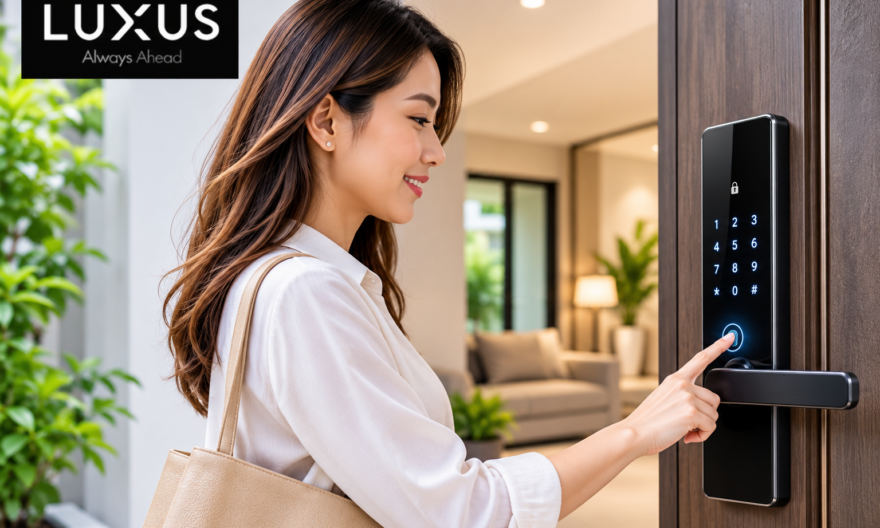
Digital door locks eliminate the need for physical keys by using PIN codes, fingerprints, RFID cards, or smartphone apps to control access. They improve home security by keeping detailed entry logs, allowing remote access management, and reducing the risk of lost or copied keys. For busy households, they simplify daily routines without compromising safety.
If you have ever stood at your front door juggling groceries while searching for your keys, you already understand the core problem. A digital door lock Singapore homeowners are increasingly turning to solves exactly this — not just by removing the key, but by rethinking how access to your home actually works. From fingerprint recognition to app-based control, these locks are built around how modern families and professionals actually live.
What Is a Digital Door Lock and How Does It Work?
A digital door lock replaces the traditional cylinder lock and metal key with one or more electronic authentication methods. Most models support multiple access modes simultaneously, so different household members can use whichever method suits them best.
Common access methods include:
- PIN code — Enter a numeric code on a keypad
- Fingerprint — Touch-to-unlock via biometric sensor
- RFID card or fob — Tap and go, similar to an EZ-Link card
- Smartphone app — Unlock remotely or via Bluetooth
- Mechanical key override — Backup option in case of power loss
Most digital locks are battery-powered and designed to last six to twelve months on a standard set of AA batteries. Many models include low-battery alerts so you are never caught off guard.
Why Digital Door Locks Are Gaining Ground in Singapore
Singapore’s high-rise residential culture, combined with an increasingly connected lifestyle, makes digital locks a natural fit. HDB flats, condominiums, and landed properties all present different door configurations, and the local market has responded with a wide range of compatible models.
According to the Singapore Police Force’s annual crime statistics, house break-ins remain one of the more common property crimes reported each year. While traditional locks can be picked or bumped, most digital locks use anti-pick, anti-drill, and anti-saw mechanisms that significantly raise the difficulty for would-be intruders.
Beyond security, the practical convenience factor is real. Families with young children, elderly parents, or domestic helpers all benefit from customisable access without duplicating physical keys that can be lost, copied, or simply forgotten.
How Smart Features Simplify Daily Routines
Keyless Entry for the Morning Rush
Mornings are chaotic. A fingerprint door lock lets every family member walk out the door without thinking about keys. No searching, no waiting. The door locks automatically behind you a feature called auto-lock that most smart models include by default.
For professionals leaving early or returning late, this alone is worth the upgrade. There is no fumbling with keys in a dimly lit corridor at 11pm.
Granting Access Without Being Home
This is where smart home security genuinely changes behaviour. With an app-connected automatic door lock, you can:
- Let in a parcel delivery without leaving your desk
- Give your cleaner a time-limited PIN that expires after their visit
- Allow elderly parents or in-laws in while you are still commuting
- Check whether the door is locked from anywhere
Temporary access codes are one of the most underused but genuinely practical features. You set them once, they work for the window you define, and they delete themselves. No awkward key returns required.
Entry Logs and Peace of Mind
Most digital lock sg models store a record of every entry who came in, by which method, and at what time. For parents of school-going children, this provides quiet reassurance that your child arrived home safely, without needing a phone call to confirm.
Some Wi-Fi enabled models push real-time notifications to your phone. The moment your door opens, you know.
Fingerprint Door Locks vs PIN vs Card: Which Access Mode Suits You?
| Access Mode | Best For | Limitation |
|---|---|---|
| Fingerprint | Daily users, all family members | May struggle with wet or injured fingers |
| PIN Code | Shared access, temporary guests | Can be observed or shared unintentionally |
| RFID Card/Fob | Children, elderly users | Card can be lost or misplaced |
| Smartphone App | Remote access, professionals | Requires Wi-Fi or Bluetooth connection |
| Mechanical Key | Emergency backup only | Defeats keyless purpose if used daily |
Most users find fingerprint the most convenient for everyday use, with PIN as a reliable backup. Households with domestic helpers or frequent visitors often appreciate the ability to issue and revoke temporary PINs on demand.
What to Look for When Choosing a Digital Lock in Singapore
Not all digital locks are built to the same standard. Here are the factors that matter most for local conditions and lifestyle needs:
Compatibility With Your Door Type
HDB main doors differ from condominium gate locks and timber bedroom doors. Confirm that the model you choose fits your door thickness, brand of gate, or existing mortise lock configuration before purchasing. Many local suppliers offer on-site assessment to avoid this guesswork.
Security Ratings and Build Quality
Look for locks with anti-tamper alarms, stainless steel bolts, and certifications from recognised bodies. Some models carry ratings under standards such as ANSI/BHMA or Singapore’s own SPRING-endorsed guidelines. A lock is only as strong as its physical construction the electronics are secondary.
Connectivity and Integration
If you are building a broader smart home security setup, consider whether the lock integrates with platforms like Google Home, Amazon Alexa, or local smart home hubs. Wi-Fi enabled locks offer the most flexibility, though they also require stable home network coverage near your door.
After-Sales Support and Warranty
Digital locks contain electronics that can, over time, require servicing. Choose a supplier with a clear warranty policy and a local service team. This matters more than price when something fails at an inconvenient hour.
Common Concerns Addressed Honestly
What Happens During a Power Outage?
Digital locks run on batteries, not mains power, so a power cut to your home does not affect them. If the internal batteries run flat, most models include an emergency mechanical key slot or an external USB/9V battery port to unlock temporarily while you replace the cells.
Can Digital Locks Be Hacked?
Wireless digital locks carry some theoretical vulnerability, but physical access remains the far greater risk in residential settings. Choosing a lock with encrypted Bluetooth or Z-Wave communication, combined with strong PIN hygiene (no birthdays or repeated digits), addresses the realistic threat level for most households.
How Long Do They Last?
Quality digital locks are designed to withstand tens of thousands of access cycles. With proper maintenance and timely battery replacement, a well-made unit can serve reliably for seven to ten years. Keeping the fingerprint sensor clean and the keypad dry significantly extends performance.
Making the Switch: A Practical Starting Point
If you are new to keyless access, start with your main entrance. A single digital lock at the front door delivers the most daily value and once you experience the routine of walking in hands-free, it becomes difficult to go back.
Enrol all regular household members during setup, create one or two permanent PINs for backup, and review the access log settings so you know what records are being kept. Most installations take under two hours with a professional fitter.
For families, professionals, and anyone who has ever been locked out at the worst possible moment, upgrading to a digital lock is a straightforward, high-return decision. Luxus offers a curated range of digital locks suited to Singapore’s residential landscape, backed by professional installation and local after-sales support a good place to start if you are ready to make the switch.
Related Blog: How to Choose the Right Digital Lock for HDB, Condo, and Landed Properties
Frequently Asked Questions
Are digital door locks suitable for HDB flats in Singapore?
Yes, many digital door locks are designed to fit standard HDB main doors and gate configurations. It is advisable to check door thickness and existing lock specifications before purchasing, or request an on-site assessment from a local supplier to ensure compatibility.
How secure is a fingerprint door lock compared to a traditional key lock?
Fingerprint door locks offer strong security through biometric authentication, which cannot be duplicated like a physical key. Most models also feature anti-tamper alarms and reinforced bolts, making unauthorised entry considerably more difficult than with a standard pin-tumbler lock.
What happens if the battery dies on my digital door lock?
Most digital locks include a low-battery warning well in advance. If the battery is fully depleted, the majority of models have a mechanical key override or an external power port that allows temporary access while you replace the batteries.
Can I give temporary access to a visitor or domestic helper?
Yes. Most digital locks allow you to create temporary PIN codes with defined expiry times. Once the period ends, the code deactivates automatically meaning you do not need to manually revoke access or worry about key returns.
Do digital locks work with smart home systems like Google Home or Alexa?
Some Wi-Fi or Z-Wave enabled digital locks integrate with popular smart home platforms. Compatibility varies by model, so confirm integration support before purchasing if smart home connectivity is a priority for your setup.
How often do digital door locks need to be serviced or replaced?
A quality digital lock can last seven to ten years with routine battery replacement and basic maintenance. Keeping the fingerprint sensor clean and ensuring the keypad stays dry are the two most effective ways to extend the lock’s operational lifespan.