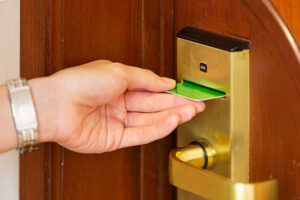
Security in Singapore has evolved quickly. From manual keys to advanced digital locks, today’s buildings rely on smart, fast, and secure tools to manage access. One popular solution is the door access system Singapore businesses and homes now depend on for daily security. These systems commonly use access cards—small yet powerful tools that unlock doors without fuss.
You might wonder how these cards differ or why one building picks one type over another. In this guide, you’ll explore different access card types for door system Singapore properties use, how they function, and what makes them effective.
Whether you manage a workplace or simply want better security at home, learning about these cards helps you choose the right solution.
Why Access Cards Matter?
Door access cards are compact plastic keys. You tap or swipe them against a reader, and the door unlocks—if the card holds the right permissions. Unlike keys, cards can’t be easily copied. You can deactivate them if lost, and you can track their use through a smart access control system Singapore offices often install.
Cards also offer speed. You tap and enter. No turning, no guessing which key fits. It’s especially helpful in offices, schools, hospitals, and high-rise flats.
How Door Access Cards Work?
These cards hold small chips inside. When held near a reader, they send signals through radio waves or magnetic lines. The system checks the card’s identity. If it matches the list, the door unlocks. If not, nothing happens.
The access control system Singapore businesses use keeps this list updated. Managers can allow or block access for different users or times.
Common Access Card Types in Singapore
You’ll find a few major card types used widely across buildings in Singapore. Each has its purpose, strength, and method of communication.
1. Magnetic Stripe Cards
- These cards look like credit cards with a black stripe. When swiped, the stripe rubs against a reader, sending basic information. Though cheap and easy to use, they wear out quickly. Anyone can swipe them easily, but they don’t offer strong security.
2. Proximity Cards (Low-Frequency RFID)
- Proximity cards contain chips that send radio signals when close to a reader. These are very common in homes and small offices. The door access system Singapore condos install often relies on these cards because they’re affordable and work reliably.
- But they lack encryption. If someone copies the card, they might get access. So, for places needing strong protection, better cards exist.
3. Smart Cards (High-Frequency RFID)
- Smart cards store more data and communicate better with modern readers. They use encryption, which means they scramble the data so others can’t easily read or copy it. These cards often work with a secure access control system Singapore firms favour for banks or offices.
- Smart cards can also work across multiple buildings. Some even hold cash for vending machines or lift buttons.
4. MIFARE Cards
- These belong to the smart card family. MIFARE cards store data in separate sections, which lets you program different levels of access—useful for buildings with multiple zones. They’re common in campuses, offices, and gyms. If you use public transport in Singapore, you’ve likely tapped a MIFARE card before.
5. Contactless NFC Cards
- Near Field Communication (NFC) cards let users unlock doors by tapping or waving the card. Newer smartphones can also mimic these cards. While not yet common in every home, some modern door access system Singapore now accept mobile NFC as a card replacement.
6. Biometric-Linked Cards
- These cards don’t hold only ID numbers—they link with your fingerprint or face. They unlock doors only when matched with your physical features. These suit high-security labs, banks, and government buildings. They cost more but offer the highest level of security.
Comparing Card Features
Let’s view the card types in a table:
Comparing Access Card Types
| Card Type | Security Level | Lifespan | Data Capacity | Common Use Cases |
| Magnetic Stripe | Low | Short | Minimal | Old office systems, hotels |
| Proximity (LF) | Medium | Moderate | Limited | Homes, small offices |
| Smart Card (HF) | High | Long | High | Banks, government, and schools |
| MIFARE | High | Long | Flexible | Gyms, condos, universities |
| NFC | High | Very Long | Mobile/High | High-tech homes, offices |
| Biometric-Linked | Very High | Long | Secure Match | Labs, restricted buildings |
These differences help you choose the right card for your space.
Key Considerations When Choosing a Card Type
1. Security Level
- Ask yourself how much protection your property needs. A hotel may settle for magnetic cards. A data centre must demand encrypted smart cards or biometric options.
2. System Compatibility
- The access control system Singapore buildings use might only support certain card types. Always match your card with the system’s reader and software.
3. Number of Users
- A school or hospital might need cards for hundreds of users. Choose a type that allows easy copying, tracking, and revoking.
4. Cost vs Durability
- Some cards wear out fast. Others cost more but last years. Balance the upfront cost with the effort to replace worn-out cards later.
Future Trends in Access Cards
Singapore’s building managers and tech developers now look beyond plastic cards. Some trends include:
- Mobile access: Using phones instead of cards.
- Cloud-based control: Updating access remotely from your phone or computer.
- Face or fingerprint ID: Built into doors, not cards.
- Multi-zone access: One card, multiple buildings or lifts.
The push for safer and smarter living spaces makes today’s access card types for door system Singapore users rely on more complex and powerful.
Maintenance and Management Tips
After picking your card and system, focus on managing it well:
- Replace lost cards fast.
- Keep backups.
- Update access lists regularly.
- Train users to tap, not bend or scratch cards.
Well-maintained systems avoid trouble and reduce misuse.
Conclusion
Access cards play a key role in shaping modern security across Singapore. They fit pockets, skip the need for keys, and blend neatly into any door access system Singapore homes and offices build.
From simple magnetic swipes to encrypted smart cards, each type unlocks a different level of safety. Choosing the right one depends on your needs—protection, ease, tech, and users.
With growing innovation in the access control system Singapore tech space, cards will keep evolving. Soon, homes may rely on phones or even faces to open doors
Also Read: Wireless vs. Wired Office Security Cameras: Which Is Better?