

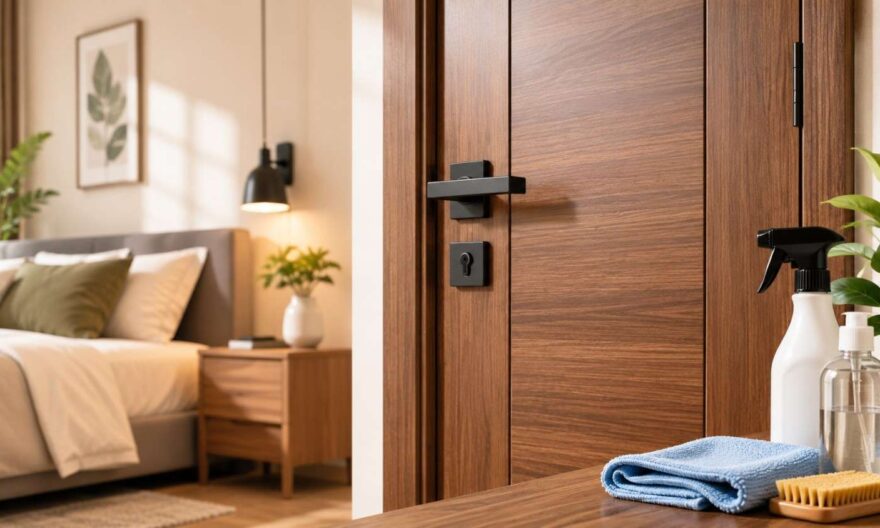
Laminate bedroom doors are easy to care for, if you use the right routine. Weekly, use a damp microfibre cloth to clean surfaces, avoid harsh chemical cleaners and keep edges dry to avoid moisture damage. For persistent marks, try pH-neutral soap. With simple habits, a laminate door can keep looking new for 10 to 15 years or even more.
So you’ve just installed a new laminate bedroom door. It looks sharp, it feels solid and the finish is clean. Now comes the part most guides skip – how do you actually keep it that way? Laminate gets a lot of good press for being low maintenance and it is. But “low maintenance” does not mean “no maintenance”. A few mistakes early on can lead to a dull surface, swelling of the edge or damage to the finish that is hard to reverse. This checklist will guide you through everything needed to protect your investment, room-by-room.
Why Laminate Doors Need Consistent (But Simple) Care
Laminate is a multi-layered product, usually a decorative paper layer fused to a substrate board, sealed with a protective resin. That layer of resin is what makes laminate tough and stain proof. But not invulnerable. Over time, that outer layer can break down with extended moisture exposure, scrubbing with abrasive materials, or using the wrong cleaning agents.
In Singapore, where the climate is humid, moisture management is particularly important for doors located near bathrooms, kitchens or rooms with poor ventilation, with indoor humidity levels in Singapore often hovering between 70% and 90%. The good news is that once you know what to stay away from, the maintenance routine is really simple.
Weekly Cleaning Routine: What to Do
Dry Dusting First, Always
Before any wet cleaning, remove surface dust and loose particles with a dry microfibre cloth or a soft-bristle duster. Skipping this step and going straight in with a wet cloth can drag grit across the surface, causing micro-scratches that accumulate over time into a dull, hazy finish.
Damp Wipe for Light Marks
For everyday fingerprints and light soil, a microfibre cloth lightly moistened with plain water is perfect. Wring the cloth well out, so that it is just damp, not wet. Wipe with long, even strokes in the direction of the grain or texture of the laminate. Then immediately wipe it over with a dry cloth to remove any remaining moisture.
pH-Neutral Soap for Stubborn Spots
If plain water isn’t enough, add a small drop of pH-neutral dish soap (look for labels that say “gentle” or “for sensitive surfaces”) to your damp cloth. This handles greasy fingerprints, food splatter near bedroom entrances, and most common household stains without harming the resin layer.
Weekly Cleaning Checklist:
- Dust surface with a dry microfibre cloth
- Wipe with a barely damp cloth — no dripping
- Use pH-neutral soap for marks and smudges
- Dry the surface immediately after damp wiping
- Pay extra attention to the handle area (most-touched zone)
Monthly Inspection: What to Check
Once a month, take two minutes to do a quick door inspection. Catching small issues early prevents larger problems from developing.
| What to Inspect | What to Look For | Action to Take
|
|---|---|---|
| Door edges | Swelling, soft spots, lifting laminate | Dry thoroughly; reseal exposed edges if needed |
| Surface finish | Dullness, cloudiness, micro-scratches | Apply laminate-safe polish sparingly |
| Handle area | Discolouration, grease buildup | Wipe with damp cloth + mild soap |
| Hinges and frame gap | Moisture pooling, mould spotting | Ventilate room; wipe gap dry |
| Bottom edge | Water stains, warping | Keep floor dry; use door seal if needed |
The Do’s and Don’ts of Laminate Door Care
This is where most owners go wrong. The cleaning mistakes that damage laminate aren’t dramatic — they’re small, repeated habits that compound over months.
Do’s
- Do use soft cloths only — microfibre is ideal
- Do clean spills immediately, especially near the bottom edge
- Do keep bedroom humidity controlled with aircon or a dehumidifier in consistently damp rooms
- Do use a door stopper or bumper to prevent handles and knobs from hitting adjacent walls
- Do check that the door closes properly — misalignment puts stress on edges
Don’ts
- Don’t use bleach, acetone, or ammonia-based cleaners — these strip the resin coating
- Don’t use abrasive scrubbers, steel wool, or rough sponges
- Don’t leave wet items (towels, bags) leaning against the door for extended periods
- Don’t steam clean — concentrated heat and moisture can cause delamination
- Don’t use furniture wax or silicone-based sprays without checking they’re laminate-safe
Dealing With Common Laminate Door Problems
Scuff Marks and Surface Scratches
A damp cloth rubbed gently in a circular motion often works well on light scuffs. For deeper surface scratches, a laminate repair pen or touch-up marker in a matching finish can help disguise the damage. These can be found at most hardware stores in Singapore and they are cheap. Deep gouges that expose the substrate board require professional attention because they allow moisture ingress if left exposed.
Sticky Residue (Stickers, Tape, Labels)
Peel off as much as you can by hand . Dab ( not rub ) the residue with a cloth with a small amount of isopropyl alcohol ( 70 % ) on it . This concentration of Isopropyl alcohol is safe on most laminate finishes but always test on a hidden corner of the laminate first. Don’t use nail polish remover, because it contains acetone and will ruin your laminate.
Edge Swelling from Moisture
This is the most common issue in Singapore homes. If you notice the door edge feels soft or looks slightly puffed, dry the area immediately with a cloth, then run a fan or dehumidifier near the room. For doors in bathrooms or adjacent to bathrooms, consider asking your door provider about moisture-resistant laminate options at your next replacement.
Applying Laminate Door Care Tips for Long-Term Results
The best laminate door care tips are nothing complicated – it’s all about consistency. A quick wipe down each week takes less than five minutes. Two is a monthly check. But not doing them for six months means you’re battling built-up dirt, dulled finish and maybe swollen edges that are way harder (and more costly) to repair.
One helpful tip: keep a special door cloth in your cleaning caddy. That way it’s always there, and you’re less likely to grab the wrong cleaner out of convenience.
When to Call a Professional
Most laminate door maintenance is genuinely DIY-friendly. However, some situations warrant professional input:
- Delamination (laminate peeling away from the substrate in large sections)
- Warping or bowing of the door panel itself
- Mould growth that keeps returning despite cleaning
- Significant edge damage that exposes the core board
In these cases, contact the supplier or installer directly. Attempting to DIY-fix structural delamination usually worsens the outcome.
A Final Word on Protecting Your Investment
Laminate bedroom doors genuinely earn their “low maintenance” reputation — but that reputation is built on owners doing the basics right. Clean gently, dry thoroughly, inspect monthly, and avoid harsh products. That’s really the whole system.
If you’re still choosing your door or looking to replace an existing one, the team at Doorgate Studio offers a range of laminate door finishes built for Singapore’s climate, with guidance on the right product for your specific room conditions. Starting with the right door makes long-term maintenance even easier.
Frequently Asked Questions
How often should I clean my laminate bedroom door?
A light weekly wipe with a damp microfibre cloth is sufficient for most laminate bedroom doors. In high-traffic areas or near bathrooms, increase cleaning frequency to two to three times per week to prevent grime and moisture buildup from affecting the surface finish.
Can I use a multi-purpose household cleaner on a laminate door?
A common problem in Singapore’s humid weather is the edge swelling of laminate doors due to prolonged exposure to moisture. Water is absorbed at exposed edges or unsealed edges causing the substrate board to swell. Keep the area dry, ventilate the room well and if swelling continues or gets worse, check with your door supplier.
Why is my laminate door edge swelling?
A common problem in Singapore’s humid weather is the edge swelling of laminate doors due to prolonged exposure to moisture. Water penetrates the exposed or unsealed edges and the substrate board expands. Keep the area dry, improve the ventilation in the room and contact your door supplier if the swelling continues or gets worse.
How do I remove scratches from a laminate bedroom door?
Light surface scratches can usually be rubbed out with a damp cloth. For more visible scratches use a laminate touch-up pen or repair marker in a matching colour. Deep gouges that expose the core board to moisture damage to the underlying substrate should be repaired by a professional.
Is steam cleaning safe for laminate doors?
No. Laminate doors are not recommended for steam cleaning. The combined heat and moisture can cause the laminate layer to separate from the substrate, a process called delamination. Wipe with a damp cloth only and dry immediately. This goes for all laminate surfaces, not only doors.
How long do laminate bedroom doors last with proper care?
With consistent cleaning and proper moisture management, laminate bedroom doors typically last 10 to 15 years or more. The key factors are avoiding harsh chemicals, keeping edges dry, and addressing minor damage promptly before it develops into larger structural issues that require full door replacement.