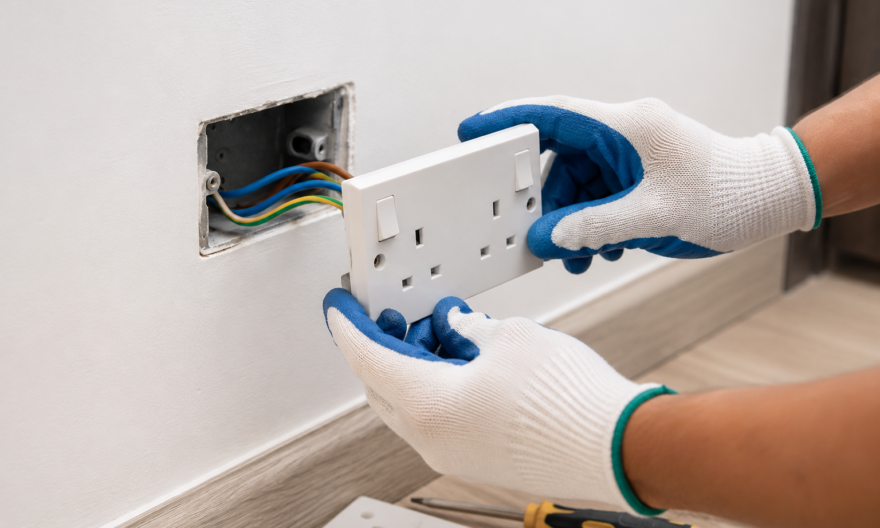
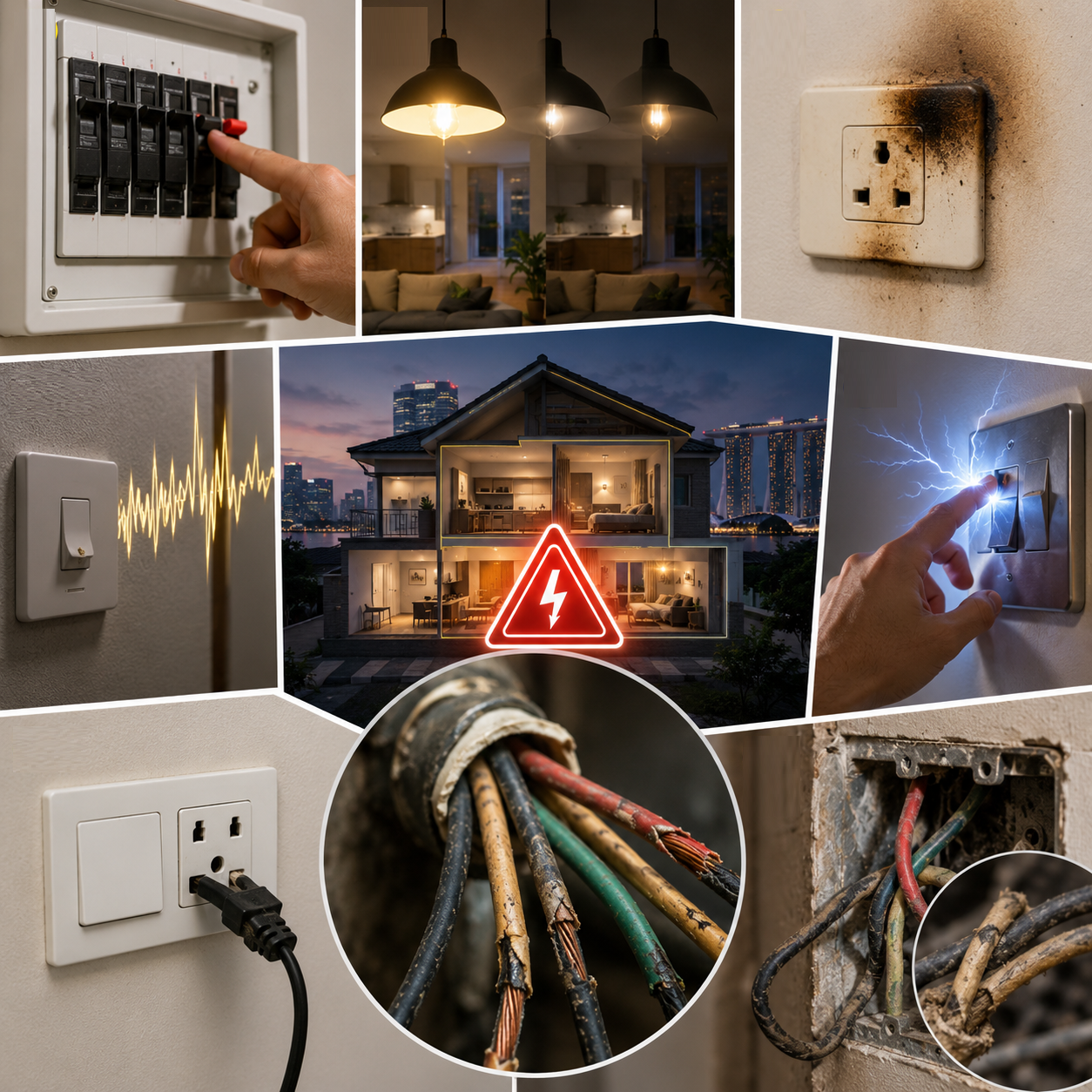
Faulty home wiring is one of the leading causes of residential fires in Singapore. Common warning signs include frequently tripping circuit breakers, flickering lights, burning smells near outlets, discoloured switch plates, buzzing sounds from walls, warm or sparking sockets, and outlets that stop working. Identifying these signs early can prevent electrical fires, equipment damage, and serious injury.
Most homeowners don’t think about their wiring until something goes wrong. But electrical problems rarely appear without warning. Before a power failure or fire hazard strikes, your home almost always gives you signals — and learning to read them could be the difference between a simple electrical repair in Singapore and a catastrophic event. Here are seven warning signs you should never ignore.
1. Circuit Breakers That Trip Frequently
What it means when your breaker keeps switching off
A circuit breaker that trips once in a while is doing its job. One that trips repeatedly especially under normal household loads is telling you something is wrong. This could indicate an overloaded circuit, a short circuit, or a ground fault somewhere in your system.
In older HDB flats and private condominiums built before the 1990s, the electrical load capacity was designed for far fewer appliances than the average Singaporean household runs today. If you’ve added air conditioners, induction cookers, or EV chargers without upgrading your wiring, your circuits may be consistently overloaded.
- Breaker trips when you turn on specific appliances — possible circuit overload
- Breaker trips randomly with no obvious cause — possible wiring fault or ground fault
- Breaker won’t reset or immediately trips again — requires immediate inspection
Do not keep resetting a tripping breaker without getting it inspected. That’s a temporary fix for a potentially serious problem.
2. Flickering or Dimming Lights
Is it a bulb issue or a wiring problem?
Occasional flickering when a bulb is loose is harmless. But if your lights flicker consistently, dim when you use a large appliance, or fluctuate across multiple rooms simultaneously, the issue is almost certainly in the wiring — not the bulb.
In Singapore’s humid climate, loose wire connections inside junction boxes and switch plates are particularly common. Moisture and heat cause wiring insulation to degrade over time, leading to intermittent connections that cause visible flickering. This type of arcing is a direct fire risk.
Pay particular attention if lights flicker in sync with appliance use. That’s a strong indicator that your home’s wiring cannot handle the current demand being placed on it.
3. Burning Smell or Discolouration Around Outlets
Why a burnt smell near a socket is a serious red flag
A burning or melting plastic smell near a power point even without visible damage signals that wiring inside the wall may be overheating. This is one of the most urgent warning signs because overheating wires can ignite surrounding materials without any visible exterior indication.
Discolouration (brown or black marks) around switch plates and socket outlets is physical evidence of past arcing or heat damage. According to the Singapore Civil Defence Force (SCDF), electrical faults remain one of the top causes of residential fires in Singapore. Scorch marks are not cosmetic issues they indicate that heat damage has already occurred inside your wall.
If you notice either of these signs, stop using the affected outlet immediately and contact a licensed electrician for electrical service in Singapore before the situation escalates.
4. Buzzing, Crackling, or Humming Sounds from Walls or Switches
Electrical systems should be silent
Properly functioning wiring makes no sound. If you hear buzzing coming from a switch, crackling from inside a wall, or a persistent hum near your electrical panel, something is wrong. These sounds typically indicate:
- Loose wiring connections that are arcing intermittently
- Overloaded circuits with wires vibrating under excess current
- Faulty outlets or switches with internal damage
- Deteriorating wire insulation causing contact between conductors
Arcing where electricity jumps between loose connections is a leading cause of electrical fires. It generates intense heat and can ignite insulation inside the wall cavity long before you see any smoke. A buzzing switch should never be dismissed as just an old fitting.
5. Electrical Shocks When Touching Switches or Appliances
Even a small shock is a warning you cannot ignore
A mild tingle or shock when you plug in an appliance or flip a switch is not normal. It’s a sign that current is flowing where it shouldn’t be typically due to a ground fault or improper wiring. In Singapore, all residential wiring is required to include earthing protection, and any shock you receive suggests that protection is compromised.
Static discharge from carpets or synthetic fabrics is different it’s brief and causes no real sensation beyond a quick snap. A wiring-related shock feels different: it’s sustained for a fraction longer and originates from a fixed point like a socket or appliance casing. Any household member experiencing repeated shocks from the same point should treat it as urgent.
6. Outlets or Switches That Stop Working
Dead outlets aren’t always a minor inconvenience
When an outlet suddenly stops delivering power, homeowners often assume it’s a tripped breaker and move on. But if resetting the breaker doesn’t restore power, or if the outlet was never connected to a breaker that tripped, the fault lies within the wiring itself.
Loose wire connections, burnt contacts, or a break in the circuit somewhere between the breaker and the outlet are common causes. In older Singaporean homes particularly landed properties with wiring that hasn’t been inspected in over two decades deteriorating connections are extremely common.
A non-functional outlet that also shows discolouration or emits heat when you place your hand near it needs electrical repair services immediately, not just a socket replacement.
7. Old or Outdated Wiring Systems
How old is your home’s electrical infrastructure?
Age alone is a valid warning sign. Singapore’s Energy Market Authority (EMA) recommends periodic inspection of home electrical installations, and for good reason. Wiring systems in homes over 20–25 years old may use materials and designs that are no longer considered safe by current standards.
Specific red flags in older Singapore homes include:
- Aluminium wiring — used in some older properties, it oxidises more easily than copper and creates loose connections over time
- Rubber insulated cables — the insulation becomes brittle and cracks with age, exposing live conductors
- Undersized consumer units — original panels that can’t safely support modern appliance loads
- No residual current devices (RCDs) — RCDs are now standard and provide critical protection against electrocution
If your home falls into any of these categories, a full wiring inspection by a licensed electrician under Singapore’s SS 638 Code of Practice for Electrical Installations is strongly recommended even if you haven’t noticed any of the other warning signs above.
When to Call for Electrical Repair Services: A Quick Reference
| Warning Sign | Urgency Level | Recommended Action
|
|---|---|---|
| Frequent circuit breaker trips | High | Schedule inspection within 24–48 hours |
| Flickering or dimming lights | Moderate–High | Inspect if persistent across multiple points |
| Burning smell or scorch marks | Urgent | Stop using the outlet, call immediately |
| Buzzing or crackling sounds | Urgent | Stop using the switch, call immediately |
| Electric shocks from outlets | Urgent | Isolate the circuit, call immediately |
| Dead outlets not resolved by breaker reset | Moderate–High | Book inspection, do not ignore |
| Wiring over 20 years old | Moderate | Schedule a full electrical audit |
Don’t Wait for a Crisis to Act
Electrical problems in Singapore homes are often slow building they worsen gradually until a critical failure makes them impossible to ignore. The warning signs above are your home’s way of asking for help before that point arrives. A qualified electrician can assess your wiring, identify the root cause, and carry out repairs that meet the safety standards set by EMA and the Singapore Standard SS 638.
For homeowners who are unsure where to start, Elite Electricians provides licensed electrical repair and inspection services across Singapore, helping you address wiring issues before they become emergencies.
Frequently Asked Questions
How do I know if my home wiring is dangerous?
Key indicators of dangerous home wiring include frequently tripping circuit breakers, flickering lights, burning smells near sockets, buzzing sounds from walls or switches, discoloured outlet plates, electric shocks when touching appliances, and outlets that stop working. Homes with wiring older than 20 years should also undergo a professional inspection even without visible symptoms.
Is flickering lights a sign of bad wiring in Singapore homes?
Yes, persistent flickering lights especially across multiple rooms or in sync with heavy appliance use — can indicate loose wiring connections, overloaded circuits, or degraded wire insulation. In Singapore’s humid environment, wiring deteriorates faster in poorly ventilated spaces. A single loose bulb is harmless; widespread or consistent flickering warrants a professional electrical inspection.
What should I do if I smell burning from an electrical outlet?
Stop using the outlet immediately. Switch off power to that circuit at your consumer unit if you can safely do so, and do not use the outlet until a licensed electrician has inspected it. A burning smell indicates overheating wiring inside the wall, which is a direct fire risk. This is an urgent electrical repair situation, not a minor inconvenience.
How often should home electrical wiring be inspected in Singapore?
The Energy Market Authority (EMA) of Singapore recommends that homeowners have their electrical installations periodically inspected by a licensed electrician. For homes over 20 years old or those that have undergone significant renovation, an inspection every 5–10 years is considered good practice. Any time you notice warning signs, an immediate inspection is warranted regardless of the last inspection date.
Can I fix electrical wiring problems myself in Singapore?
No. In Singapore, electrical work on fixed installations must be carried out by a licensed electrician registered with the EMA. Performing unlicensed electrical work is both illegal and dangerous. DIY wiring repairs can result in faulty connections, fire hazards, electrocution risk, and potential invalidation of your home insurance policy in the event of a claim.
What is the cost of electrical repair services in Singapore?
The cost of electrical repair services in Singapore varies depending on the nature and complexity of the fault. Simple repairs such as replacing a faulty socket or switch typically range from SGD $50 to $150. More complex work, such as rewiring a circuit or upgrading a consumer unit, can range from a few hundred to several thousand dollars. Always request a quote from a licensed electrician before work begins.
Related Blog: Bright Ideas: Modern LED Light Installation Singapore Homes Love