


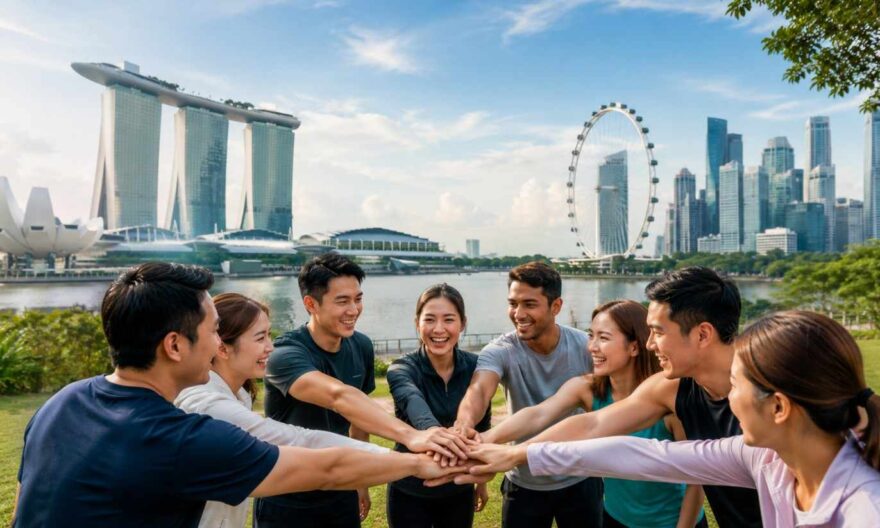
An inefficient team could slow down an excellent company. Inefficient communication, lack of trust, and employee fatigue may be common where people operate in silos. This is one reason why many organizations today are increasingly spending on team building activities.
However, many such events end up being a waste of money and time since they neither make the employees feel better nor help the team become stronger. Even worse, employees end up leaving such events more exhausted than they were earlier.
It is worth noting that highly effective team building activities require no elaborate planning or massive investments. This guide highlights how to plan team building in Singapore events for small teams, startups, and big organizations.
Why Most Team Building Events Fall Flat
There is a reason why many find the concept of team building scary. They will be resentful rather than bond when it is forced upon them.
What goes wrong more often than not is that companies think of team building activities first then organize everything around it. That’s doing it backward. What you should do is to figure out what your people want first.
The Real Goal of Team Bonding Singapore Companies Miss
Team bonding is definitely not meant for just some light-hearted fun. The real objective of team bonding is to tear down those barriers among employees within different departments or even between employees who don’t have any reason to communicate with each other in everyday situations.
How To Plan Successful Team Building In Singapore For Any Company Size
Step 1: Know Your Team Before You Pick Anything
Before you open a single vendor website, ask yourself a few questions.
- How big is your team?
- Are there people with physical limitations?
- What is the average age group?
- Do people already know each other well, or are they strangers?
- What is the mood in the office right now — stressed, celebratory, disconnected?
Step 2: Set a Clear Objective
There is always a reason behind a successful team-building activity in Singapore.
Common Goals To Consider
- New teams: The aim here is to help people feel relaxed with each other.
- Old teams: Dig deeper. Get them involved in solving problems or creating memorable experiences together.
- Cross-department events: Activities that deliberately break down departments are good. Do not go for any activities that reinforce current cliques.
- Building relationships between leaders and staff: Choose something that does not have any hierarchical structure in place.
Step 3: Decide on Indoor vs Outdoor
Given that the weather in Singapore is unpredictable, it is crucial to prepare adequately. It will be better to conduct an outdoor team-building exercise between November and March, during which it will be slightly cooler. However, having a contingency plan is important to avoid any surprises from the rains.
There are many benefits to indoor activities. This way, your employees can concentrate more on the experience than the weather, heat, and humidity.
Step 4: Match the Activity to Your Group Size
Here’s where most planners mess up. An activity that would suit 20 persons could flop when applied to 200 persons.
Small Teams (10 to 30 Persons)
Small teams have greater room for customisation, making activities like escape room games, cooking lessons, pottery sessions, or an Amazing Race game suitable.
Moderate Teams (30 to 100 Persons)
Moderate teams require a more organised approach. Workshops, challenges, and even charitable work prove to be effective. Rotating events are great for engaging everyone.
Big Teams (100 to 500+ Persons)
Big teams require a highly organised and scalable format, such as sports day and carnival games.
Step 5: Choose the Right Format
There are several activities for team building in Singapore. It all boils down to selecting one that will meet your requirements rather than being fun.
- Adventure-based: These may include kayaking or any other physical challenge. This helps create a bond among team members.
- Creative workshops: This may include cooking workshops, painting, or any kind of craft activity. This works for people who prefer something casual and social.
- Problem-solving-based: Escape rooms or any puzzle games would suit people who enjoy such kinds of activities.
- Community service programs: Such activities involve volunteer services or even packing health care kits for charity purposes.
- New hybrid model: Recently, some Singapore team-building companies have started organising hybrid programs for teams.
Step 6: Work With a Reputable Vendor
A good team-building vendor in Singapore will manage the planning, logistics, facilitation, and backup arrangements.
What to Look for in a Vendor
- Real client reviews and experience
- Ability to handle your team size
- Flexible programme options
- Clear pricing with no hidden costs
- A dedicated contact person
Do not choose based on price alone. A poorly run event can reflect badly on the organiser.
Step 7: Gather Feedback Afterwards
The event is over. Now what?
Send a short feedback form within 24 hours while the experience is fresh. Ask what people enjoyed, what could be better, and whether they felt it was a good use of time.
This data is gold for planning your next event. It also signals to your team that their opinion matters.
How to Make Activities for Team Bonding in Singapore Last Beyond the Day
A good team bonding in Singapore will have enough power to help carry over its momentum into your business operations. Here are some ways you can continue doing so.
Hold a follow-up during a team meeting. Make mention of one thing from the experience, such as a funny incident, a team that shocked everybody, or an issue resolved creatively.
Relate it to your core values. If collaboration is among your corporate values, you could make a reference to one instance wherein this value was demonstrated.
Incorporate a routine into your meeting process. For example, some businesses incorporate a short game or ice breaker as part of their opening routine after the team-building event.
Conclusion
Planned successful team building in Singapore are never about searching for the most expensive or noisy event; it all comes down to human nature and arranging situations which will allow the teams to bond.
Some enterprises need relaxation and more casual workshop activities; some require outdoor activities, some need wellness retreat programs – all this depending on the team’s size, culture, and its goals.
The most essential thing for any team bonding Singapore program to be successful is that it should appear organic rather than mechanical to those involved; when employees feel good in such an event, this effect carries on much longer.
Frequently Asked Questions
What are the best team-building activities in Singapore?
Amazing Race Singapore style games, escape room concepts, cooking classes, charity-themed events, game show formats are some of the most popular types. Outward bound activities such as kayaking, trail adventures can also be incorporated but careful attention to the weather is important here.
How do I organise team-building for my big company in Singapore?
Big groups require rotation, professional facilitators and logistical management. In many cases, corporations that have 100 people or more hire external vendors to conduct an entire team building session for them.
Is team building worth my investment in Singapore?
Yes – especially if you do it properly. According to the latest studies conducted by Gallup, higher engagement rates correlate directly with strong ties within a team, and employees are more productive and loyal when they engage.
How often should I do team building in Singapore?
Every organisation benefits from organising a proper event annually, as well as smaller touch points every quarter. This could include lunch dates, mini workshops, etc.