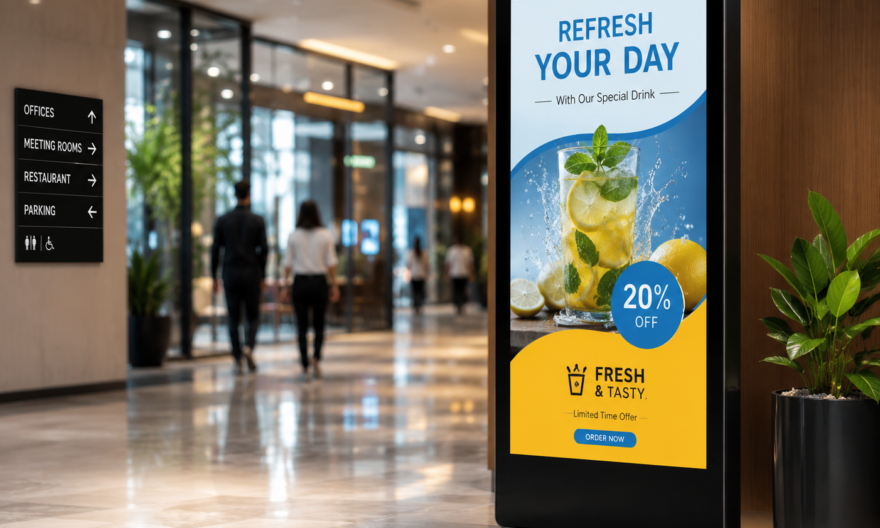
Travellers hurry through busy terminals. Their eyes scan for gates, shops, and restrooms. Amid this rush, digital advertising boards grab attention without shouting. These bright screens share flight updates, shop offers, and local tips. They turn waiting time into useful moments. Consequently, airports now rely on these displays more than ever. Passengers expect information within seconds.
What Makes Airport Screens Effective
These digital advertising boards for airports serve a clear purpose. They help passengers find what they need. At the same time, they also show helpful information in a smooth way. Unlike a noisy announcement, a screen waits patiently. It catches the eye without disturbing a conversation.
- Screens stand near security checkpoints and boarding gates
- Each display shows short, easy-to-read messages
- Content changes based on time of day or crowd size
A traveller spots a sale at a cafe two gates away. Another learns about a luggage service. The system works because it respects people’s hurry. Similarly, parents with crying children appreciate silent guidance. Business travellers value quick updates without delays.
Where Airports Place These Displays
Placement decides success. Therefore, screens near baggage claim show car park directions. While displays beside passport control flash weather updates. Monitors above food courts list order times. Each location serves a unique need.
- Arrival halls show taxi wait times.
- Departure lounges display gate change alerts.
- Corridors between terminals highlight walking distances.
How the Displays Operate
The setup runs like a silent assistant. Therefore, a central control room sends fresh content to every screen. While the staff updates messages within seconds. Rain delays a flight? Therefore, the board shows nearby hotels. A gate changes? The screen redirects passengers without confusion.
The Role of Real-Time Data
These digital signage system Singapore pull live information from airport systems. A flight lands early? The screen adjusts baggage belt numbers. A storm closes runways? The display offers hotel booking codes. Consequently, travellers receive solutions before they ask.
- Weather feeds trigger umbrella sale alerts.
- Flight databases refresh gate numbers automatically.
- Security queue sensors update wait times every two minutes
Who Manages the Content
A small team oversees every screen from one room. They schedule breakfast ads in the morning. After that, they switch to dinner promotions in the evening. At the same time, they remove outdated messages instantly. Thus, no traveller sees wrong information for long.
Content You Might See
Short videos play for ten seconds. Bold text appears without fancy effects. Maps highlight restrooms or charging stations. Shops announce meal deals before lunch hours. Everything moves fast because attention spans stay short in airports.
Types of Advertisements on Display
Retailers love these boards. A bookstore advertises bestsellers near gate B12. A spa promotes fifteen-minute massages in Terminal C. A currency exchange shows live rates on arrival. Each ad matches the traveller’s location and mood.
- Duty-free shops flash perfume discounts.
- Cafes display breakfast combos before 10 AM
- Luggage wrap services demonstrate their process in six seconds
Informational Content Beyond Ads
Not every message sells something. Some screens show meditation guides for nervous flyers. Others display walking routes to quiet lounges. A few list nearby medical aid points. This balance builds trust. Passengers accept ads because they also receive genuine help.
Benefits for Passengers
These digital advertising boards for airports reduce stress. A lost parent finds the gate number quickly. A tired businessman grabs a coffee from the nearest outlet. The information arrives without forcing anyone to ask for help.
- Flight status updates appear every minute.
- Walking times to gates show clearly.
- Local weather flashes before landing.
How Screens Save Time
Time matters most in airports. A traveller connecting in forty minutes cannot waste seconds. The screen shows the shortest path to the next gate. It lists which shops lie along that route. Therefore, the passenger shops and reaches the gate on time.
- Gate change alerts prevent wrong turns.
- Bathroom locations appear with cleaning schedules.
- Charging station maps stop frantic searching
Why Airports Prefer This System
Space inside terminals feels tight. Paper posters take up wall area. They also grow old within a day. Screens solve both problems. One display replaces twenty old posters. Staff change content without ladders or tape rolls.
Environmental Benefits of Digital Displays
Paper posters create waste. Each campaign ends with stacks of thrown-away prints. Screens produce zero paper trash. They use electricity, but modern versions need very little. Some even run on solar power during sunny hours. Thus, airports reduce their carbon footprint.
- No glue or tape residue on walls
- Even no shipping boxes for printed posters
Smooth Travel Experience
Passengers notice fewer delays. They spend less time searching. The airport feels calmer. A digital signage system in Singapore handles millions of travellers each year. The same idea works for any busy airport. Screens guide, inform, and sell without feeling pushy.
Connecting Screens to Mobile Phones
Some airports link displays to personal devices. A traveller scans a QR code on the screen. The phone receives a map. It also gets discount vouchers for nearby shops. Consequently, the passenger walks away with useful information stored forever.
- Scan codes for luggage tracking links
- Tap screens for restaurant reservations
Final Thoughts
Digital advertising boards serve a simple goal. They connect people with what they need right now. A flight update. A meal coupon. A direction to baggage claim. The technology stays invisible while the help stays visible. Next time you walk through a terminal, notice the screens. They work for you. A digital signage system proves how smoothly this works every single day.
FAQs
- Do these screens work during a power failure?
Yes. Airports keep backup batteries for all displays. During a power cut, screens switch to emergency mode within one second. They show only gate numbers, exit routes, and bathroom locations.
- Can the screens understand different languages?
Many displays rotate between three or four common languages. Some newer models detect a traveller’s passport country and show text in that language automatically without any button pressing.
- Do the screens watch or record travellers?
No. The cameras only count how many people stand nearby. They never capture faces or save personal information. The system shows an ad because ten people walk past, not because it knows anyone.
- How often do the messages change?
Staff update content within seconds from a central control room. A flight delay triggers a hotel offer immediately. A gate change appears on every screen before the announcement finishes.