A display chiller keeps perishable products cold while making them visible and accessible to customers. The right unit depends on your business type, available floor space, product range, and customer flow. Cafés, bakeries, and convenience stores each have distinct chilling needs — choosing the wrong unit affects both product quality and sales performance.
Why Choosing the Right Display Chiller Matters
Not every chiller works for every setting. A unit designed for canned beverages behaves differently from one built to showcase pastries or fresh-cut sandwiches. Temperature range, airflow type, shelving configuration, and door design all affect how well your products hold up — and how attractive they look to a passing customer.
In Singapore’s food and beverage industry, the National Environment Agency (NEA) requires that perishable food items be stored at or below 4°C. Non-compliance can result in fines or licence suspension. Your chiller is not just a sales tool — it is part of your food safety compliance.
Types of Display Chillers and Where They Work Best
Upright Glass Door Chillers
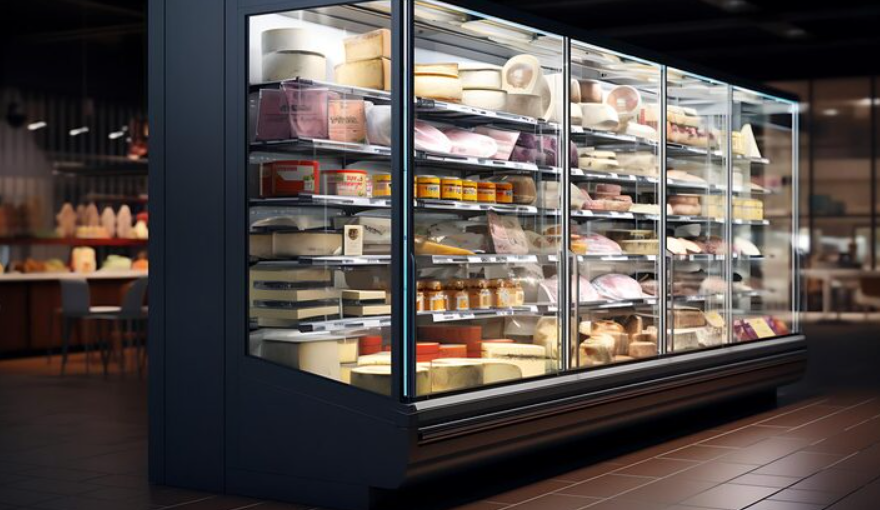
These are tall, freestanding units with one or more glass doors. Customers can see the full product range at eye level without opening the cabinet. They are energy-efficient because the cold air stays contained until the door is opened.
Best suited for: Convenience stores, petrol kiosks, and mini-marts where beverages, dairy, and packaged food need clear visibility and fast customer self-service.
Countertop Display Chillers
Compact and designed to sit on a service counter, these units are a staple in cafés and bakeries. They are ideal for displaying cakes, tarts, sandwiches, and cold brew bottles directly at the point of sale — right where buying decisions are made.
Their smaller footprint makes them practical for F&B outlets with limited floor space, especially in shophouse-style cafés common across Singapore.
Bakery Display Chillers
A bakery display chiller is purpose-built for pastries, cakes, and chilled desserts. These units use low-velocity fan systems or static cooling to prevent moisture loss — critical for keeping croissants flaky and cream cakes stable.
Humidity control is a key differentiator here. Forced-air systems dry out baked goods quickly. Look for units with adjustable fan speeds or humidity retention panels if you are running a patisserie or cake shop.
Beverage Display Chillers
A beverage display chiller is built for high-volume cold drinks — bottles, cans, and cartons. These typically use powerful fan-assisted cooling to maintain uniform temperatures even when the door is frequently opened throughout the day.
For cafés running a grab-and-go drinks section or convenience stores stocking isotonic drinks and juices, these units offer fast temperature recovery and excellent front-facing visibility through full-glass doors.
Open-Front Chillers
Popular in supermarkets and larger retail settings, open-front chillers offer no doors — customers reach directly into the chilled zone. This increases impulse purchases but consumes significantly more energy. In Singapore’s warm and humid climate, the cooling load on open-front units is higher than in temperate countries.
They suit high-traffic retail environments where speed of access outweighs energy efficiency considerations.
Matching the Right Display Chiller to Your Business Type
| Business Type | Recommended Chiller Type | Key Features to Prioritise
|
|---|---|---|
| Café | Countertop or slim upright | Glass display, interior lighting, compact footprint |
| Bakery / Patisserie | Bakery display chiller | Humidity control, low-velocity airflow, multiple shelves |
| Convenience Store | Upright glass door or multi-deck | Fast temperature recovery, energy efficiency, large capacity |
| Bubble Tea / Drinks Kiosk | Beverage display chiller | Uniform cooling, high door-opening frequency tolerance |
| Hawker / Food Court Stall | Under-counter chiller | Space-saving design, easy access during service |
Key Specifications to Check Before Buying
Choosing a chiller based on looks alone is a costly mistake. Here are the specifications that should drive your decision:
- Temperature range: Confirm the unit can hold temperatures between 2°C and 8°C consistently for fresh food compliance.
- Cooling system: Fan-assisted cooling suits beverages and packaged goods. Static cooling is gentler on pastries and cakes.
- Energy rating: In Singapore, look for NEA-endorsed energy labels. A higher tick rating reduces operating costs significantly over time.
- Interior lighting: LED lighting improves product visibility and generates less heat than fluorescent tubes.
- Shelf adjustability: Flexible shelving lets you reconfigure the unit as your product range changes.
- Defrost type: Auto-defrost saves time and reduces the risk of ice build-up affecting temperature stability.
Common Mistakes Business Owners Make When Selecting a Chiller
Buying by price alone often leads to higher long-term costs. A cheaper unit with poor insulation or an inefficient compressor will drive up electricity bills and need replacing sooner.
Oversizing is equally problematic. A large upright chiller in a small café creates visual clutter and uses more energy than your product volume justifies. Match unit capacity to your average daily stock, not your maximum possible stock.
Many owners also overlook after-sales service. In Singapore’s climate, commercial refrigeration runs continuously. A reliable supplier who offers maintenance support and spare parts availability matters as much as the unit itself.
What a Retail Refrigerator Needs to Do Differently
A retail refrigerator in a convenience store or supermarket operates under different pressures than a café chiller. Door-open frequency is far higher. Product turnover is faster. The unit must handle temperature fluctuations caused by restocking while recovering quickly to the set temperature.
Multi-deck open chillers or tall upright glass-door units with strong fan-assisted systems handle this best. Some retail operators in Singapore also use remote condensing units — where the compressor is located outside the sales floor — to reduce in-store heat and noise.
Finding the Right Supplier in Singapore
Local availability of technical support, warranty coverage, and NEA-compliant energy ratings should all factor into your supplier choice. Singapore’s Food Safety System Certification (FSSC) requirements and NEA guidelines mean your chilling equipment must be maintained and documented properly.
For café owners, bakery operators, and retail managers looking for quality commercial refrigeration options, Hubs offers a range of display chillers suited to different business formats and floor plans — from compact countertop units to full-height beverage chillers built for high-demand retail environments.
Frequently Asked Questions
What temperature should a display chiller be set at for food safety in Singapore?
The NEA requires perishable foods to be stored at or below 4°C. Most commercial display chillers are set between 2°C and 4°C for fresh food and up to 8°C for beverages and packaged goods.
What is the difference between a bakery display chiller and a regular beverage chiller?
A bakery display chiller uses static or low-velocity cooling to preserve moisture in pastries and cakes, while a beverage chiller uses fan-assisted cooling for faster temperature recovery. Using the wrong type can dry out baked goods or cause uneven cooling in drinks.
How do I choose the right size display chiller for my café or shop?
Base your sizing on average daily stock volume, not maximum capacity. Measure your available floor or counter space first, then match the unit’s internal capacity to what you realistically sell and restock each day to avoid wasted energy.
Are display chillers energy-efficient enough for small businesses?
Modern display chillers with NEA energy labels and LED lighting are significantly more efficient than older models. Choosing a unit with a higher energy tick rating reduces monthly electricity costs, which matters for small cafés and bakeries operating on tight margins.
Can I use a display chiller as my main storage refrigerator?
Display chillers are designed for product presentation and customer-facing use, not bulk cold storage. For back-of-house storage, a dedicated reach-in refrigerator or cold room is more appropriate. Using a display unit for bulk storage reduces its lifespan and affects temperature consistency.
How often should a commercial display chiller be serviced in Singapore’s climate?
In Singapore’s humid tropical climate, quarterly servicing is recommended for commercial display chillers. Regular cleaning of condenser coils, door seals, and drainage prevents breakdowns and ensures the unit maintains consistent temperatures required for food safety compliance.