


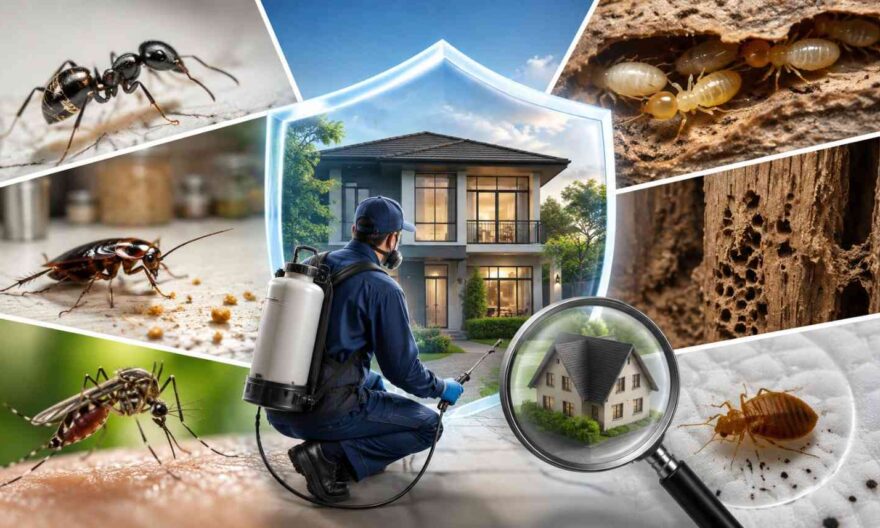
The right pest control services depend entirely on what you’re dealing with — not just the pest itself, but where it’s appearing, how often, and in what numbers. A mosquito problem on your balcony needs a completely different approach than termites silently eating through your floor joists. This guide helps you identify your situation and match it to the correct service before you call anyone.
How to Know Which Pest Control Service You Actually Need
Start with what you’re seeing. Not all pest sightings mean the same thing, and not all solutions are equal. The wrong treatment wastes money and can leave the core problem untouched. Match your symptoms to the service type below — this will save you time, money, and repeated treatments.
You’re Seeing Ants Everywhere — Especially in the Kitchen
Ants are the most common household complaint in Singapore. Depends on the species. Ghost ants tend to nest in walls and cabinets. Fire ants form mounds outside and can sting aggressively. If you are seeing trails of tiny ants around food sources or along the skirting boards then you will most likely need a targeted ant baiting or gel treatment program.
Rarely will an ant problem be solved with one spray. Sprays kill the ants you see, but don’t reach the colony. Workers carry slow-acting bait back to the nest to destroy the nest at its source. If you try to tackle the problem yourself and the ants just keep returning, then it’s time to call in a licensed pest management professional.
What to Look For
- Visible ant trails, especially near food prep areas
- Small piles of fine debris near walls (ant frass)
- Biting incidents outdoors near soil mounds
You’ve Spotted a Cockroach — Now What?
If you’ve got one roach, you’ve got a one-roach problem. The humidity in Singapore makes HDB flats, condos and landed homes equally vulnerable. The American cockroach (large, reddish-brown) usually enters through drains, whereas the German cockroach (small, light brown) breeds rapidly inside cabinets and appliances and is much harder to get rid of.
German cockroach infestations need to be treated with gel baits applied to harborage zones, not a spray-and-go visit. Residual spraying combined with drain treatment may be necessary for American cockroach activity through drainage systems. If you know your species then the entire approach to service changes.
Signs the Problem Is Bigger Than One Bug
- Egg cases (oothecae) behind appliances or in cabinet hinges
- Musty, oily smell in kitchen or bathroom areas
- Droppings resembling black pepper near food storage
- Cockroach sightings during the day (indicates overcrowding in the nest)
You’re Finding Wood Damage or Mud Tubes — Termite Inspection First
This is the one pest problem where time is of the essence. The dominant species in Singapore is the subterranean termite, which can cause structural damage that is not detected for months or years. Termites are one of the most destructive pests affecting properties in the region, and are often only discovered during renovations, Singapore’s National Environment Agency (NEA) said.
Don’t wait if you spot mud tubes on walls or foundations, hollow-sounding timber or dropped wings around windows and doors (especially after rain). You need an expert termite inspection, not a general pest spray. There are two main ways of treating:
Termite Treatment Options Compared
| Treatment Type | How It Works | Best For
|
|---|---|---|
| Soil Treatment (Termiticide Barrier) | Chemical barrier applied around/under the structure | New builds, pre-construction, ground-floor units |
| Baiting System | Slow-acting bait stations eliminate the colony over time | Active infestations, environmentally sensitive areas |
| Wood Treatment (Boron-based) | Applied directly to affected timber | Localised damage, furniture, exposed wood |
You’re Getting Bitten at Night — Bed Bug or Mosquito?
There are two very different reasons for nite bites and the treatment is totally different for each. They hide in mattress seams and headboards and electrical outlets and leave itchy, clustered bites. Mosquitos bite all evening, associated with dengue risk, real public health concern in Singapore where NEA tracks dengue cases weekly.
If you wake up to find clusters of bites and see little red-brown stains on your sheets, you have bed bugs. If you get bitten while you’re awake and outside, it’s likely mosquitoes. Both require urgent professional intervention but the services involved are completely different.
Bed Bug Treatment Options
- Heat treatment: Raises room temperature to levels that kill bugs and eggs — no chemicals required
- Chemical treatment: Residual insecticide applied to harborage points
- Combined approach: Most effective for severe infestations
Mosquito Control Options
- Misting / fogging: Targets adult mosquitoes in outdoor areas
- Larviciding: Treats standing water to eliminate larvae before they hatch
- Inspection and source removal: Identifying and treating breeding sites around the property
You’re Seeing Rodent Droppings or Hearing Scratching in the Ceiling
Rats and mice aren’t just a nuisance — they chew through wiring, contaminate food, and spread disease. Roof rats often gain entry to homes through the roof and often live in ceiling voids. Norway rats often enter HDB flats and shophouses through drain systems or rubbish areas.
More than just setting traps, rodent control. A thorough inspection will find entry points which need to be sealed as part of the program. Without any exclusion work, the first population of rodents comes down and they come back in. Look for a provider that offers baiting, trapping and proofing – not just one of the three.
Rodent Warning Signs to Watch For
- Dark, cylindrical droppings near food storage or appliances
- Gnaw marks on cables, wood, or food packaging
- Scratching or scurrying sounds, especially at night
- Greasy rub marks along skirting boards or walls
You Have Flies — But Which Kind?
Not all fly problems are alike. Fruit flies hang out on overripe produce and fermentation. House flies breed in rubbish and are a food hygiene hazard. Drain flies hatch from the organic gunk that builds up in drains. Each needs a different intervention – and mixing them up leads to ineffective treatment.
If your kitchen is clean but you see flies, check your drains. Any spray may not be as quick a fix as a drain gel treatment or drain cleaning service. If the volume is high and it is associated with food waste sources nearby, professional site inspection will accurately identify the breeding ground.
You’re Unsure — Here’s a Quick Symptom-to-Service Reference
| What You’re Seeing | Likely Pest | Service to Request
|
|---|---|---|
| Ant trails near food | Ghost ants / fire ants | Ant baiting programme |
| Small cockroaches in cabinets | German cockroach | Gel bait treatment |
| Large cockroaches from drains | American cockroach | Residual spray + drain treatment |
| Hollow timber, mud tubes | Subterranean termites | Termite inspection + baiting or soil treatment |
| Bites with blood stains on sheets | Bed bugs | Heat treatment or chemical treatment |
| Evening bites outdoors/indoors | Mosquitoes | Misting, larviciding, source removal |
| Scratching in ceiling or walls | Roof rats / mice | Rodent baiting + exclusion proofing |
| Flies near drains or fruit | Drain flies / fruit flies | Drain treatment or source elimination |
What to Ask Before Booking Any Pest Control Service
Choosing the right treatment also means choosing the right provider. Not every company has the same range of services, inspection depth, or follow-up protocols. Before confirming any booking, ask these questions:
- Is your company licensed by NEA? In Singapore, pest management companies must hold a valid NEA Pest Control Operator licence. Always verify this before proceeding.
- What species-specific approach will you use? Generic spray-and-go services are rarely adequate for persistent infestations.
- Does the treatment include a follow-up visit? One session often isn’t enough for cockroaches, termites, or rodents.
- What prep work is required before treatment? Some treatments require you to vacate the property or store food away.
- Will you provide a written report or treatment record? This matters for recurring contracts and property documentation.
One-Time Treatment or Recurring Service — Which Makes More Sense?
The answer to most Singapore homes depends on your property type and history. Ongoing risk is greatest for land-based properties, older condos and homes near dense vegetation or food establishments. One treatment may solve a current problem, but if the situation remains the same, it won’t prevent reinfection.
Recurring service agreements typically are based on the pest and occur quarterly or monthly, providing continued monitoring and early intervention. Termites in particular are best handled with a monitoring and baiting system, with regular check-ins, rather than a one-time treatment and fingers crossed. Think of it less as medicine and more as servicing your air conditioning: regular maintenance prevents bigger problems down the road.
When to Call Immediately (Don’t Wait)
Some pest situations cross from inconvenience into genuine risk. If any of the following apply, contact a licensed pest control company Singapore-based without delay:
- You’ve found live or dead termites inside the home structure
- A family member has had an allergic reaction to an insect bite
- Rodent activity is near a baby’s room or food preparation area
- You’ve had a confirmed dengue cluster in your block or estate
- Cockroaches are appearing in large numbers during daylight hours
These are not situations where a wait-and-see approach is appropriate. Early intervention consistently produces better outcomes — both in terms of effectiveness and cost.
Making the Right Call
Pest issues are rarely one-size-fits-all, and the most common mistake homeowners make is booking a generic treatment without diagnosing the problem first. A proper inspection, species identification, and tailored treatment plan will always outperform a broad-spectrum spray applied without context.
If you’re still unsure what you’re dealing with, Action Pest provides thorough inspections and specific treatment recommendations — so you’re never guessing about what your home actually needs. The right service starts with the right diagnosis.
Frequently Asked Questions
How do I know if I need a one-time or recurring pest control service?
If your property has had repeated infestations or sits in a high-risk environment — such as near food establishments or dense greenery — a recurring service plan gives you ongoing protection and early detection. A one-time treatment works for isolated, first-time incidents with no structural risk involved.
Is pest control safe for children and pets?
Licensed pest control providers in Singapore use NEA-approved products and should advise you on the appropriate re-entry time after treatment. Most treatments are safe once dry or after ventilation, but always inform your technician about children, pets, or family members with respiratory sensitivities before the service begins.
What is the difference between termite baiting and soil treatment?
Soil treatment creates a chemical barrier around your property that termites cannot cross, while baiting uses slow-acting bait stations to eliminate the colony from within. Baiting is better suited to active infestations and sensitive areas; soil treatment is typically preferred for new construction or pre-renovation protection.
Can I treat a cockroach infestation myself before calling a professional?
DIY sprays can reduce visible numbers temporarily but rarely reach the nest, especially with German cockroaches. Improper use can also make cockroaches more resistant to future treatments. If the problem persists after two weeks of DIY efforts, a professional gel bait treatment is the more effective and cost-efficient next step.
How long does a standard pest control treatment take?
Most single-unit residential treatments take between 30 minutes and two hours depending on the pest type and property size. Termite baiting system installations and bed bug heat treatments take longer. Your technician should give you a clear time estimate along with preparation instructions before the appointment date.
Does pest control in Singapore require NEA licensing?
Yes. All pest management companies operating in Singapore must be licensed by the National Environment Agency (NEA) under the Control of Vectors and Pesticides Act. Always verify a company’s NEA licence before booking — it ensures the technicians are trained and the pesticides used are legally approved for residential use.