

An air purifier for office environments needs to handle higher occupancy, larger floor areas, and pollutants like printer emissions and shared air recirculation. The home unit is meant to be quiet, cover smaller spaces and fight common allergens like dust and pet dander. The core technology may be the same but the size, the grade of filtration and the performance requirements are very different in the two environments.
Choosing an office air purifier or home air purifier is more than simply choosing the most powerful model. It is about matching the unit to the specific air quality challenge
Why the Environment Changes Everything
Indoor air quality is shaped by who occupies a space, what activities take place there, and how air circulates through it. An office and a home are fundamentally different on all three counts. That is why the same unit that works brilliantly in a bedroom may be completely inadequate for an open-plan workspace.
According to the National Environment Agency (NEA) of Singapore, indoor air pollutant levels can be two to five times higher than outdoor levels, with enclosed office buildings being particularly vulnerable due to limited natural ventilation and the concentration of equipment and people.
Air Purifier for Office: Key Requirements
Higher Coverage Area
Most residential air purifiers are rated for spaces between 20 to 50 square metres. An open-plan office can easily span 100 to 300 square metres or more. Running an underpowered unit in a large office simply means the air is never properly cycled, leaving pollutants unaddressed across much of the floor space.
When selecting an air purifier for office use, check the Clean Air Delivery Rate (CADR) and the recommended room size. For large offices, multiple units placed strategically will outperform a single centralised device.
Handling Office-Specific Pollutants
Offices generate a distinct category of airborne pollutants that most home users never encounter at the same volume:
- Volatile Organic Compounds (VOCs) from laser printers, photocopiers, and new furniture off-gassing
- Carbon dioxide build-up from multiple occupants in enclosed spaces
- Particulate matter from paper handling, toner particles, and foot traffic
- Bacteria and viruses spread through shared air systems and frequent human contact
A quality office air purifier should include activated carbon filtration for VOC absorption alongside HEPA filtration for particulate capture. Some advanced models also incorporate UV-C or ionisation stages to address microbial load — particularly relevant in Singapore’s high-humidity, air-conditioned office environments.
Noise Tolerance and Continuous Operation
Offices often run air purifiers throughout the working day, sometimes continuously. Units must be rated for extended duty cycles without overheating or degrading performance. Noise level matters too — a unit running at 60 dB in a quiet meeting room will disrupt focus and calls.
Look for office-grade purifiers with a low-noise or sleep mode rated under 40 dB, while still maintaining adequate airflow on standard settings during peak occupancy hours.
Air Purifier for Home: What Matters Most
In a home the priorities are different. A typical air purifier for home is designed for one or two rooms, needs to handle a limited number of pollutants and should blend in seamlessly with daily life without constant adjustment.
Common Household Pollutants
At home, the main culprits are:
- Dust mites and fine dust particles
- Pet dander and hair
- Cooking fumes and grease particles
- Mould spores, particularly in Singapore’s humid climate
- Pollen tracked in from outdoors
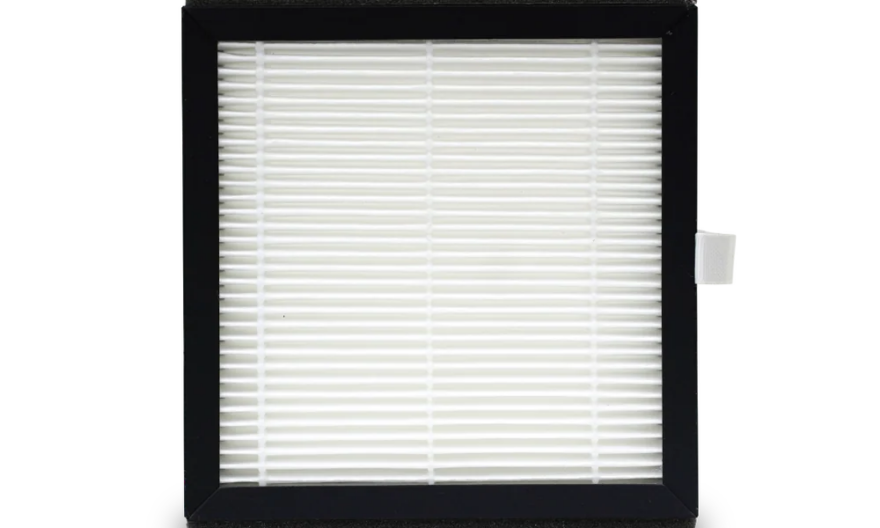
A standard True HEPA filter with an activated carbon pre-filter takes care of these nicely. Commercial printing equipment typically produces continuous VOC output that is seldom found in a home, so a smaller filtration system will generally suffice for office environments.
Humidity and Mould: A Singapore-Specific Concern
In Singapore, relative humidity regularly sits between 70% and 90%. High humidity accelerates mould growth and dust mite proliferation — two of the most common indoor allergen sources. This is where a 2-in-1 air purifier and dehumidifier unit becomes genuinely practical for home use, addressing both air quality and moisture control in a single appliance rather than running two separate devices.
Side-by-Side Comparison: Office vs Home Air Purifier
| Feature | Office Air Purifier | Home Air Purifier
|
| Coverage Area | 100–300+ sqm | 20–60 sqm |
| Primary Pollutants | VOCs, toner, bacteria, CO₂ | Dust, mould, pet dander, pollen |
| Filter Type | HEPA + Activated Carbon + UV-C | HEPA + Carbon Pre-filter |
| CADR Requirement | High (300+ m³/h) | Moderate (100–250 m³/h) |
| Operating Hours | 8–12 hours/day continuous | Intermittent or overnight |
| Noise Sensitivity | Moderate (meeting rooms: low) | High (bedroom use) |
| Humidity Control | Less critical (centralised HVAC) | Important in tropical climates |
Filter Replacement: What Both Settings Have in Common
Regardless of whether you are running a unit in a busy office or a family home, filter maintenance determines long-term performance. A clogged or expired filter does not just reduce airflow — it can release trapped pollutants back into the air, which defeats the purpose entirely.
In Singapore’s high-humidity environment, filters tend to degrade faster than in drier climates. Office units running continuously will need replacement more frequently than home units. A common benchmark is every three to six months for active use, though manufacturers’ guidelines should always take precedence. Keeping a stock of the correct replacement filters on hand prevents gaps in air quality protection.
How to Choose the Right Unit for Your Situation
For Office Decision-Makers
- Calculate total floor area and choose units accordingly — do not rely on a single device for large open plans
- Prioritise multi-stage filtration with VOC capture
- Check operational noise ratings for meeting rooms and focus areas
- Factor in filter replacement costs as part of total cost of ownership
For Home Users
- Match the unit to room size, not the whole house
- Consider a combined dehumidifier and air purifier if humidity is a recurring issue
- Prioritise quiet operation for bedroom placement
- Look for units with auto mode or air quality sensors for hands-free management
Both settings benefit from investing in the right filtration technology upfront. The real cost savings come from choosing correctly the first time rather than replacing an underpowered unit later. Hydroflux offers practical solutions — including 2-in-1 air purifier and dehumidifier options with compatible filter replacements — designed for real-world use in Singapore’s demanding climate, for both homes and commercial spaces.
Frequently Asked Questions
Can I use a home air purifier in a small office?
Yes, if the office is small — typically under 40 square metres with fewer than five occupants. For larger spaces or high-occupancy offices, a home-rated unit will not cycle the air adequately. Always match the unit’s CADR and coverage rating to your actual floor area.
How often should office air purifier filters be replaced?
With continuous use in an office, filters should be replaced every three to four months. In high traffic environments, with printers or poor ventilation, you may need to change them more often. Always follow the manufacturer’s recommended schedule, and if the unit has filter indicators, check them.
What are the pollutants an office air purifier must filter that a home unit does not?
Offices have much higher levels of VOCs from printers and toner and higher CO2 and airborne bacteria levels from multiple occupants. Home units are primarily designed for dust, mold and allergens — they are not typically designed for sustained VOC filtration at commercial volumes.
Is a 2-in-1 Air Purifier and Dehumidifier a Must for Singaporeans?
Very useful, especially for homes. Humidity in Singapore is frequently above 80% encouraging the growth of mold and dust mites. A combined unit solves both problems at once, saving space and energy by using separate appliances. It works especially well in bedrooms and living rooms.
What is CADR and how does it matter to choose an air purifier?
CADR stands for Clean Air Delivery Rate, and it measures the amount of filtered air an air purifier can deliver in an hour. The higher the CADR (Clean Air Delivery Rate) the faster the air is cleaned. This is the most accurate metric for matching a unit to room size, especially in offices where air needs to be cycled multiple times per hour.
Do air purifiers improve humidity in Singapore offices?
Standard air purifiers don’t control humidity. That’s the job of a dehumidifier or an HVAC system. In Singapore most offices use centralized air-conditioning to control humidity. If you have a separate room or home office, a 2-in-1 air purifier and dehumidifier gives you both air purification and moisture control all in one unit.