

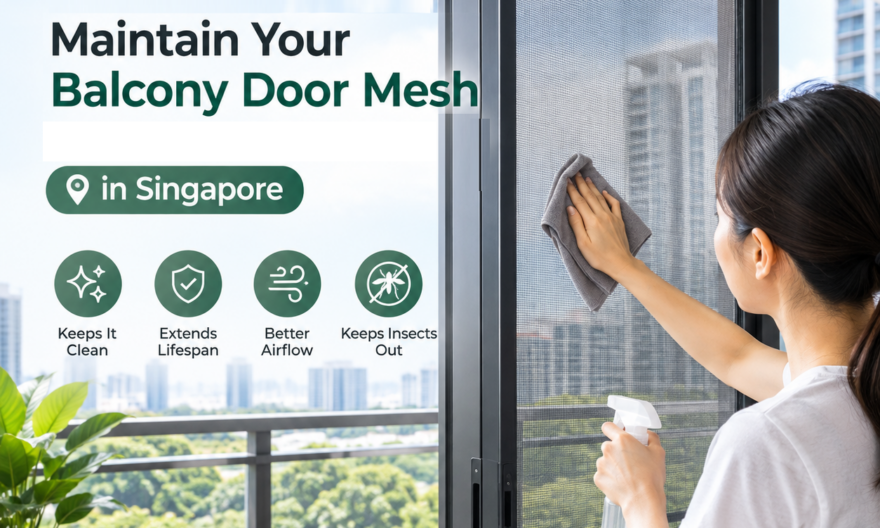
To clean a balcony door mesh, use a soft brush to remove loose dust, then wipe the screen with a damp microfibre cloth soaked in mild soapy water. Rinse with clean water and let it air dry. In Singapore’s humid climate, monthly cleaning prevents mould buildup, corrosion, and fibre degradation that can shorten the lifespan of your mesh.
If you have a balcony door mesh installed at home, you already know how much it does keeping insects out, letting the breeze in, and giving you that open-air feel without the bugs. But Singapore’s tropical weather is not exactly kind to mesh screens. Between the humidity, monsoon rain splatter, haze residue, and urban dust, your mesh can go from clean to grimy faster than you’d expect.
The good news? Keeping it in top condition doesn’t require much time or special tools. It just requires the right approach.
Why Singapore’s Climate Makes Mesh Maintenance Non-Negotiable
Singapore’s average relative humidity hovers between 70% and 90% throughout the year, according to the Meteorological Service Singapore. That level of moisture creates ideal conditions for mould, mildew, and algae growth all of which can embed themselves into mesh fibres over time.
Add to that the fine particulate dust that settles on surfaces during dry spells, and the salt-laden air in coastal or waterfront properties, and you have a combination that degrades mesh screens faster than in temperate climates. Regular maintenance isn’t optional here it’s what keeps your mesh functional and looking good year after year.
How Often Should You Clean Your Balcony Mesh?
A simple schedule works best:
- Monthly: Light wipe-down to remove surface dust and moisture buildup
- Every 3 months: Deep clean with soapy water, especially after the monsoon season
- Annually: Full inspection of the frame, tension, and mesh integrity
If your unit faces a main road, green belt, or the sea, lean toward cleaning more frequently. Urban dust and sea breeze carry more particulates and salt, both of which accelerate wear.
What You’ll Need Before You Start
You don’t need expensive products. Most of what you need is already in your home:
- Soft-bristle brush or old toothbrush
- Microfibre cloth or soft sponge
- Mild dish soap or diluted white vinegar solution
- Clean water in a bucket or spray bottle
- Dry towel or cloth for finishing
Avoid abrasive scrubbers, bleach, or strong chemical solvents. These can damage the mesh fibres, weaken the frame coating, and cause premature sagging or fraying particularly on finer invisible-style mesh screens.
Step-by-Step Guide to Cleaning Your Balcony Door Mesh
Step 1 — Remove Loose Dust First
Before introducing any liquid, use a soft-bristle brush or dry microfibre cloth to gently sweep off surface dust, dead insects, and debris. Work from top to bottom in light strokes. This prevents dust from turning into muddy smears once wet.
Step 2 — Prepare Your Cleaning Solution
Mix a few drops of mild dish soap into a bucket of warm water. Alternatively, dilute white vinegar at a 1:3 ratio with water — this works well for mould spots and is safe on most mesh materials. Do not use hot water, as it can distort finer mesh fibres.
Step 3 — Wipe Down the Mesh
Dampen your microfibre cloth or sponge in the solution and wipe the mesh in gentle, circular motions. Pay extra attention to the corners and edges where dust and moisture tend to accumulate. For stubborn grime or mould patches, use a soft toothbrush to work the solution into the fibres without pressing too hard.
Step 4 — Rinse Thoroughly
Use a clean damp cloth wrung out so it’s not dripping to remove all soap residue. If you’re cleaning outdoors, a gentle spritz from a spray bottle works well. Leaving soap residue on the mesh can actually attract more dust and cause faster resoiling.
Step 5 — Dry Completely
Pat the mesh dry with a clean towel, then allow it to air dry fully before closing the door or rolling up the screen. In Singapore’s humidity, trapped moisture between a folded mesh and its housing is a common cause of mould growth. If possible, clean your mesh on a sunny, breezy day for faster drying.
Insect Screen Cleaning Tips for Specific Mesh Types
Not all mesh screens are built the same. The cleaning approach should match the material:
| Mesh Type | Material | Key Cleaning Note
|
|---|---|---|
| Invisible / Ultra-Fine Mesh | Polyester or fibreglass | Use very light pressure; avoid scrubbing |
| Standard Fibreglass Mesh | Fibreglass | Durable; handles moderate scrubbing |
| Aluminium Frame with Mesh | Aluminium + fibreglass | Wipe frame separately; avoid vinegar on aluminium |
| Retractable / Roller Mesh | Varies | Clean in the extended position; dry before retracting |
Mesh Screen Maintenance: Keeping the Frame and Tracks in Shape
Cleaning the mesh itself is only half the job. The frame, tracks, and housing need attention too.
- Tracks: Use a dry brush or cotton bud to clear debris from sliding tracks. A small amount of silicone lubricant keeps the mechanism moving smoothly.
- Frame corners: Check for moisture accumulation or hairline cracks, especially after heavy rainfall. These are the first signs of structural wear.
- Housing unit (for retractable mesh): Wipe the exterior with a dry cloth monthly. Do not spray water directly into the housing as it can damage the internal spring mechanism.
- Tension check: If the mesh feels loose or sags in the middle, it may need re-tensioning. Contact your installer rather than attempting DIY adjustments on finer mesh systems.
Common Mistakes That Damage Balcony Mesh Faster
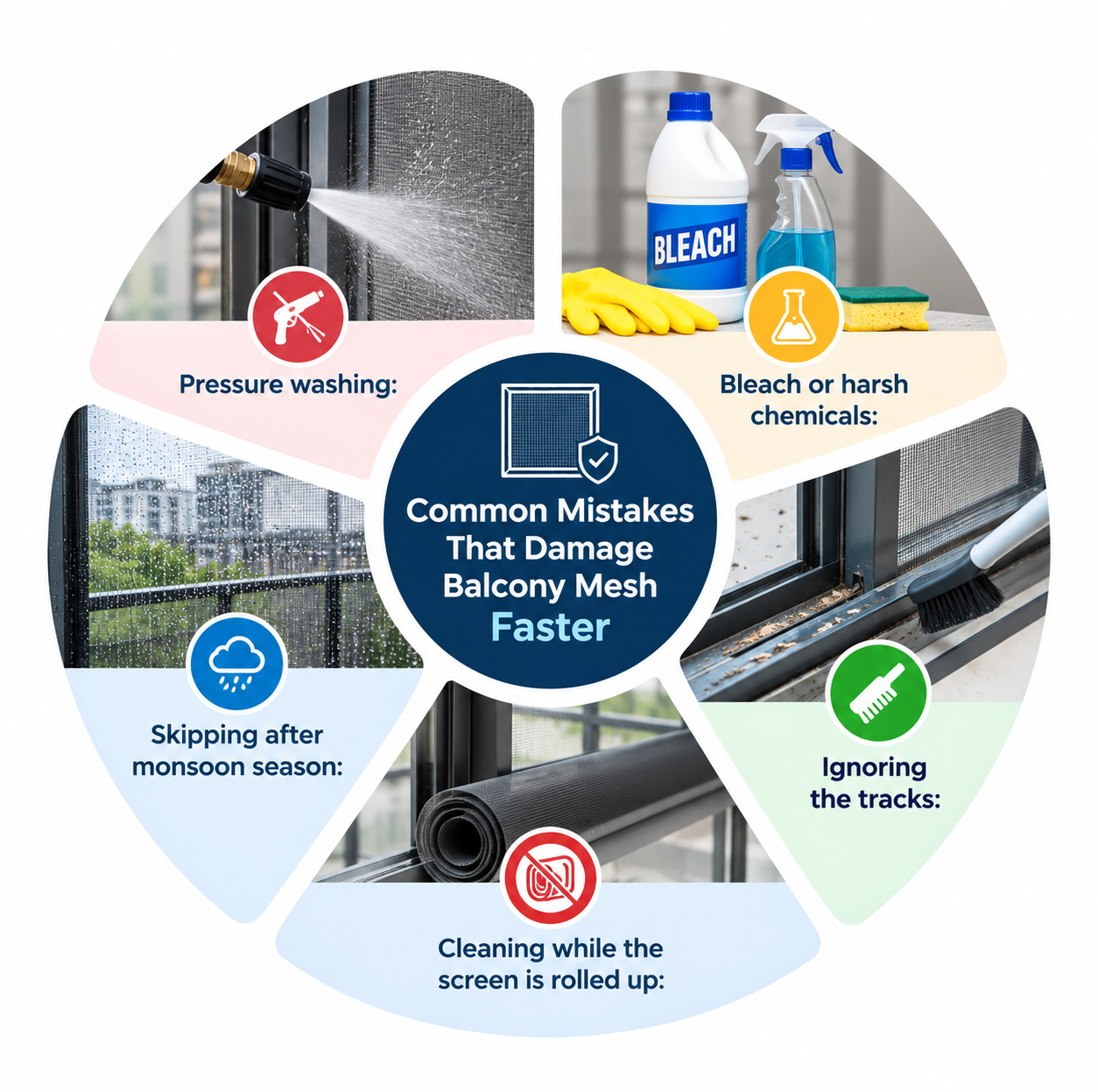
Even well-meaning cleaning habits can shorten your mesh’s lifespan. Here’s what to avoid:
- Pressure washing: The force can warp or tear fine mesh fibres, especially on invisible-style screens
- Bleach or harsh chemicals: These weaken fibres over time and can discolour the mesh
- Ignoring the tracks: Grit in the tracks creates friction that wears down both the track lining and the mesh edge
- Cleaning while the screen is rolled up: Always extend retractable mesh fully before cleaning
- Skipping after monsoon season: Post-monsoon is when mould spores are most active in Singapore a deep clean after October to December is strongly recommended
When to Replace Instead of Clean
Good maintenance extends the life of your mesh significantly, but no mesh lasts forever. Watch for these signs that a replacement is more practical than another clean:
- Visible tears, holes, or fraying edges
- Persistent sagging despite re-tensioning
- Rust staining on aluminium frames that won’t clean off
- Mesh fibres that have turned brittle or yellowed
- Retraction mechanism that sticks or refuses to fully extend
If your mesh is more than five to seven years old and showing multiple signs of wear, a replacement is often more cost-effective than repeated repairs especially given Singapore’s year-round UV exposure and humidity levels.
Keeping a consistent clean balcony mesh routine takes less than 20 minutes a month but can add years to your screen’s life. For homeowners looking for durable, low-maintenance options or needing a professional assessment of their current installation, Luxus offers invisible mesh solutions built specifically for Singapore’s climate conditions.
Frequently Asked Questions
How often should I clean my balcony door mesh in Singapore?
In Singapore’s humid climate, a light wipe-down monthly and a deep clean every three months is recommended. Post-monsoon cleaning particularly after the Northeast Monsoon season from November to January is especially important to remove mould spores and trapped moisture.
Can I use a pressure washer to clean my insect screen?
No. Pressure washing can tear or warp fine mesh fibres, especially on invisible or ultra-fine screens. Always use a soft cloth and gentle soapy water instead. The force from even a low-pressure setting is too strong for most residential mesh materials.
What causes mould on balcony mesh and how do I remove it?
Mould forms when moisture gets trapped in mesh fibres, which is common in Singapore’s humidity. To remove it, apply a diluted white vinegar solution using a soft brush and let it sit for a few minutes before wiping clean. Ensure the mesh dries fully afterward.
How do I maintain a retractable balcony mesh screen?
Always clean the mesh in its fully extended position and allow it to dry completely before retracting. Wipe down the housing exterior monthly and apply silicone lubricant to the tracks every few months. Never spray water directly into the housing unit.
How long does a balcony door mesh last in Singapore?
With regular cleaning and maintenance, a quality balcony mesh can last between five to ten years in Singapore. UV exposure, salt air, and monsoon humidity accelerate wear, so consistent care and annual inspections help you get the most out of your installation.
Is white vinegar safe for all types of mesh screens?
White vinegar is safe for fibreglass and polyester mesh but should be avoided on bare aluminium frames as it can cause surface corrosion. Always test on a small inconspicuous area first, and use a diluted solution one part vinegar to three parts water.
Read More: How to Choose the Right Digital Lock for HDB, Condo, and Landed Properties