


CNC parts machining allows engineers and product teams to create accurate, functional parts without the time or expense of traditional tooling. It’s capable manufacturing single prototype parts, or low volume production runs from 1 to 500 parts, with fast turnaround, precise tolerances and a wide range of material choices. For teams moving from concept to market, it eliminates the bottleneck between design and validation.
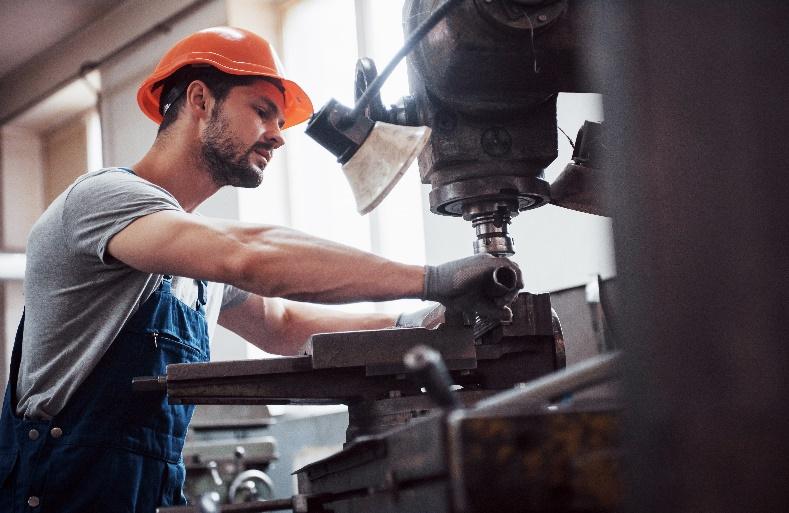
Why Product Teams Choose CNC Machining for Early-Stage Development
The last thing a team wants when a product is still evolving is a procedure locked into fixed tooling. Injection molding requires pricey dies that take weeks to make. That investment can be rendered worthless by one design change.
With CNC machining parts you avoid all of that. Changes to a CAD file are changes to the machine directly. A mold alteration carries no retooling cost, no minimum order penalty and no lead time.
For startups and R&D teams, this means:
- Faster iteration cycles between design versions
- Ability to test real materials, not just plastic stand-ins
- Production-grade parts from the very first batch
- Reduced risk before committing to mass manufacturing
What Is CNC Prototyping and How Does It Work?
CNC prototyping refers to using computer-controlled subtractive machining to create physical parts directly from digital designs. A CNC machine reads a G-code program derived from the CAD file and removes material from a solid block — metal, plastic, or composite — to produce the final geometry.
Unlike 3D printing, which builds parts layer by layer, CNC machining cuts from solid stock. This produces parts with superior surface finish, better dimensional accuracy, and material properties identical to production-grade components. For functional testing, that difference matters significantly.
Tolerances You Can Expect
CNC machining typically achieves tolerances of ±0.005 inches (±0.127 mm) as a standard baseline, with tighter tolerances achievable on precision setups. When a product designer needs to verify fit, form, and function — not just appearance — that level of accuracy is non-negotiable.
CNC Parts Machining for Low-Volume Production: Bridging the Gap
Low-volume production sits in an awkward middle ground. You need more than one prototype but not enough units to justify mass production tooling. CNC machining fills this gap cleanly.
Runs of 5 to 500 units are well within the economic range of CNC production, particularly when designs are optimised for machinability. This is often called bridge production — it keeps supply moving while final tooling is prepared or while market demand is being tested.
Where Bridge Production Matters Most
- Medical devices: Pre-production units for clinical evaluation and regulatory submissions
- Aerospace components: Small-batch structural parts for testing and certification
- Consumer electronics: Enclosures and brackets for beta units before tooling is finalised
- Industrial equipment: Replacement components for legacy machines no longer in production
Materials Available for Custom Machined Parts
One of the most practical advantages of CNC machining in prototyping is access to the exact material the final product will use. This is not always possible with additive manufacturing or other rapid methods.
| Material | Common Applications | Why It’s Used in Prototyping |
|---|---|---|
| Aluminium 6061 | Enclosures, brackets, structural parts | Lightweight, easy to machine, good strength |
| Stainless Steel 304 | Medical, food-grade, marine parts | Corrosion resistance, production-realistic testing |
| Titanium | Aerospace, implants | High strength-to-weight, biocompatible |
| Delrin (Acetal) | Gears, bushings, housings | Low friction, dimensional stability |
| PEEK | High-temp, chemical environments | Performance testing in harsh conditions |
Using the same material in a prototype that will be used in production means test data is accurate and relevant. Stress tests, thermal performance, and fit checks reflect real-world behaviour — not approximations.
Rapid Prototyping with CNC: Timeline Expectations
Speed is often the primary driver for choosing rapid prototyping via CNC. A well-prepared CAD file can go from upload to finished part in as little as 3 to 5 business days for simple geometries, or 7 to 15 days for complex multi-axis work.
Compare that to injection moulding, where tooling alone can take 4 to 12 weeks. For a startup on a product development sprint or an R&D team chasing a milestone, that time compression changes what’s possible within a quarter.
What Speeds Up Turnaround
- Clean, well-toleranced CAD files with clear machining notes
- Designing for machinability — avoiding unnecessarily deep cavities or paper-thin walls
- Selecting materials stocked by the machining provider
- Consolidating part revisions before submission to avoid rework
Design for Manufacturability: Getting Prototypes Right the First Time
A prototype that passes testing is only useful if it can also be manufactured at scale. CNC machining encourages this discipline early. When designers work within the constraints of subtractive machining — internal radii, wall thickness, draft angles — those design decisions often survive into production.
This is sometimes called design for manufacturability (DFM), and it is one of the less-discussed benefits of using CNC for prototyping. The process teaches designers how parts will actually behave in production, not just in simulation.
Common DFM Mistakes to Avoid in CNC Prototyping
- Internal corners with zero radius (cutters are round — they cannot produce sharp internal corners)
- Feature depths greater than 4x the tool diameter, which increases chatter and reduces precision
- Tolerances tighter than the application actually requires, which drives up cost unnecessarily
- Thin walls under 0.5 mm in metals, which can deflect during machining
How CNC Machining Compares to 3D Printing for Prototyping
Both methods have a role in prototyping, but they serve different purposes. The choice depends on what you need to validate.
| Factor | CNC Machining | 3D Printing (FDM/SLA) |
|---|---|---|
| Material accuracy | Production-identical | Material approximation |
| Surface finish | Smooth, post-processable | Layer lines visible |
| Dimensional tolerance | ±0.005 in standard | ±0.010–0.020 in typical |
| Best for | Functional testing, fit checks | Visual models, early concepts |
| Cost at low volumes | Higher per part, lower per batch | Lower per part for simple shapes |
When functional performance and material integrity matter — such as load-bearing parts, thermal components, or anything going into a regulatory submission — CNC machining is the stronger choice.
Scaling from Prototype to Low-Volume Production
The path from a validated prototype to a small production run is shorter with CNC than with almost any other method. The same machine, the same program, and the same material can produce 5 units or 250 without a change in setup logic.
For teams running phased product launches, limited pilot runs, or filling orders before full-scale tooling is ready, this continuity between prototype and production is highly valuable. There is no translation loss between what was tested and what gets shipped.
The broader product development community is increasingly recognising this. According to the National Institute of Standards and Technology (NIST), digital manufacturing technologies — including CNC machining — are central to reducing time-to-market for precision-engineered products, particularly for small and mid-sized manufacturers in the US.
Choosing the Right CNC Partner for Prototyping Work
Not every machine shop is set up for prototyping. Volume-focused shops often have minimum order requirements or long queues that make rapid iteration impractical. When evaluating a CNC partner for prototype and low-volume work, look for:
- Experience with short-run and one-off projects
- In-house engineering support for DFM feedback
- Multi-axis capability for complex geometries
- Quality documentation, including inspection reports and material certifications
- Fast quoting — ideally within 24 to 48 hours
Communication also matters. A shop that flags potential machining issues before cutting metal saves both time and money. That feedback loop is part of what makes a prototyping partner genuinely useful versus just a vendor.
If you are in the early stages of product development and need a reliable partner for precision work, Super Adv Tech offers CNC machining services built specifically to support prototyping and low-volume production requirements, with the technical depth to handle complex custom machined parts across a wide range of industries.
Frequently Asked Questions
What is CNC parts machining used for in prototyping?
CNC parts machining is used to manufacture precise, functioning prototypes from real production material. It lets product teams to test fit, form, and function correctly before committing to expensive tooling. Great for iterative design validation and pre-production testing.
How many parts can CNC machining produce economically for low-volume runs?
The economics of CNC machining work well for runs between 1 and say 500 parts. It is the most economical when the expenditure in tooling from injection molding cannot be justified or when designs are still changing between production runs.
Is CNC prototyping faster than injection moulding?
Yes, a lot. CNC prototyping can provide final parts between 3 to 15 business days depending on complexity. Injection molding tooling alone usually takes 4 to 12 weeks, so if speed-to-testing is a priority, CNC is the obvious alternative.
What materials can be used for custom machined parts in prototyping?
CNC machining is capable of working with a variety of materials, including aluminum alloys, stainless steel, titanium, technical polymers such as Delrin and PEEK, and composites. Using prototypes with production-grade materials enables test results to be indicative of real-world performance.
How does CNC machining support design for manufacturability (DFM)?
The primary advantage of machining within CNC limitations (e.g., tool radii, wall thickness limits, and depth-to-diameter ratios) is training designers to make decisions that carry straight to production. This lowers redesign cycles and makes sure that the prototype and the final part have the same logic of shape.
When should a startup choose CNC over 3D printing for prototyping?
CNC is the right choice if you require production-level materials, stringent dimensional tolerances or functioning parts for stress testing, regulatory submissions or client pilot programs. Use 3D printing for early-stage visual concepts where material performance is not yet validated.