


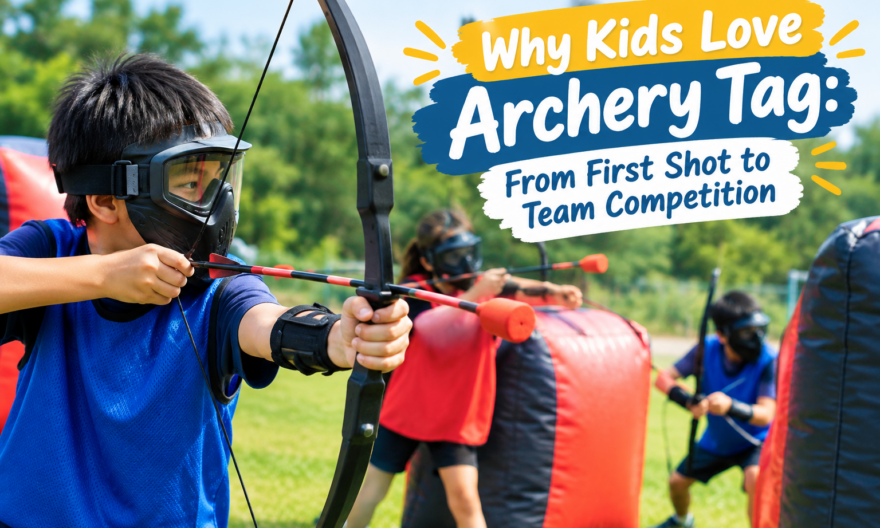
Kids take to archery tag almost instantly. The moment they pick up a bow, something clicks — a mix of focus, excitement, and the thrill of something genuinely new. Unlike passive entertainment, archery tag for kids combines physical activity, strategy, and friendly competition in a format that feels like play but builds real skills. It works for beginners and active kids alike.
If you’ve been looking for an activity that gets children off screens, moving their bodies, and working with others — this is one that consistently delivers.
What Makes Archery Tag So Appealing to Children?
The appeal isn’t complicated. Archery tag blends the focus of traditional archery with the energy of a team game. Children get to run, aim, dodge, and strategise — all at once. There’s no sitting around waiting for a turn. Every child is involved from the moment the game begins.
What separates it from other kids archery activities is the competitive layer. Instead of shooting at static targets, kids shoot at each other (safely, using foam-tipped arrows) and defend their team. That dynamic keeps energy levels high and attention fully locked in.
According to Sport Singapore’s ActiveSG programmes, structured physical play activities that involve skill-building and social interaction are consistently among the most effective ways to engage children between ages 6 and 14. Archery tag checks every one of those boxes.
The First Shot: What Happens When a Child Picks Up the Bow
Most children have never held a bow before their first session. That unfamiliarity is actually part of the magic. There’s no prior experience to compare themselves to, so every small win — hitting the target, tagging a player, landing an accurate shot — feels like a genuine achievement.
Trained facilitators walk kids through the basics: how to hold the bow, how to draw back safely, how to aim. Within minutes, most children are shooting confidently. The learning curve is gentle, but the sense of progression feels fast — and that keeps them motivated.
Skills Children Develop From the First Session
- Hand-eye coordination — Drawing and aiming a bow requires precise coordination between both hands and the eyes
- Focus and patience — Even in a fast-paced game, landing a shot requires a moment of stillness and concentration
- Spatial awareness — Moving around a play field while tracking other players builds real-time body awareness
- Resilience — Getting tagged out and coming back into the game teaches children to reset quickly
How Team Missions Unlock a Whole New Level of Fun
Once children get comfortable with the basics, the team game format is where the real excitement begins. Most archery tag sessions for kids are structured around team missions — objective-based rounds where groups work together to eliminate opponents, capture targets, or protect their zone.
This format does something that pure physical activities often miss: it gives children a reason to communicate. Kids naturally start calling out positions, coordinating shots, and cheering teammates on. Leadership and teamwork emerge organically, without anyone having to prompt it.
Common Game Formats Children Love
| Game Format | How It Works | Key Skill It Builds |
|---|---|---|
| Elimination | Tag all opposing players to win the round | Strategy and quick decision-making |
| Target Capture | Shoot down target discs while defending your own | Accuracy and focus under pressure |
| Protect the VIP | One player is the VIP; teammates guard them | Teamwork and role assignment |
| Revival Zone | Tagged players can be revived by teammates | Communication and coordination |
Is Archery Tag Safe for Kids?
This is the first question most parents ask — and it’s a fair one. Archery tag uses specially designed foam-tipped arrows and low-draw bows built for safe, recreational use. The foam tips absorb impact on contact, making the game suitable for children typically from age 6 and above, depending on the organiser’s guidelines.
Participants wear protective face masks throughout the session. Facilitators monitor the game and enforce safety rules consistently. The environment is controlled, and the equipment is purpose-built — not adapted from adult gear.
For parents watching from the sidelines, the immediate observation is usually the same: it looks far more intense than it actually is. Children come off the field buzzing, not bruised.
Why Archery Tag Works Better Than Passive Entertainment
Combat games for kids often get a hesitant look from parents. But there’s meaningful research behind why structured competitive play matters. The Health Promotion Board in Singapore highlights that children aged 7–12 need at least 60 minutes of moderate-to-vigorous physical activity daily. Activities that feel like games — rather than exercise — are far more likely to hit that target.
Archery tag sessions typically run 60 to 90 minutes of active play. Children are running, crouching, sprinting between obstacles, and constantly engaging. They don’t notice the physical output because they’re too focused on the game — which is exactly the point.
Compare that to passive screen time or spectator-only group activities. Archery tag demands presence. Every child has a role. No one fades into the background.
When to Book Archery Tag for Your Child
Archery tag is one of the most flexible fun activities for children when it comes to occasion. It works across a wide range of contexts:
- Birthday parties — Small groups of 8–20 children; competitive rounds keep energy high for the full duration
- School holiday programmes — A structured break-day activity that mixes physical play with team challenges
- Family bonding days — Parents can join in; archery tag is designed to be inclusive across age groups
- School excursions or CCA events — Ideal for building peer bonds and introducing children to a new physical discipline
- Enrichment programmes — Multi-session formats help children build archery skills progressively over time
What Parents Notice After the First Session
The feedback from parents tends to follow a consistent pattern. Children who were initially uncertain — or who typically shy away from group activities — often emerge from their first archery tag session more confident and animated than they went in.
The structured team environment removes the social pressure of free play. Everyone has a task. Everyone has a role. That clarity helps quieter children find their footing faster than most other group formats allow.
Parents also notice how children talk about the session afterwards. It’s not vague enthusiasm — kids recall specific moments. The shot they landed. The round their team won. The friend who covered for them. Those moments of specificity are what meaningful play looks like.
Ready to Book? Here’s What to Expect
A standard kids archery tag session typically includes a safety briefing, equipment fitting, skill warm-up, and multiple rounds of team game play. Sessions are facilitated throughout, meaning children are guided from start to finish — no prior experience needed.
Group sizes vary, but most sessions work well with 10 to 30 participants. Venues are usually set up with inflatable bunkers or obstacle barriers to add tactical depth to the game play.
For families in Singapore looking for a well-structured, energy-packed, and genuinely memorable experience, Team Bonding Singapore offers kids archery tag sessions designed for exactly this — from birthday parties to school holiday programmes, with trained facilitators managing every round.