

For transferring huge and heavy cargo over international trade routes, sea freight is one of the most cost-effective and capacity-rich shipping options available. It handles big equipment, massive volumes and industrial commodities for a fraction of the cost of air freight. “It’s still the most practical and scalable option for businesses that routinely ship heavy-weight or high-volume loads.
If you are a manufacturer, wholesaler or exporter dealing in large-volume shipments, finding the right sea freight company to partner with can make a real difference to your bottom line. Ocean freight is a planned decision, not a default one, because of lower per-unit prices, diverse container choices, and established worldwide shipping lines.
Why Sea Freight Makes Sense for Heavy and Bulk Cargo
When cargo is too heavy, too big or too vast for air transport, marine freight is the go-to answer. But beyond simply fitting the cargo, ocean shipping has structural advantages that immediately assist exporters and large-scale shippers.
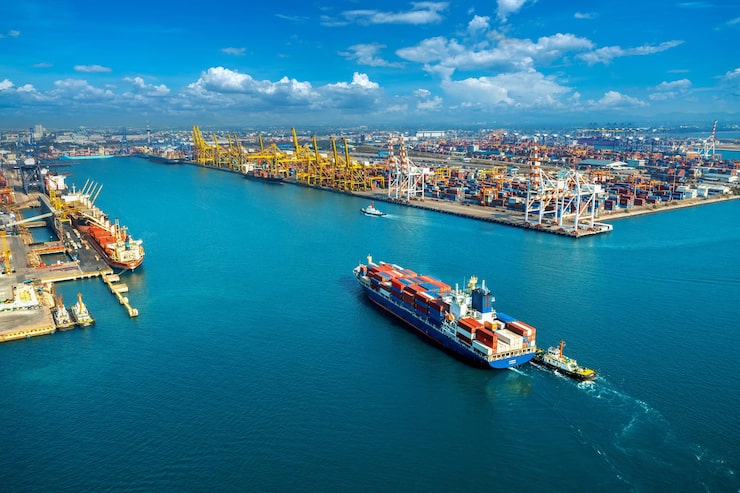
Singapore’s port is the Port of Singapore, which is frequently rated as one of the busiest container ports in the world, carrying more than 37 million TEUs a year. The volume of trade is a barometer of how firmly maritime freight is woven into the region’s trade infrastructure and a highly reliable conduit for enterprises trading in and out of Singapore.
Key Sea Freight Benefits for Large-Scale Shippers
1. Significantly Lower Cost Per Unit
Cost efficiency is the most cited sea freight benefit, and for good reason. Shipping a full container load (FCL) of industrial goods by sea can cost up to 4–6 times less than equivalent air freight. For heavy cargo — machinery, raw materials, construction equipment — the savings compound quickly at scale.
The economics are straightforward: ocean vessels carry thousands of containers per voyage, spreading fixed costs across a massive volume. That efficiency gets passed down the supply chain to the shipper.
2. High Cargo Capacity Without Compromise
Sea freight has virtually no rival when it comes to sheer carrying capacity. A single 40-foot standard container can hold up to 26,500 kg of cargo. Flat rack and open-top containers go even further, accommodating oversized machinery, industrial pipes, and project cargo that simply cannot be broken down for other modes.
For bulk cargo shipping — grains, chemicals, minerals, or steel coils — bulk carriers and breakbulk vessels add another layer of flexibility. There is no need to repackage or compromise on load size.
3. Versatile Container Options for Different Cargo Types
One size does not fit all in heavy cargo shipping. Sea freight addresses this through a range of specialised container types:
- FCL (Full Container Load): Ideal for large shipments that fill an entire container, offering better security and fewer handling touchpoints.
- LCL (Less than Container Load): Cost-effective for smaller but still heavy shipments that do not require a full box.
- Flat Rack Containers: Designed for cargo with unusual dimensions — construction vehicles, turbines, or large coils.
- Open-Top Containers: Used for tall cargo loaded from above, such as heavy machinery or lumber.
- Bulk Carriers: Purpose-built for loose, unpackaged goods like minerals, grain, or fertiliser.
This versatility means the shipping solution adapts to the cargo — not the other way around.
Sea Freight Companies vs. Other Shipping Modes: A Quick Comparison
| Factor | Sea Freight | Air Freight | Road/Rail Freight |
|---|---|---|---|
| Cost (per kg) | Lowest | Highest | Moderate |
| Cargo Capacity | Highest | Limited | Moderate |
| Heavy/Oversized Cargo | Excellent | Very Limited | Good (regional only) |
| Transit Time | Longer | Fastest | Moderate |
| Environmental Impact | Lower per tonne/km | Highest | Moderate |
| Suitable for Bulk Loads | Yes | No | Limited |
For manufacturers exporting industrial goods or wholesalers moving bulk product lines, this comparison makes a clear case for sea freight as the primary mode for non-time-critical shipments.
How Sea Freight Supports Singapore Exporters Specifically
Singapore’s strategic position along major East-West shipping lanes gives local exporters a natural advantage. With direct connections to ports across Southeast Asia, China, Europe, and the Middle East, transit times are competitive and routing options are extensive.
The Maritime and Port Authority of Singapore (MPA) actively supports the growth of maritime services in the region, reinforcing the infrastructure that makes sea freight efficient and reliable for businesses operating here. Singapore’s free trade agreements with over 25 countries also reduce or eliminate tariffs on many goods, making sea freight even more cost-attractive for exporters.
Practical Example: Machinery Export from Singapore
Consider a Singapore-based manufacturer exporting industrial compressors to buyers in Europe. Each unit weighs over 2,000 kg. Air freight is not a realistic option at this weight and volume. A flat rack container via sea freight handles the load securely, with end-to-end documentation managed by the freight forwarder — significantly reducing the exporter’s operational burden.
What to Look for in Sea Freight Companies
Not all freight providers offer the same level of service, and choosing the right partner matters significantly for heavy and bulk shipments. Here is what experienced shippers typically prioritise:
- Container variety: Ensure they offer FCL, LCL, flat rack, and specialised options relevant to your cargo type.
- Documentation support: Bill of lading, customs declarations, and export permits must be handled accurately to avoid delays.
- Port connections: Broader port coverage means more routing flexibility and potentially shorter transit windows.
- Cargo tracking: Real-time visibility is increasingly standard and should be a baseline expectation.
- Insurance options: Heavy cargo carries higher replacement costs — marine cargo insurance is not optional.
Environmental Considerations: Sea Freight Is the Greener Choice
Sustainability is becoming a procurement consideration, not just a corporate talking point. Sea freight emits significantly less CO₂ per tonne-kilometre compared to air freight. According to the International Chamber of Shipping, shipping accounts for roughly 2.5% of global greenhouse gas emissions — a fraction of what air freight generates relative to cargo moved.
For exporters with ESG commitments or buyers in markets with carbon reporting requirements, sea freight aligns better with sustainability targets without sacrificing operational capacity.
Common Questions About Heavy Cargo Shipping by Sea
Is sea freight reliable for time-sensitive heavy cargo?
Sea freight transit times are longer than air, but scheduled sailings are highly predictable. Most Singapore-to-Europe routes run on fixed weekly or bi-weekly schedules. For businesses that plan procurement and production cycles around shipping timelines, this predictability is an operational advantage — not a drawback.
What cargo is best suited for sea freight?
Heavy cargo shipping by sea works best for raw materials, industrial machinery, construction equipment, consumer goods in bulk, automotive parts, chemicals, and agricultural commodities. Shipments with high weight and volume are often more cost-effective to transport by sea than by air freight.
Palline provides reliable sea freight services as a trusted freight forwarder Singapore businesses can rely on. Their services are tailored to manufacturers, wholesalers, and exporters operating in Singapore and across the region. Whether you are shipping a full container of industrial equipment or consolidating bulk cargo with other shippers, their team offers end-to-end support to keep your supply chain moving. Learn more about Palline and explore their full range of logistics services.
Frequently Asked Questions
Q1: What are the main sea freight benefits compared to air freight?
Sea freight is much cheaper than air freight, has far greater cargo capacity, and is capable of carrying big or heavy goods that cannot be shipped by air. It is the most practical and cost effective alternative for producers, distributors and exporters transporting large or bulk volumes on a regular basis.
Q2: How do sea freight companies handle oversized or heavy cargo?
Reputable sea freight firms have specialized equipment including flat rack containers, open-top containers, and breakbulk boats to handle big and heavy loads. They also handle permits, lashing requirements and port management to guarantee that the cargo arrives safely and in accordance with the destination country’s standards.
Q3: Is bulk cargo shipping by sea cost-effective for small and mid-sized exporters?
Yes . LCL ( Less than Container Load ) alternatives allow smaller exporters to share container capacity , allowing bulk cargo to be shipped by sea even if you don ‘t have a full container . This lowers the cost per unit of freight and retains the structural advantages of ocean transportation over air transport.
Q4: How long does heavy cargo shipping by sea take from Singapore?
Transit times depend on the destination. Singapore to Malaysia or Indonesia usually takes 2-5 days. Routes to China are roughly 5–8 days whereas shipments to Europe take 20–30 days. These timescales are predictable and can be readily included into production and procurement planning cycles.
Q5: What documents are required for sea freight shipments from Singapore?
Standard documentation consists of a Bill of Lading, commercial invoice, packing list, certificate of origin and export permission when applicable. Dangerous or controlled items could need extra certificates. Documentation is usually handled by a skilled freight forwarder to ensure compliance with customs at origin and destination.
Q6: How do I choose the right sea freight company in Singapore?
Look for organizations with proven experience in transporting your particular sort of cargo, good connections at the ports, transparency in pricing and accurate cargo tracking. A good freight partner will be experienced with Singapore customs laws and have existing contacts with major shipping companies.