


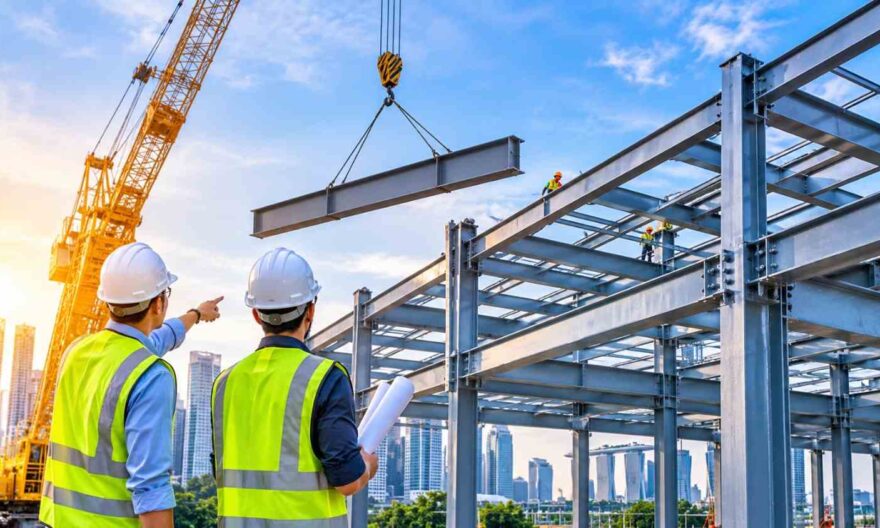
Structural steel work project timelines in Singapore typically range from 6 to 20 weeks, depending on project scale, design complexity, procurement lead times, and site conditions. Fabrication alone can take 4 to 10 weeks, while erection adds 2 to 8 weeks. Permit approvals, weather delays, and subcontractor coordination are the most common causes of schedule overruns.
For project managers, understanding what drives timeline variance in steel work in Singapore is not optional — it is essential for scheduling dependent trades like concrete, cladding, and MEP systems accurately. A delay in steelwork erection can push an entire construction programme by weeks.
This FAQ breaks down the real factors that affect completion speed, so you can build a schedule that holds.
How Long Does a Structural Steel Work Project Take in Singapore?
There is no single answer, but most commercial and industrial steel projects in Singapore fall within these broad phases:
| Phase | Typical Duration
|
|---|---|
| Design and detailing | 2 – 4 weeks |
| BCA/PE submission and approval | 3 – 6 weeks |
| Steel fabrication | 4 – 10 weeks |
| Delivery to site | 1 – 2 weeks |
| Erection and installation | 2 – 8 weeks |
| Inspection and sign-off | 1 – 2 weeks |
These phases often overlap. A well-coordinated steel contractor in Singapore will begin fabrication drawings while regulatory submissions are in progress, compressing the overall schedule without cutting corners.
Frequently Asked Questions
What is the single biggest cause of steelwork delays on Singapore construction sites?
Procurement lead times are the most frequent culprit. Structural steel sections, particularly heavier universal columns and beams, are not always held in local stock. If your design specifies sections that need to be ordered from regional mills — such as those in Japan, South Korea, or China — lead times of 6 to 10 weeks are realistic. This is a fixed constraint, not a contractor efficiency issue.
The practical fix: finalise your structural design and get your steel contractor involved early, ideally during the design development stage. Locking in section sizes and quantities 10 to 12 weeks before you need steel on site is not over-planning — it is standard practice on well-run projects.
How do regulatory approvals in Singapore affect the steel work timeline?
Under the Building Control Act, structural steel works require a Qualified Person (QP) submission to the Building and Construction Authority (BCA) before construction can begin. Approval turnaround times vary based on submission completeness and project category, but project managers should plan for 3 to 6 weeks as a conservative buffer.
Incomplete submissions — missing load calculations, inadequate connection details, or absent Professional Engineer (PE) endorsement — are the most common reason approvals are delayed. Using a steel contractor with strong in-house detailing capability can significantly reduce back-and-forth with BCA.
Does project complexity actually change the fabrication timeline?
Yes, significantly. A straightforward portal frame warehouse structure uses repetitive member profiles and simple bolted connections — a fabricator with adequate capacity can complete this in 3 to 4 weeks. A complex multi-storey steel frame with moment connections, stiffener plates, and varied section sizes can take 8 to 10 weeks or more in the fabrication shop alone.
Three complexity factors that extend fabrication time:
- High weld volume — moment connections and full-penetration welds require certified welders and non-destructive testing (NDT)
- Tight tolerances — column base plates and embedded anchor bolts require precise fabrication to avoid site fit-up issues
- Surface treatment requirements — intumescent fire protection coatings and hot-dip galvanising add 1 to 2 weeks post-fabrication
How does site access and sequencing affect erection speed?
Even perfectly fabricated steelwork will sit in a yard if the site is not ready to receive it. Common erection bottlenecks include:
- Concrete foundations or ground beams not achieving design strength before the erection start date
- Crane access constraints in tight urban sites — a common challenge across Singapore’s central and industrial zones
- Clashes with other ongoing trades requiring stop-start erection sequences
Project managers should build a minimum 2-week float between the foundation handover date and the planned erection start. Concrete cure periods are non-negotiable, and trying to compress them creates structural risk, not schedule savings.
Can weather affect structural steelwork timelines in Singapore?
Unlike temperate climates, Singapore’s weather risk is not seasonal — it is year-round. The Northeast Monsoon (November to January) and Southwest Monsoon (June to September) both bring periods of heavy rainfall that can halt crane operations and affect surface coating application. High wind speeds above 72 km/h trigger automatic crane shutdowns under WSH guidelines.
As a rule, build a 10 to 15 per cent weather contingency into your erection programme. This is especially relevant for elevated or exposed structures where crane reach is at maximum capacity.
What can a project manager do to actively protect the steel work schedule?
These four actions have the greatest impact on keeping steelwork on programme:
- Early contractor engagement — appoint your steel contractor before final structural design is complete, not after
- Design freeze discipline — late design changes after fabrication drawings are issued are the fastest way to lose 2 to 4 weeks
- Parallel processing — push for concurrent BCA submission and fabrication drawing production wherever the QP allows it
- Weekly look-ahead scheduling — a 3-week rolling programme reviewed jointly with your steel contractor catches emerging delays before they compound
The projects that consistently hit their steelwork milestones share one common trait: the project manager treats the steel contractor as a planning partner, not just a supplier delivering to a fixed date.
For project managers working on industrial, commercial, or specialised construction in Singapore, working with an experienced team makes a measurable difference in schedule reliability. Lea Keong brings decades of structural steel expertise to complex projects across Singapore, with detailing, fabrication, and erection capabilities managed under one roof — reducing the coordination gaps that most commonly erode programme dates.
FAQ Schema
How long does structural steel work take in Singapore?
Most structural steel projects in Singapore take between 6 and 20 weeks end-to-end, covering design, BCA approval, fabrication, delivery, and erection. Smaller single-storey structures can be completed faster, while complex multi-storey frames with moment connections and fire protection coatings will sit at the higher end of that range.
What causes delays in steel fabrication projects?
The most common causes are long procurement lead times for non-stock steel sections, late design changes after fabrication drawings are issued, incomplete BCA submissions, and site readiness issues such as foundations not achieving required strength before the erection start date.
Do I need BCA approval before structural steelwork begins in Singapore?
Yes. Under Singapore’s Building Control Act, structural steel works require a Qualified Person submission to the BCA with Professional Engineer endorsement before construction proceeds. Project managers should allow 3 to 6 weeks for approval and ensure submissions are complete at first lodgement to avoid revision cycles.
How early should I appoint a steel contractor in Singapore?
Appoint your steel contractor during design development, ideally 10 to 12 weeks before you need steel delivered to site. Early appointment allows procurement of long-lead materials, parallel processing of detailing and approvals, and better integration of steelwork milestones into the master construction programme.
Does weather affect steelwork erection in Singapore?
Yes. Heavy rainfall and wind speeds above 72 km/h halt crane operations year-round in Singapore. Project managers should build a 10 to 15 per cent weather contingency into the erection programme, particularly for exposed or elevated structures where crane operations are at maximum capacity.