


Planning a Buddhist funeral involves coordinating religious rites, ceremonial timelines, and logistical arrangements that honour the deceased’s spiritual journey. Families typically work with a monk or religious officiant, prepare offerings, and observe mourning customs rooted in Theravada or Mahayana traditions. The process usually spans three to seven days and includes chanting sessions, prayer rituals, and cremation or burial rites.
Losing a loved one is never easy. When the family follows Buddhist beliefs, there is an added layer of responsibility — ensuring that the final rites are carried out properly, with reverence and spiritual intention. Understanding what Buddhist funeral services in Singapore typically involve can help families focus on grieving rather than scrambling through logistics.
Why Proper Planning Matters in a Buddhist Funeral
In Buddhism, death is not an end but a transition. The rites performed during this period are believed to influence the rebirth of the deceased. This places meaningful weight on how the ceremony is conducted — from the first moments after passing to the final prayers at cremation.
Getting the rituals right matters deeply to most Buddhist families in Singapore. Whether the family follows Chinese Mahayana, Theravada, or Tibetan Buddhist traditions, the core belief remains: the consciousness of the deceased needs guidance and merit to transition peacefully.
Key Stages of a Buddhist Funeral Ceremony
Immediately After Death
The hours following a death are spiritually significant. Many Buddhist teachings advise against disturbing the body for a period after passing, as the consciousness is believed to still be present. Families are often encouraged to remain calm, avoid loud crying near the body, and begin chanting or reciting sutras to help guide the departing soul.
A monk or religious officiant is typically contacted during this stage. In Singapore, funeral directors experienced in Buddhist rites can coordinate this swiftly, ensuring no time-sensitive rituals are missed.
Setting Up the Funeral Wake
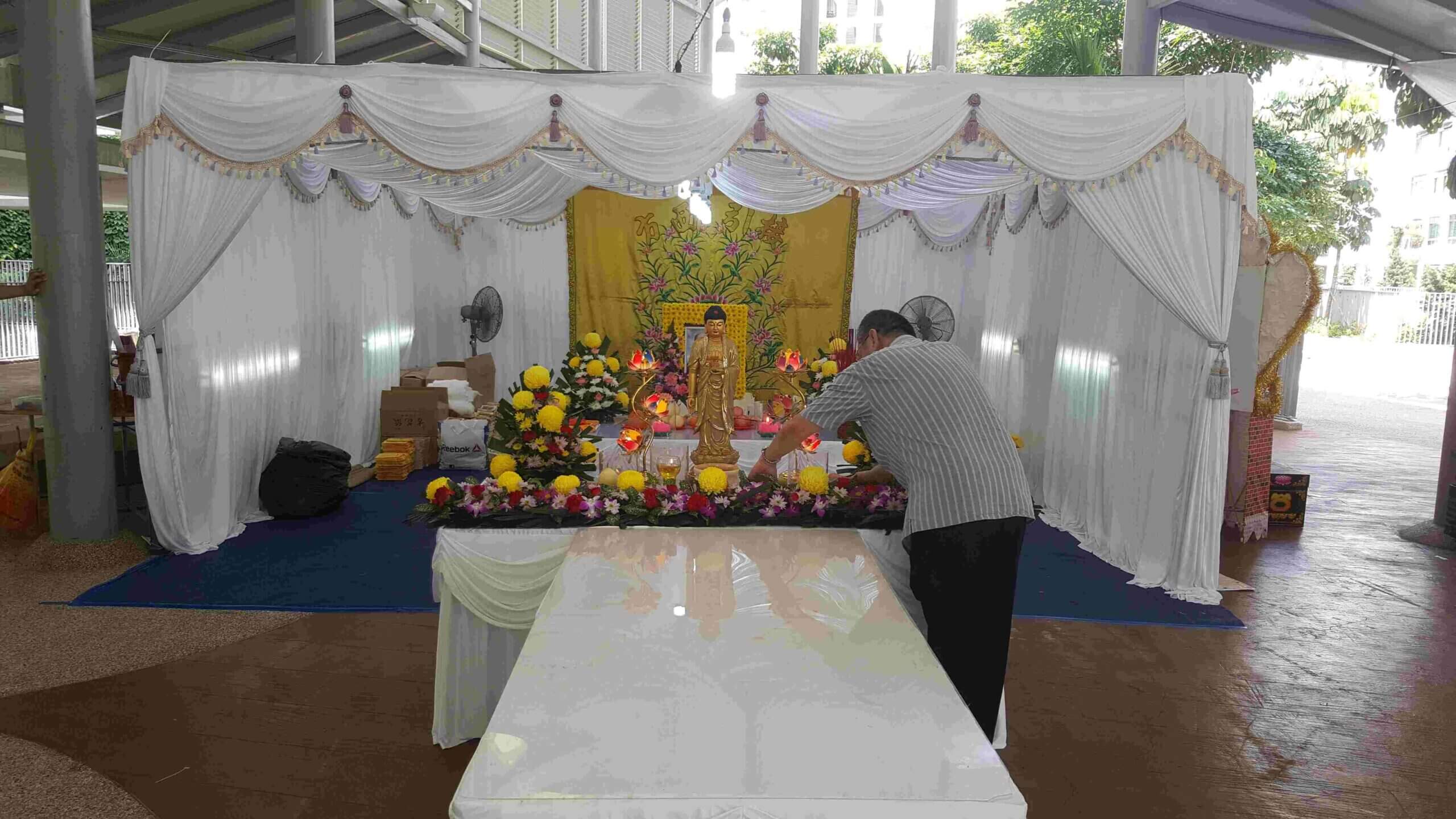
The wake is usually held over three to seven days, depending on the family’s preferences and the religious teacher’s guidance. During this period, the body lies in state, and visitors come to pay their respects. Key elements of the wake setup include:
- An altar with a portrait of the deceased, fresh flowers, and incense
- Vegetarian food offerings placed before the altar
- Oil lamps or candles kept burning throughout
- A white or yellow banner indicating a Buddhist household in mourning
- Chanting sessions held at scheduled intervals, often morning and evening
The colour white is predominantly used in Buddhist funerals in Singapore. Mourners are expected to dress simply, in white or muted tones, as a sign of respect.
Chanting and Merit-Making Rituals
Monks are invited to conduct chanting sessions during the wake. These recitations, often from texts like the Amitabha Sutra or the Tibetan Book of the Dead, are intended to generate merit for the deceased and ease their transition. Families participate by listening respectfully, burning incense, and sometimes joining in if they know the sutras.
Merit-making also includes making donations in the name of the deceased — to temples, charitable organisations, or the poor. This act is considered spiritually beneficial for the departed soul’s next journey.
Understanding the Buddhist Funeral Package in Singapore
A well-structured buddhist funeral package in Singapore typically covers all the essential components families need, so they are not left managing scattered arrangements during a difficult time. Standard inclusions often consist of:
| Component | What It Covers |
|---|---|
| Casket and Preparation | Embalming, dressing, and placement in casket |
| Altar Setup | Religious items, floral arrangements, incense, candles |
| Monk or Nun Services | Chanting sessions during the wake and funeral procession |
| Hearse and Transport | Transfer from home or hospital to wake venue and crematorium |
| Cremation Arrangements | Booking at a crematorium and urn selection |
| Administrative Support | Death certificate processing, government filings |
Families in Singapore can hold wakes at void decks, funeral parlours, or at home, depending on the available space and family preferences. Each venue option comes with different setup logistics, which a Buddhist funeral package typically accounts for.
Traditional Practices Families Should Prepare For
Dress Code and Mourning Conduct
Immediate family members generally wear white mourning attire. Some families also tie a white cloth around the head. Bright colours, jewellery, and casual wear are considered disrespectful. Visitors should follow the family’s cues if unsure about the dress code.
Food Offerings and Dietary Observance
Many Buddhist families observe a vegetarian diet during the mourning period, lasting anywhere from three days to forty-nine days after the passing. Food offerings placed at the altar are strictly vegetarian. Families hosting visitors during the wake often provide vegetarian refreshments as well.
The Forty-Nine Day Period
In Chinese Mahayana Buddhism, it is widely believed that the consciousness of the deceased goes through a transitional state for forty-nine days. During this time, prayers and offerings are made every seven days. Many Singapore Buddhist families observe memorial prayers on the 7th, 14th, 21st, and 49th days after passing.
These sessions do not necessarily require an elaborate ceremony each time — a simple home altar setup with incense, offerings, and a brief chanting prayer is considered sufficient by many families.
Cremation vs. Burial: What Does Buddhism Recommend?
Buddhism does not strictly mandate cremation, but it is the most widely practised method in Singapore. Cremation aligns with the Buddhist understanding of the body as impermanent, and it was the method used at the passing of the historical Buddha, Siddhartha Gautama.
In Singapore, land scarcity also makes cremation the more practical choice. Cremation services are available at facilities managed by the National Environment Agency (NEA), and ashes are typically interred at columbaria attached to temples or funeral parlours.
Practical Checklist for Families Arranging a Buddhist Funeral in Singapore
- Notify the funeral director and monk or religious officiant immediately after passing
- Confirm the duration of the wake (three, five, or seven days)
- Select a buddhist funeral package singapore that covers all ceremonial and logistical needs
- Arrange the wake venue — void deck, home, or funeral parlour
- Confirm the number of chanting sessions and schedule with the monastery
- Prepare mourning attire for immediate family members
- Inform extended family and close friends of the wake schedule
- Plan for post-funeral memorial prayers on the 7th and 49th day
- Handle administrative matters: death registration with the Immigration and Checkpoints Authority (ICA) of Singapore
Choosing the Right Buddhist Funeral Service Provider
Not every funeral service provider in Singapore specialises in Buddhist rites. When selecting a provider, families should look for experience with the specific Buddhist tradition the family follows — Mahayana, Theravada, or Tibetan Buddhism each has distinct ceremonial requirements.
A reputable provider will help families navigate every detail, from coordinating with monks to handling paperwork and cremation booking. They should also offer transparent pricing so families are not caught off guard with unexpected costs during an already difficult time.
Singapore Buddhist Funerals offers dedicated Buddhist funeral services in Singapore with packages tailored to different traditions and family needs. Their team handles both the religious and logistical sides of the arrangement, allowing families to grieve with peace of mind. For more information on their full range of services, visit the Singapore Buddhist Funerals homepage.
Frequently Asked Questions
What is typically included in a Buddhist funeral package in Singapore?
A Buddhist funeral package in Singapore typically includes casket preparation, altar setup with religious items, monk chanting sessions, hearse transport, cremation arrangements, and administrative support such as death certificate processing. Packages vary by provider, so it is advisable to request a detailed breakdown before confirming.
How long does a Buddhist funeral last in Singapore?
A Buddhist funeral in Singapore typically lasts between three and seven days, depending on the family’s tradition and the guidance of the religious officiant. The wake period includes daily chanting sessions, and the final day involves a funeral procession followed by cremation.
What should guests wear to a Buddhist funeral in Singapore?
Guests attending a Buddhist funeral in Singapore should wear white or muted, dark-coloured clothing. Avoid bright colours, bold patterns, and flashy jewellery. The dress code reflects respect for the deceased and the family’s mourning period, so when in doubt, plain and modest attire is always appropriate.
Is cremation mandatory in a Buddhist funeral?
Cremation is not strictly required in Buddhism, but it is the most common practice in Singapore due to both religious tradition and practical land constraints. Most Buddhist families choose cremation, with ashes later interred at a temple columbarium or a facility managed by the National Environment Agency.
What are the 49-day prayers in a Buddhist funeral?
The 49-day prayers are a series of memorial rites observed in Chinese Mahayana Buddhism, based on the belief that the deceased’s consciousness transitions over forty-nine days. Prayers are held every seven days, with the 7th and 49th day being the most significant, to generate merit for the departed soul.
How do I register a death in Singapore for funeral arrangements?
In Singapore, deaths must be registered with the Immigration and Checkpoints Authority (ICA) within 24 hours of passing. Most experienced Buddhist funeral service providers assist families with this process as part of their administrative support, ensuring all legal documentation is completed promptly and accurately alongside the funeral arrangements.