

You vacuum every week, sometimes twice, and the carpet still gives off a faint musty smell the moment you walk barefoot across it or switch on the air-conditioner. This is one of the most common frustrations for carpet owners in Singapore, and it isn’t a sign that you’re cleaning incorrectly it’s a sign that vacuuming was never designed to solve this particular problem in the first place.
Why Vacuuming Alone Doesn’t Remove Carpet Odour
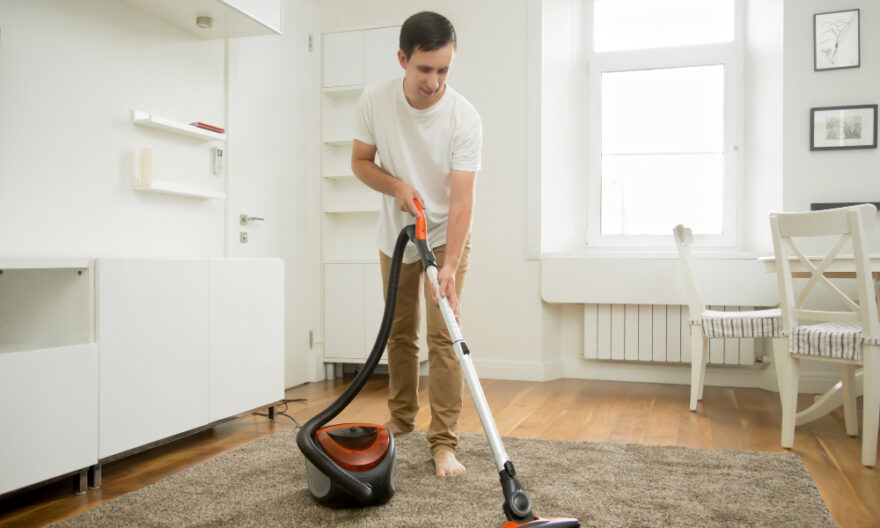
A vacuum cleaner, even a good one, only reaches the top layer of carpet fibres. It’s excellent at lifting loose dust, crumbs, and hair, but the source of a musty smell usually sits much deeper — down in the fibre base and the underlay, where moisture, trapped bacteria, and old residue accumulate over months. No amount of surface vacuuming can pull that out, which is why the smell keeps returning within days of every clean.
What’s Actually Causing That Musty Smell
Before the smell can be dealt with properly, it helps to understand where it’s actually coming from, since different causes need different solutions.
| Cause | Why It Happens in Singapore | What It Feels/Smells Like |
| Trapped moisture | High year-round humidity keeps carpet fibres slightly damp | A stale, musty smell that lingers even after airing the room |
| Mould and mildew | Grows in the underlay when moisture isn’t fully dried out | A sharp, damp-basement type odour, sometimes with faint discolouration |
| Dust mites | Thrive in warm, humid conditions deep within carpet fibres | No strong smell, but linked to sneezing and itchy eyes at home |
| Old spills and residue | Sugary or oily residue left behind after a surface-only clean | A sour smell that gets stronger with humidity or when walked on |
How Singapore’s Climate Makes Carpets Harder to Keep Clean
Singapore’s year-round humidity is one of the biggest reasons carpets here behave differently from carpets in drier climates. Even in an air-conditioned home, moisture in the air settles into carpet fibres faster than it evaporates out, especially in rooms with less airflow or carpets laid close to the floor. Add in occasional spills, pet paws, or condensation from an air-con unit, and the fibres rarely get a real chance to fully dry out between cleans which is exactly the environment mould, mildew, and dust mites need to thrive.
Signs Your Carpet Needs More Than a Regular Vacuum
- A musty or damp smell that returns within a day or two of vacuuming
- Patches that feel slightly damp or cooler to the touch than the rest of the carpet
- Visible discolouration or faint dark patches, especially near walls or under furniture
- Increased sneezing, itchy eyes, or blocked noses when spending time in the room
- A flattened, matted texture in high-traffic areas that doesn’t bounce back after vacuuming
A Step-by-Step Approach to Deep Cleaning a Carpet at Home
Step 1: Vacuum Thoroughly First
Go over the entire carpet slowly, including edges and under furniture, since a slower pass lifts far more dust than a quick once-over. This step matters even before deep cleaning, as loose debris left behind can turn into mud once liquid is introduced.
Step 2: Spot-Treat Stains and Odour Patches
Identify any visibly stained or smelly patches and treat them individually with an appropriate carpet-safe solution before working on the carpet as a whole, since general cleaning products often aren’t strong enough for localised residue.
Step 3: Deodorise Before Wet Cleaning
Sprinkling a carpet-safe deodorising powder and letting it sit before vacuuming again can lift some surface-level odour, though these only masks or removes smell sitting near the top of the fibres.
Step 4: Deep Extraction Clean
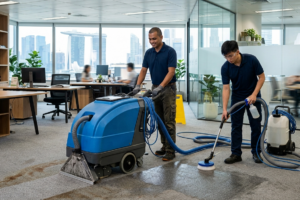
This is the step that actually reaches down into the fibre base, using either a rented hot-water extraction machine or a wet shampoo method, followed by thorough rinsing to avoid leaving soapy residue behind, since leftover residue attracts dirt faster afterward.
Step 5: Dry Completely
This is the step most home cleans get wrong. In Singapore’s humidity, carpets need active airflow fans, open windows, or air-conditioning to dry fully within a reasonable window. A carpet left even slightly damp for too long is exactly how mould and that musty smell come right back.
DIY Carpet Cleaning vs Professional Deep Cleaning
Whether a DIY clean is enough or whether it’s time to bring in equipment built for the job usually comes down to how deep-set the odour is and how much moisture risk you’re comfortable managing yourself.
| Factor | DIY Carpet Cleaning | Professional Deep Cleaning |
| Equipment used | Rented or home shampooer, household vacuum | Commercial hot-water extraction machines |
| Drying time | Often 24–48 hours, sometimes longer if over-wet | Typically, faster, with proper extraction reducing leftover moisture |
| Removes deep-set odour | Partially — surface smell improves, root cause may remain | Targets the underlay and fibres where odour actually originates |
| Risk of mould if not dried properly | Higher, especially in humid weather | Lower, with equipment designed to extract most of the moisture |
| Best suited for | Small rugs, light refresh between deeper cleans | Full carpets, persistent odour, allergy-prone households |
Tools and Products You’ll Need for DIY Cleaning
- A vacuum with strong suction and a good filter
- Carpet-safe stain remover for localised spots
- A carpet deodorising powder or baking soda for surface odour
- A rented or owned carpet shampooer or extraction machine
- Fans or a dehumidifier to speed up drying time
Common Mistakes That Make Carpet Smell Worse
- Over-wetting the carpet: using too much water or solution makes it harder to dry fully, which increases the risk of mould underneath.
- Skipping the drying step: walking on or replacing furniture on a still-damp carpet traps moisture right back in.
- Using the wrong products: some household cleaners leave a sticky residue that attracts dirt faster than before.
- Ignoring the underlay: surface cleaning does nothing for moisture or mould that’s settled into the padding beneath the carpet.
- Cleaning only when it smells bad: waiting until odour is noticeable usually means the problem has already had time to set in deep.
How Often Should Carpets Be Deep Cleaned in Singapore’s Climate?
Given the humidity, most homes benefit from a proper deep clean every three to six months, rather than the once-a-year schedule that might work in drier countries. Households with young children, pets, or anyone with dust allergies usually see a noticeable difference when cleaning is done closer to the three-month mark, since dust mites and trapped moisture build up faster in daily high-use areas.
How to Tell the Difference Between Odour and an Actual Mould Problem
Not every musty smell means mould has taken hold, but it’s worth knowing the difference before deciding how urgently to act. A general damp smell that fades somewhat after airing the room out is often just trapped moisture and residue — something a thorough deep clean and proper drying can usually fix. A sharper, more persistent odour paired with visible dark spots, a slightly fuzzy texture, or a smell that gets noticeably worse in humid weather is more likely an active mould issue, particularly if it’s concentrated in one corner or near a wall that tends to feel damp.
If you’re seeing any of those stronger signs, it’s worth treating it as more urgent than a routine clean. Mould that’s taken hold in the underlay tends to spread rather than resolve on its own, and simply cleaning the visible carpet surface won’t address what’s happening underneath it.
Carpet Placement and Ventilation Matter More Than People Expect
Two identical carpets in the same home can age very differently depending on where they’re placed. A carpet in a room with limited airflow, next to a window that’s rarely opened, or in a corner where air-con condensation tends to collect will almost always develop odour issues faster than one in a well-ventilated, frequently used room.
- Rooms with little natural airflow benefit from occasionally running a fan even when no one’s using the space, just to keep air moving across the carpet surface.
- Carpets placed directly under or near air-con units are more prone to trapping condensation, so periodic checks underneath is worth the effort.
- Furniture left in the exact same spot for months can trap moisture and prevent that patch of carpet from ever fully drying between cleans, which is why occasionally shifting heavier pieces helps.
When It’s Worth Calling in Professional Help
If the musty smell keeps returning after a DIY shampoo, or if you’re dealing with a large carpeted area where full drying is hard to manage on your own, it’s usually a sign the problem has settled deeper than a home clean can reach. A carpet cleaning service Singapore homeowners rely on for recurring odour issues will typically use hot-water extraction equipment that pulls out far more moisture than a rented shampooer, which reduces the mould risk that comes with Singapore’s humidity and gets the smell out at the source rather than just covering it up.
Conclusion
A musty carpet smell that keeps coming back isn’t a cleaning failure on your part — it’s usually a sign that the moisture, mould, or residue causing it sits deeper than a vacuum or a quick surface wipe can reach, especially in Singapore’s humid climate. Understanding what’s actually causing the smell, following a proper deep-cleaning process, and making sure the carpet dries completely afterward is what actually breaks the cycle, rather than repeating the same surface clean and expecting a different result.
If your carpet keeps smelling musty no matter how often you vacuum, CSS Integrated’s professional carpet cleaning team can deep clean and fully dry it out for you, without the guesswork of a rented machine.
Frequently Asked Questions
1. Why does my carpet smell musty even right after vacuuming?
Vacuuming only removes surface dust and debris. The musty smell usually comes from trapped moisture, mould, or bacteria deep in the fibres and underlay, which a vacuum simply can’t reach.
2. Can I get rid of carpet odour without replacing the whole carpet?
In most cases, yes. A proper deep extraction clean followed by thorough drying is usually enough to remove the odour at its source, without needing to replace the carpet entirely.
3. Is a DIY carpet shampoo enough to fix a persistent smell?
It can help with surface-level odour, but if the smell keeps returning within a day or two, the moisture or mould causing it has likely settled deeper than a rented shampooer can reach.
4. How long should a carpet take to dry after cleaning?
With good airflow, most carpets should be dry within several hours to a day. Taking noticeably longer than that, especially in humid weather, increases the risk of mould developing underneath.
5. Does professional carpet cleaning also help with dust allergies?
Yes. Deep extraction cleaning removes dust mites and allergens trapped in the fibre base, which regular vacuuming alone typically isn’t able to reach.