

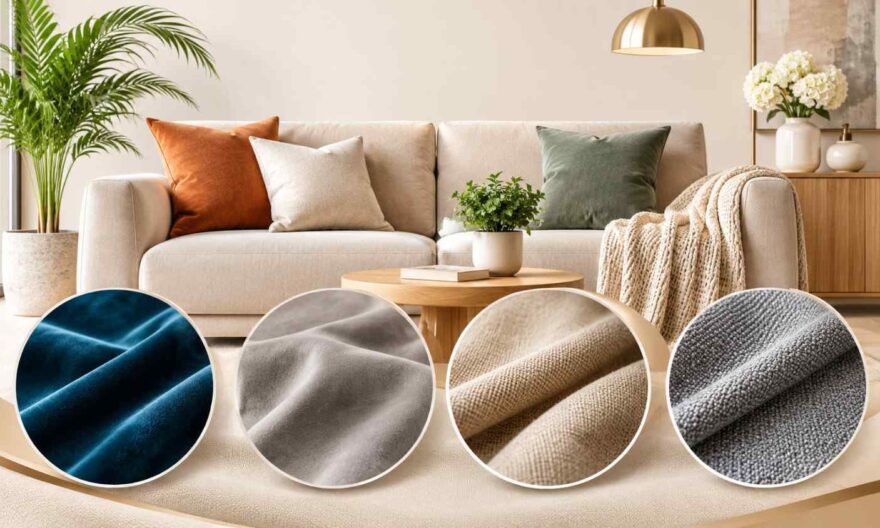
Choosing the right fabric for a custom made sofa comes down to four key factors: durability, texture, maintenance, and how the material performs in your specific living environment. Velvet offers luxury and visual depth, microfibre delivers practicality and easy cleaning, linen brings a natural breathable finish, and Belgium fabric provides structured elegance with long-term resilience. Each serves a different lifestyle need.
If you are currently working through the customisation process for a custom made sofa in Singapore, fabric selection is one of the most consequential decisions you will make. It affects not just how the sofa looks on day one, but how it holds up through years of daily use in Singapore’s humid, air-conditioned interiors.
Why Fabric Choice Matters More Than You Think
Singapore’s climate creates a unique challenge for upholstery. Indoor humidity levels can sit between 70% and 80% even with air conditioning running. Fabrics that trap heat or absorb moisture quickly become uncomfortable and prone to odour or mildew over time. This is why understanding each material’s properties — not just its appearance — is essential before you commit.
Beyond climate, consider your household. Pets, young children, and high foot traffic all affect which fabric will realistically last. A fabric that looks stunning in a showroom may not hold up to a household with a Labrador and two kids under five.
Velvet: The Premium Choice for Aesthetic Impact
Velvet is a woven fabric with a short, dense pile that catches light and creates a rich, lustrous appearance. It is the go-to choice for statement sofas in formal living rooms or spaces designed around visual impact.
What velvet does well
- Exceptional visual depth — colours appear more saturated and luxurious
- Soft to the touch, making it a comfortable fabric for long seating sessions
- Available in a wide range of colours, including jewel tones that hold vibrancy well
- Modern performance velvet variants resist crushing and are easier to clean than traditional versions
Limitations to consider
- Can show imprints from sitting or brushing against the pile
- Not ideal for homes with cats, as claws snag the pile easily
- Requires more careful spot-cleaning — harsh chemicals damage the finish
- Can feel warm in rooms without strong air conditioning
Velvet works best in adult-dominated spaces where the sofa is used moderately and the priority is visual presence over rugged practicality.
Microfibre: The Practical Everyday Performer
Microfibre is a synthetic fabric made from ultra-fine polyester or nylon fibres. It was engineered specifically for durability and stain resistance, which makes it a popular choice for family homes in Singapore.
What microfibre does well
- Highly resistant to stains — liquids bead on the surface rather than soaking in
- Easy to wipe down with a damp cloth, requiring minimal maintenance
- Resists pet hair accumulation better than woven fabrics
- Durable under high-frequency use without significant pilling or wear
- Breathable enough for Singapore’s climate when used with quality foam cores
Limitations to consider
- Can feel less premium compared to natural fibre options
- Limited in colour depth — neutrals and mid-tones work best
- Lower-grade microfibre can pill or flatten with extended use
Microfibre is the smart choice for households that need the sofa to look good and survive real life simultaneously. It is also one of the more forgiving options if you are considering changing a custom sofa order mid-production due to a lifestyle reassessment.
Linen: The Natural, Breathable Option
Linen is a plant-based natural fibre derived from the flax plant. It has a textured, slightly irregular weave that gives custom sofas a relaxed, organic aesthetic — popular in Scandinavian-influenced and minimalist interiors.
What linen does well
- Highly breathable — a major advantage in Singapore’s warm climate
- Becomes softer with use rather than deteriorating
- Natural texture adds visual interest without relying on bold colour
- Environmentally friendly compared to synthetic alternatives
Limitations to consider
- More prone to wrinkling and creasing than synthetic options
- Stains are harder to remove — spills need to be addressed immediately
- Can fade with prolonged exposure to direct sunlight
- Not recommended for households with young children or pets
Linen suits buyers who prioritise comfort, sustainability, and a laid-back aesthetic over heavy-duty practicality. It performs best in calmer households where the sofa sees moderate daily use.
Belgium Fabric: The Structured, Long-Term Investment
Belgium fabric refers to high-quality upholstery fabric produced using Belgian weaving techniques, known for tight construction, consistent texture, and long-term resilience. It sits between linen and velvet in terms of formality, offering a sophisticated finish without the high maintenance of velvet.
What Belgium fabric does well
- Dense, tight weave resists sagging and deformation over years of use
- Holds its shape and colour significantly longer than looser woven alternatives
- Works well in both formal and contemporary interiors
- Less prone to pilling compared to mid-range synthetic fabrics
- Comfortable without sacrificing durability
Limitations to consider
- Typically priced at a premium over microfibre or standard linen
- Heavier fabric weight can make reupholstery more complex if needed later
- Colour range is more conservative — it excels in neutrals and earth tones
Belgium fabric is the choice for buyers who want a sofa that holds its structural and aesthetic integrity over the long term. It is a quiet, confident material that does not need to shout to make an impression.
Side-by-Side Fabric Comparison
| Feature | Velvet | Microfibre | Linen | Belgium Fabric
|
|---|---|---|---|---|
| Durability | Moderate | High | Moderate | High |
| Stain Resistance | Low–Moderate | High | Low | Moderate |
| Breathability | Low | Moderate | High | Moderate |
| Maintenance | High effort | Low effort | Moderate effort | Low–Moderate |
| Pet-Friendly | No | Yes | No | Moderate |
| Child-Friendly | No | Yes | No | Moderate |
| Aesthetic Style | Luxurious | Casual–Modern | Organic–Minimal | Refined–Versatile |
| Price Point | Mid–High | Mid | Mid | High |
Which Fabric Should You Choose?
There is no universal answer — the right fabric depends entirely on how you live. Here is a quick decision guide:
- You want a showpiece sofa in an adult-only home: Choose velvet in a deep jewel tone
- You have children, pets, or high daily traffic: Choose microfibre — it will outlast the alternatives in real-world conditions
- You prefer a natural, relaxed interior and keep a tidy home: Linen delivers the most organic, breathable finish
- You want longevity, structure, and a timeless look without high maintenance: Belgium fabric is the strongest long-term investment
At Modale Living Concept, each of these fabrics is available as part of the customisation process, with consultants able to guide you through the right pairing of fabric, foam density, and frame construction based on your specific lifestyle and space.
Frequently Asked Questions
Which custom sofa fabric is easiest to maintain in Singapore’s climate?
Microfibre is the easiest to maintain in Singapore’s humid climate. It resists moisture absorption, wipes down cleanly, and does not trap heat as readily as velvet. It is the most practical choice for day-to-day living without compromising on appearance.
Is velvet sofa fabric suitable for homes with pets?
Velvet is generally not recommended for pet owners. The short, dense pile snags easily under cat claws, and pet hair embeds into the weave. Microfibre or Belgium fabric handles pet ownership significantly better due to their tighter, more resilient surface construction.
What is Belgium fabric and why is it used in custom sofas?
Belgium fabric is a high-quality upholstery textile woven using traditional Belgian techniques known for precision and density. It is used in custom sofas for its structural integrity, long colour retention, and versatility across both formal and contemporary interior styles.
Can I change my fabric selection after a custom sofa order has started?
Changing a custom sofa order mid-production depends on how far along the manufacturing process is. Early-stage orders often allow fabric changes, but once cutting or stitching has begun, changes may incur additional costs or delays. Always confirm the cut-off point with your supplier before deciding.
Which fabric is most breathable for Singapore’s indoor environment?
Linen is the most breathable fabric option for Singapore’s warm indoor climate. Its natural open weave allows airflow and prevents heat from building up during prolonged sitting. It is ideal for homes that rely on natural ventilation rather than heavy air conditioning.
How do I choose the right fabric for a custom made sofa in Singapore?
Start by assessing your household — pets, children, and frequency of use matter most. Then factor in your interior style and maintenance preference. Microfibre suits active households, Belgium fabric suits buyers prioritising longevity, linen suits minimalist homes, and velvet suits lower-traffic, design-led spaces.