


A fire resistant door in your home is vital as it will slow down the spread of fire and smoke which will allow you to get out safely. These doors are rated to survive fire from 30 to 120 minutes, depending on the rating. They assist with building code compliance and beyond life safety can cut insurance premiums and add value to your house.
What Makes a Door Fire Resistant?
A fire resistant door, also known as a fire-rated door or fire protection door, is made of materials that are designed to prevent ignite and structural failure under intense heat. Solid cores of steel, timber composites or glass wool insulation are used in the construction of fire-rated doors and they are tested under controlled settings to international standards such as BS 476 or EN 1634, compared to regular interior doors which can burn through in less than five minutes.
Its fire rating – FD30, FD60, FD90 or FD120 – specifies how many minutes it can resist fire and smoke. The specifications of fire doors in Singapore are governed by the Singapore Civil Defence Force (SCDF) and the corresponding Fire Code requirements stipulated by the Building and Construction Authority (BCA).
Core Fire Resistant Door Benefits for Residential Properties
1. Buys Critical Evacuation Time
The most immediate benefit of a fire resistant door is the time it gives you between the outbreak of fire and the spread of fire through your property. “Fire safety bodies consistently research that fire doubles in size every minute in open conditions. A FD30 door will stop fires and smoke from passing through for 30 minutes or more, allowing your family enough time to escape and the emergency services enough time to arrive.
Most people don’t die from the fire, they die from smoke inhalation. Fire-rated doors also have intumescent seals – strips that swell up when exposed to heat – to stop smoke from flowing through the gap in the door frame. Not a regular door can provide this two-fold security.
2. Legal Compliance with Singapore’s Fire Code
Fire-rated doors are required in some home settings in Singapore, not just advised. Fire protection doors are necessary at staircase enclosures, elevator lobbies, and between specific compartments in multi-story homes and landed properties undertaking significant restoration or A&A work, according to the SCDF Fire Code and BCA regulations.
Failing inspections, receiving enforcement warnings, or having your Temporary Occupation Permit (TOP) denied are all consequences of noncompliance. By installing certified fire-rated doors, you may avoid expensive retrofits later on and ensure that your renovation or new construction complies with regulations from the start.
3. Lower Home Insurance Premiums
The financial benefits of investing in fire safety are often overlooked by homeowners. When determining premiums for home and contents coverage, insurers in Singapore and around Asia-Pacific are increasingly taking structural fire resistance into account. Because the property’s risk profile is clearly lower, a home with certified fire protection doors may be eligible for cheaper premiums or better policy conditions.
It is worthwhile to discuss the fire rating certification of your doors with your insurer directly. This will be officially acknowledged by some insurers as a risk-reduction strategy. The total savings during a ten to twenty-year period of ownership can either completely or partially cover the installation expense.
4. Compartmentalisation Protects the Whole Property
Fire compartmentalisation is a passive fire protection strategy used in both commercial buildings and well-designed homes. The concept is straightforward: divide the home into fire-resistant zones so that a fire starting in one area — the kitchen, for example — cannot rapidly engulf the entire property.
Safety doors installed between the kitchen and living area, at the top of staircases, or between the garage and the main house act as fire breaks. This approach not only protects lives but also limits structural damage, which directly affects the cost and complexity of post-fire restoration.
5. Maintains and Enhances Property Value
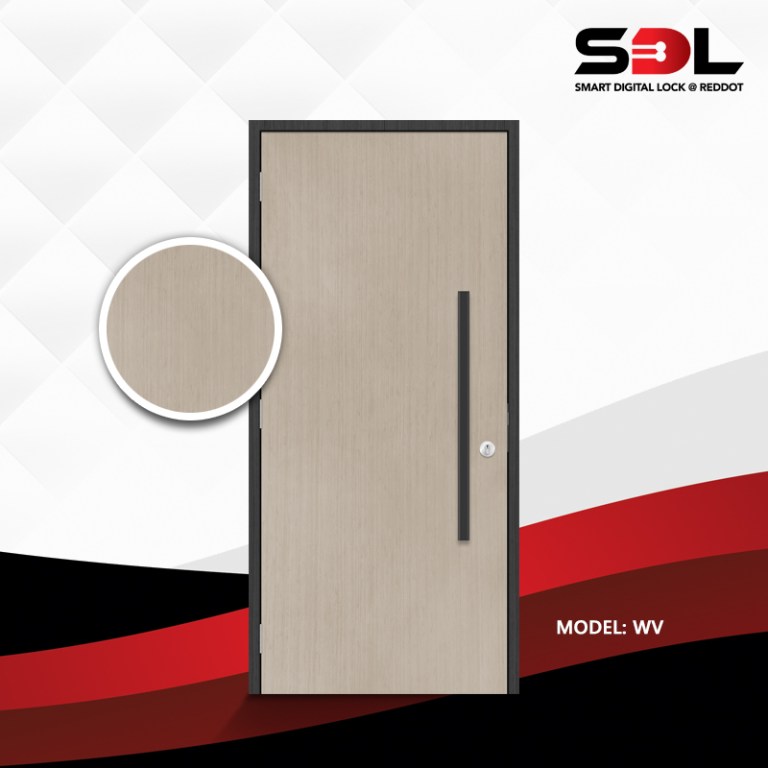
Fire-rated doors fitted with quality hardware and sleek finishes are no longer the industrial-looking installations of the past. Modern fire protection doors are available in wood veneer, laminate, powder-coated steel, and even glass variants — designed to complement contemporary interior aesthetics.
From a property perspective, documented fire safety upgrades carry real weight during resale. Savvy buyers and property valuers increasingly recognise structural safety features as value-adding, particularly in Singapore’s competitive residential market where due diligence is thorough.
6. Integrated Smart Lock Compatibility
One practical advantage that is easy to overlook — fire-rated doors in modern residential settings can be fitted with smart digital locks without compromising their fire rating, provided the lock is tested and certified for use with fire doors. This means you do not have to choose between security, convenience, and fire safety. A single door can deliver all three functions simultaneously.
This is especially relevant for front entry doors and internal interconnecting doors in HDB flats, condominiums, and landed homes where homeowners are upgrading to digital access systems.
How Fire Resistant Doors Compare to Standard Doors
| Feature | Standard Door | Fire Resistant Door
|
| Fire resistance | Under 5 minutes | 30 to 120 minutes (rated) |
| Smoke containment | None | Yes (with intumescent seals) |
| Regulatory compliance | Not applicable | Meets SCDF / BCA fire code |
| Insurance benefit | None | Potential premium reduction |
| Smart lock compatibility | Yes | Yes (certified locks) |
| Property value impact | Neutral | Positive |
Where Should You Install Fire-Rated Doors in a Home?
Not every door in the house requires a fire rating, but there are several high-priority locations where installation delivers the greatest protective benefit:
- Kitchen to living area: Kitchens are the most common origin point of residential fires in Singapore.
- Garage to internal hallway: Garage fires can spread aggressively due to fuel and chemicals stored nearby.
- Staircase access doors: Vertical fire spread is rapid; compartmentalising stairwells is critical in multi-storey homes.
- Utility and store rooms: Especially those housing electrical panels, gas pipes, or combustible materials.
- Main entrance door: Provides a final barrier if a fire originates inside the unit, protecting corridor egress in apartment buildings.
Home Fire Safety Starts at the Door
It is easy to treat fire safety as a background concern — something to think about after choosing flooring or lighting. But a single fire incident can render years of home investment irrelevant in minutes. The Singapore Civil Defence Force responded to over 3,000 fire calls in residential premises in recent years, with cooking-related fires remaining the leading cause.
Installing fire-rated doors does not require a full renovation. Many certified fire protection doors can be retrofitted into existing frames with minimal disruption. The combination of life safety, legal compliance, insurance advantage, and property value protection makes it one of the most cost-effective upgrades a homeowner can make.
For homeowners looking to combine fire safety with modern access control, Smart Digital Lock Reddot offers fire-rated door solutions designed for Singapore’s residential environment — engineered to meet fire code requirements without sacrificing style or smart functionality.
Frequently Asked Questions
Q: Are fire resistant doors required by law in Singapore homes?
In Singapore, fire-rated doors are mandatory in specific residential locations under the SCDF Fire Code and BCA guidelines. These typically include staircase enclosures, lift lobbies, and certain compartment boundaries in landed properties or flats undergoing A&A works. It is advisable to check with your architect or contractor to confirm compliance requirements for your specific property type and renovation scope.
Q: How long does a fire resistant door actually hold back fire?
A fire resistant door’s protection time depends on its rating. An FD30 door withstands fire and smoke for at least 30 minutes, while FD60 and FD90 doors provide 60 and 90 minutes respectively. These ratings are determined through standardised testing. Intumescent seals fitted around the door frame also block toxic smoke — which is responsible for the majority of fire-related fatalities.
Q: Can I install a smart digital lock on a fire-rated door?
Yes, but the smart lock must be certified as compatible with fire-rated doors. Using an uncertified lock can void the door’s fire rating. Reputable suppliers provide locks specifically tested and approved for use on fire doors. Always request documentation confirming that the lock and door combination meets the relevant fire safety standard before installation.
Q: Will a fire resistant door reduce my home insurance premium?
It can. Many insurers view certified fire-rated doors as a risk mitigation measure, which may qualify your home for lower premiums or more favourable policy terms. The outcome depends on your specific insurer and policy. It is recommended to inform your insurer of any fire safety upgrades, including fire protection doors, and request a reassessment of your premium at renewal.
Q: Do fire-rated doors look different from regular interior doors?
Modern fire protection doors are available in a wide range of finishes, including timber veneer, laminate, and powder-coated steel. They can closely resemble standard interior or exterior doors in appearance. The key difference is in the core construction and certified hardware. When specified correctly, a fire-rated door can match the interior design of your home without looking institutional or industrial.
Q: What is the difference between a fire door and a security door?
A fire door is engineered specifically to resist the spread of flames and smoke for a rated period of time — its primary function is life safety and fire compartmentalisation. A security door is designed to resist forced entry. Some doors are engineered and certified to fulfil both functions simultaneously, combining fire resistance with anti-intrusion performance, which is an option worth exploring for main entrance applications