A small drip can cost you thousands. Many homes face water leaking from the ceiling, yet the real cause often begins somewhere else. The slow water tap leak initially appears safe to the homeowners. Stains show up after the paint starts to peel, and the expenses for building repairs increase.
The process of small leaks transforming into major destruction will be demonstrated to you. The identification of different indicators which need monitoring, together with their respective solutions, will be demonstrated to you.
How a Water Tap Leaking Starts Bigger Problems
The small leaks from a tap develop into major home damage. Water does not stay in one place. The water movement creates hidden damage to areas that remain invisible.
Slow Drips Add Up Fast
The slow drip appears harmless, yet it results in significant water loss throughout the day. The water accumulation begins to reach nearby surfaces, which include floors and walls.
Hidden Moisture Builds Pressure
Water typically gathers inside concealed areas that exist behind walls and ceilings. The moisture that remains trapped inside materials will deteriorate wood and plaster over time.
From Tap to Ceiling Damage
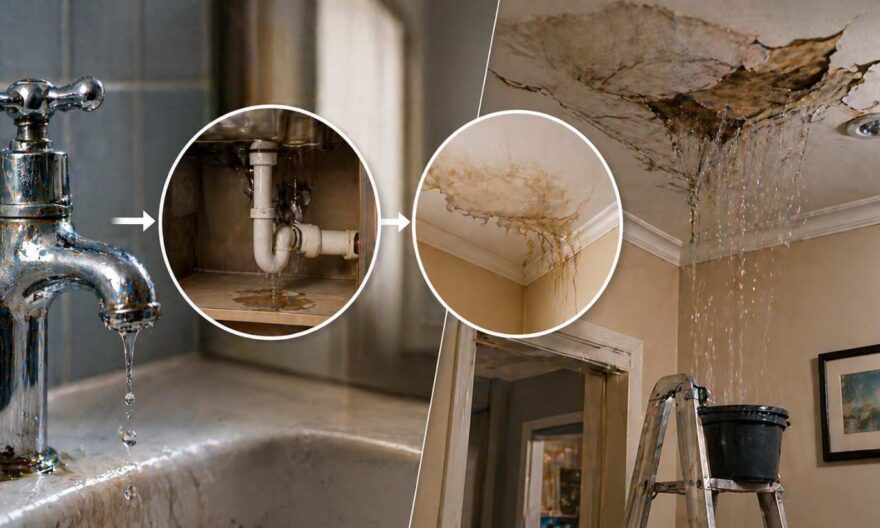
The damage does not happen at once. It builds step by step from a small leak. Over time, the moisture spreads and reaches the ceiling, where it becomes visible.
- A water tap leaking creates constant moisture
- Water enters pipes or joints
- Weak seals allow water to escape
- Moisture spreads upward or sideways
- The ceiling absorbs water and shows damage
Eventually, you notice water leaking from the ceiling, but the real issue started much earlier.
Common Causes Behind Ceiling Leaks
Ceiling leaks can occur due to multiple origin points. However, most problems begin with small faults that go unnoticed. The minor problems develop over time until they produce actual damage to your residence.
1. Faulty Taps and Fixtures
A water tap leaking is a common starting point for bigger issues. People tend to overlook small faults, which include worn washers. The gradual water leak creates hidden wetness, which expands its reach over time.
2. Damaged Pipes
Pipes can develop cracks because of their age, installation problems or pressure factors. A tiny crack will result in continuous water loss. The gradual leak will damage adjacent surfaces, which will result in ceiling destruction at a later time.
3. Blocked Drains
Blocked drains prevent proper water movement through pipes. Water seeks alternative routes because of this situation. The overflow from this system frequently enters building interiors through walls and ceilings, which results in damp spots.
4. Roof Problems
Damaged roofs permit rainwater to penetrate the house. Broken tiles or weak seals create a common problem. The water enters the building and travels downwards until it accumulates in the ceilings, which causes visible leaks.
Signs You Might Have Water Leaking From the Ceiling
You rarely see the leak at the start. Instead, your home gives clues.
Visible Warning Signs
Look for these early signals:
- Yellow or brown stains on the ceiling
- Paint bubbling or peeling
- Damp patches that grow over time
- A musty smell in rooms
Less Obvious Signs
Sometimes the warning signs are subtle:
- Slight drop in water pressure
- Higher water bills without a reason
- Small cracks in the ceiling corners
If you spot these signs, act fast. Delay makes repairs harder.
How Ceiling Damage Actually Develops
The bathroom tap you mentioned has been leaking water from its faucet for three weeks.
Week 1–2
Water seeps under the floor tiles, revealing cracks in the grout and a hairline crack that exists in the screed. The moisture sits there, mostly invisible.
Week 3–4
The water moves laterally through the screed, spreading beyond the original leak point. The water progresses until it reaches the ceiling slab of the unit below and begins to create pools.
Week 5–6
The unit downstairs discovers a wet area on its ceiling. Paint begins to bubble or peel. Plaster begins to crack in the most serious situations.
Beyond 6 Weeks
Mould takes hold. The structural strength of the screed begins to collapse. Tiles may start lifting. The repair scope has now expanded significantly.
Water which leaks from the ceiling creates a dual problem because it affects both the ceiling and the floor which connects to the ceiling.
Practical Steps to Stop Small Leaks from Getting Bigger
You don’t need to be a plumber to catch problems early.
- Check your taps monthly: Run your finger along the base of each tap and look for any moisture or mineral deposits. These are early signs of a slow leak.
- Inspect flexible hoses every six months: Look for cracks, bulging, or discolouration. A hose that looks worn should be replaced before it fails.
- Watch your water meter: Turn off all water-using appliances and check whether the meter is still moving. If it is, you likely have a concealed leak.
- Act on ceiling stains immediately: Don’t assume a stain is old or harmless. Have it checked. A small investigation now costs far less than a full repair later.
When to Call a Professional
Some signs mean you should pick up the phone today, not next week.
- Water is actively dripping from your ceiling
- A tap leak that returns after you’ve already replaced the washer
- Any crack in your bathroom or kitchen floor tiles near a water source
- A neighbour is reporting water damage that may have come from your unit
Long-Term Effects of Ignoring Ceiling Leaks
The process of ignoring a ceiling leak creates an initial appearance of being minor. The situation develops into major damage over time.
Structural Weakness
Moisture allows wood and plaster materials to lose their structural integrity. The ceiling structure develops cracks and sagging problems throughout its existence.
Mould and Health Risks
Mould growth occurs at damp locations because of their moisture content. The material typically moves through concealed areas.
Higher Repair Costs
The cost of early repairs remains low because they require less work. The expenses increase when repairs get postponed.
Conclusion
Water leaking from the ceiling rarely starts at the ceiling. The primary source of most water leaks originates from minor problems, which include a water tap that drips. The problem begins as a simple issue which people can overlook. The process results in the formation of stains and mould, which leads to expensive damage.
The early signs of the problem need to be detected according to the first rule, which requires immediate repairs of all tiny leaks. Your home remains protected through continuous inspections and immediate maintenance work.
Frequently Asked Questions
How do I know if my tap leak has already caused ceiling damage?
Look for damp patches, bubbling paint, and discolouration on the ceiling directly below your bathroom or kitchen. If you live on an upper floor, check whether your downstairs neighbour has reported any water leaks.
Can I fix a water tap leaking myself in Singapore?
Homeowners who have basic skills can handle simple tasks which involve replacing washers. The work which needs to be done requires a licensed plumber because it involves concealed pipes, floor waterproofing, and shared building systems.
How long does waterproofing repair take in a Singapore flat?
Most bathroom waterproofing jobs take three to five working days from hacking to tile completion. The waterproofing membrane requires one to two days for drying time. The bathroom will remain closed for up to one week because of the planned work.
Will my HDB home insurance cover ceiling water damage?
Standard HDB fire insurance does not cover water damage from internal leaks. Certain home contents and home protection policies will cover accidental water damage.