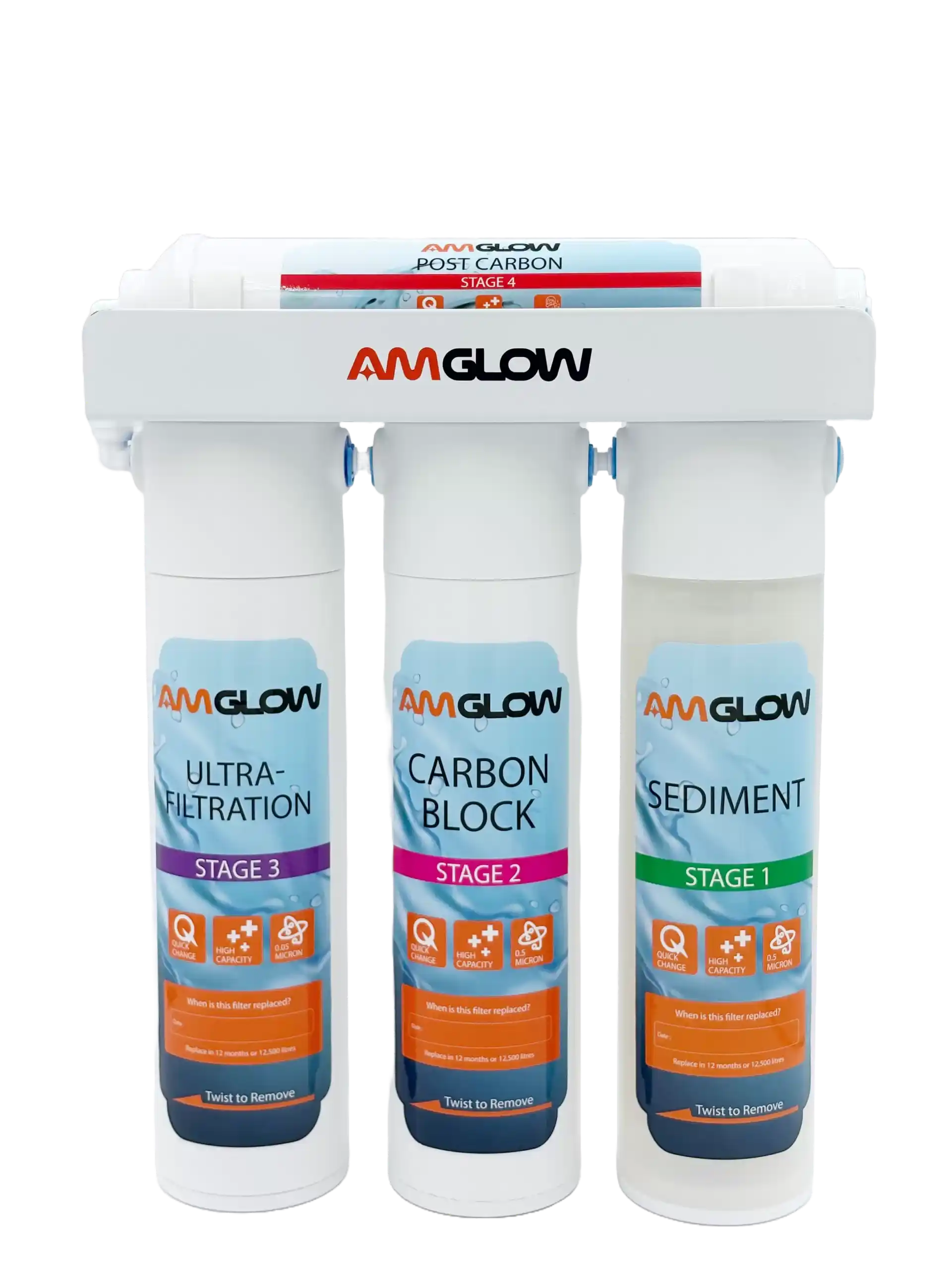
A 4-stage under sink water filter passes tap water through four sequential filtration stages — typically a sediment pre-filter, an activated carbon block, a refined carbon or specialty filter, and a polishing post-filter. Each stage targets specific contaminants. Together, they remove sediment, chlorine, heavy metals, volatile organic compounds, and other impurities, delivering clean, great-tasting drinking water directly from your tap.
If you’ve ever wondered what’s actually happening inside your under-sink cabinet, you’re not alone. A 4 stage under sink water filter isn’t just a single block doing all the work — it’s a carefully engineered sequence where each stage hands off cleaner water to the next. Understanding that sequence helps you trust what’s coming out of your tap and make smarter decisions about your home’s water quality.
Why Four Stages Instead of One?
Single-stage filters are like using one tool for every job — they work, but not well enough. Tap water carries a mix of physical particles, chemical compounds, and dissolved metals. No single filter medium can efficiently address all of them at once without getting overwhelmed quickly.
A multi-stage system distributes the workload. Each filter medium is optimised for specific contaminant types, which means better removal efficiency, longer filter life, and consistently high-quality output. It’s a smarter design — and your water shows the difference.
The 4 Stages Explained: What Happens at Each Step
Stage 1: Sediment Pre-Filter
The first stage uses a sediment filter — usually a spun polypropylene or pleated membrane rated at 5 microns or finer. Its job is physical filtration: catching rust flakes, sand, silt, dirt, and other suspended particles before they reach the more sensitive downstream stages.
Think of it as the gatekeeper. Without this stage, fine sediment would clog your carbon filters prematurely, reducing their effectiveness and shortening their lifespan. This stage alone can extend the life of the entire system significantly.
Stage 2: Activated Carbon Block Filter
Once sediment is cleared, water moves into the activated carbon block — the workhorse of any water filtration system. Activated carbon works through a process called adsorption, where contaminant molecules bond to the enormous surface area of the carbon material.
This stage targets:
- Chlorine and chloramines (common disinfectants in municipal water)
- Volatile organic compounds (VOCs) like benzene and toluene
- Herbicides and pesticides
- Unpleasant tastes and odours
A single gram of activated carbon can have a surface area exceeding 500 square metres. That’s a vast contact area packed into a compact filter block — which is why carbon filtration is so effective at chemical removal.
Stage 3: Specialty or Refined Carbon Filter
The third stage varies by system design. In many quality setups, this is a second carbon filter — either a coconut shell carbon or a catalytic carbon block — that handles what the first carbon stage didn’t fully eliminate. Some systems use this stage for targeted removal of specific contaminants such as:
- Heavy metals including lead and mercury
- Chloramine byproducts
- Hydrogen sulphide (the rotten-egg smell in some water supplies)
- Pharmaceutical traces
This layered approach to the carbon filter stages is what separates a capable drinking water filter from a basic one. The redundancy isn’t wasteful — it’s intentional and necessary for thorough filtration.
Stage 4: Post-Filter / Polishing Stage
The final stage is the finishing touch. A post-carbon or inline granular activated carbon filter polishes the water before it reaches your glass. Its primary role is to remove any residual taste or odour picked up during the filtration process itself — particularly if water sat in the system between uses.
The result is water that’s not just safer but noticeably cleaner in flavour. This stage is what gives filtered water that crisp, neutral taste that makes it genuinely refreshing to drink.
What Contaminants Does a 4-Stage System Actually Remove?
Here’s a practical breakdown of what a well-designed 4 stage under sink water filter addresses across all stages:
| Contaminant Type | Primary Stage Targeting It
|
| Sediment, rust, sand, silt | Stage 1 – Sediment Filter |
| Chlorine, VOCs, odour | Stage 2 – Carbon Block |
| Lead, heavy metals, chloramines | Stage 3 – Specialty Carbon |
| Residual taste and odour | Stage 4 – Polishing Filter |
It’s worth noting that 4-stage systems using carbon-based filtration are not designed to remove dissolved minerals like calcium and magnesium — which is actually a benefit. These minerals contribute to water’s natural taste and are part of a healthy diet.
How Is an Under-Sink System Different from a Countertop Filter?
Installation location is the obvious difference, but the functional advantages go further. Under-sink systems are plumbed directly into your cold water line, meaning filtration happens on demand without waiting for water to pass through a pitcher or external unit. There’s no manual refilling, no countertop clutter, and flow rates are typically higher.
They’re also better suited for household volume — a family drawing water for cooking, drinking, and filling bottles throughout the day benefits from a system that keeps up without degrading in performance.
How Often Should You Replace the Filters?
Filter replacement intervals vary by stage and usage, but general guidelines are:
- Stage 1 (Sediment): Every 3–6 months, depending on your water’s turbidity
- Stage 2 & 3 (Carbon filters): Every 6–12 months under normal household use
- Stage 4 (Post-filter): Every 12 months or at the same interval as the carbon stages
Skipping replacements doesn’t just reduce filtration performance — exhausted filters can become a breeding ground for bacteria and may release previously captured contaminants back into your water. Set a calendar reminder. It’s a small habit with a real impact on water quality.
Is It Worth Installing One?
For health-conscious households, the answer is almost always yes. A 4-stage system delivers filtered water at the point of use, eliminating the cost and plastic waste of bottled water while providing consistent quality. Over time, the per-litre cost of filtered tap water is a fraction of bottled alternatives.
Beyond cost, there’s the issue of what you’re not drinking. Chlorine byproducts like trihalomethanes (THMs) have been studied extensively in relation to long-term health. Reducing daily exposure — even from treated municipal water — is a reasonable and achievable goal with the right system in place.
If you’re ready to upgrade your home’s water quality, Amglow‘s 4-stage under-sink filtration system is engineered to deliver clean, great-tasting water through a compact and easy-to-install design — purpose-built for modern households that take hydration seriously.
Frequently Asked Questions
What does a 4 stage under sink water filter remove?
Sediment, rust, chlorine, volatile organic compounds, heavy metals like lead, chloramines, and offensive tastes and odours are all eliminated using a four-stage technique. Because each stage is intended to target a particular type of contamination, the combination provides more thorough filtration than any single-stage filter could.
How long do the filters in a 4-stage under-sink system last?
Carbon block filters usually last 6–12 months, but sediment pre-filters usually last 3–6 months. Every year, the post-filter polishing stage is typically changed. The amount of water used by your home and the degree of pollutants in your local water source determine how long a filter will last.
Does a 4-stage filter remove fluoride?
Fluoride is not eliminated by conventional 4-stage systems that use activated carbon. A specific alumina or reverse osmosis stage is needed for fluoride removal. Look for systems that expressly use such media if removing fluoride is a top priority, or think about a 5-stage RO system as an option.
Can I install a 4-stage under-sink water filter myself?
The majority of under-sink filtration systems come with the required fittings and are made for do-it-yourself installation. The procedure usually entails installing a special tap and connecting to the cold water supply line. Although most homeowners finish the installation in less than an hour, basic plumbing knowledge is beneficial.
Does filtered water from an under-sink system still contain healthy minerals?
Sure. Beneficial minerals like calcium and magnesium are not removed by carbon-based filtering systems, but chemical pollutants are. Compared to reverse osmosis systems, which demineralise water, this is an advantage. Without sacrificing the naturally occurring minerals that add flavour and nutrition, you get cleaner water.
How do I know when to replace my under-sink filter cartridges?
A suggested replacement plan based on volume or time is typically included in systems. Reduced water flow, a returning taste or scent of chlorine, and cartridge darkening are signs that a filter needs to be changed. The most dependable method for maintaining constant water quality is to adhere to the manufacturer’s replacement schedule.