


Emerald engagement rings need continuous, gentle care to maintain their brilliance throughout time. Clean them monthly with lukewarm water and mild soap. Avoid ultrasonic cleaners and keep them free from harsh chemicals and physical impact. Store separately in a padded box. With the appropriate habits, your emerald ring will retain its color, clarity and structure for decades.
Emerald engagement rings. Bold, very personal choice. There is no other gemstone like that deep green, dark as a forest or brilliant as spring. But emeralds aren’t diamonds. They are built differently, they are sensitive differently, they require a different kind of day-to-day care. If you wear yours every day (as most people with engagement rings do), learning how to take adequate care of it is not an option – it is vital.
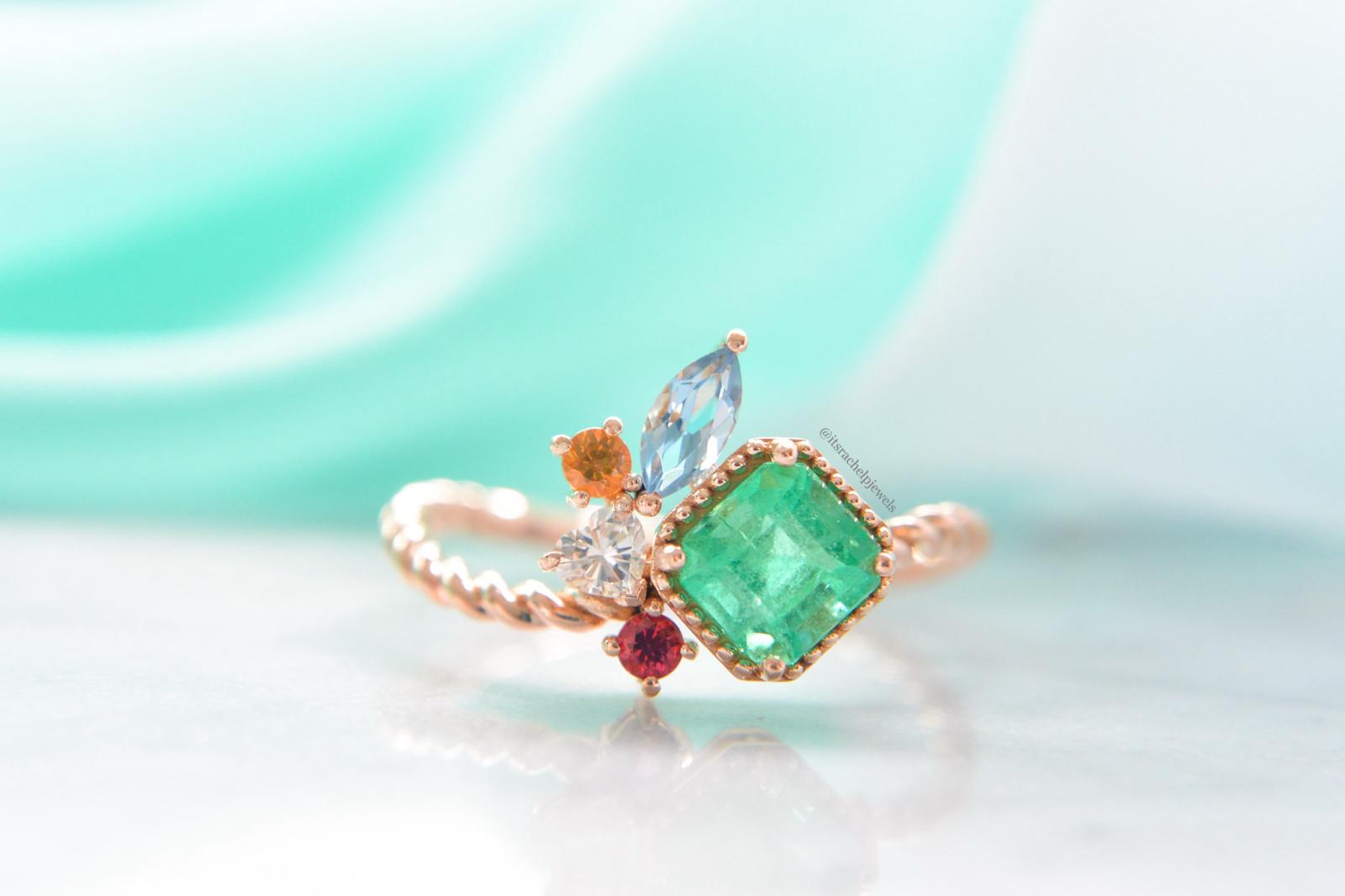
Why Emerald Rings Need Special Attention
The emeralds are rather hard, with a rating of 7.5–8 on the Mohs scale of hardness, yet hardness is only part of the story. Most natural emeralds feature internal cracks, called inclusions or jardin, so common they are regarded a defining property of the stone. Many emeralds are also treated with cedar oil or resin to fix surface-reaching fractures and to enhance beauty.
Emeralds are treated with a mixture of natural inclusions and oil, making them more susceptible to heat, chemicals, and ultrasonic vibrations than most other engagement ring stones. What is safe for a diamond ring can do permanent damage to your emerald.
Step-by-Step: How to Clean an Emerald Engagement Ring at Home
Cleaning your ring at home is simple, but the method matters. Follow these steps consistently, and you will keep your stone looking its best without causing damage.
Step 1: Prepare Your Cleaning Solution
Fill a small bowl with lukewarm water — not hot, never boiling. Add two to three drops of mild, fragrance-free dish soap. Avoid anything with bleach, ammonia, acetone, or alcohol. These chemicals strip the oil treatment from the stone and can dull its surface permanently.
Step 2: Soak Briefly
Place your ring in the solution and let it soak for no longer than five minutes. Extended soaking can loosen the oil treatment in the emerald. A brief soak is enough to soften any buildup of lotion, skin oils, or everyday grime.
Step 3: Scrub Gently with a Soft Brush
Use a soft-bristled toothbrush — baby toothbrushes work especially well — to lightly clean around the setting and beneath the stone. Use light, circular strokes. Do not press hard against the stone itself. Focus on the metal setting where buildup tends to accumulate most.
Step 4: Rinse and Pat Dry
Rinse under a gentle stream of lukewarm water. Avoid hot water. Pat dry with a lint-free, soft cloth. Let the ring air dry fully before storing or wearing it again. Never use a hairdryer or any heat source to speed up drying.
What to Avoid When Wearing an Emerald Ring Daily
Good emerald ring care is as much about what you do not do as what you do. These are the situations and substances most likely to cause damage over time.
- Ultrasonic and steam cleaners: These are standard tools in many jewellery shops, but they are not suitable for emeralds. The vibrations can worsen existing fractures, and steam heat can remove oil treatments. Always let your jeweller know you have an emerald before they clean it.
- Household cleaning products: Bleach, surface sprays, bathroom cleaners, and even hand sanitiser can chemically react with both the stone and the metal setting. Remove your ring before any cleaning task at home.
- Swimming pools and the sea: Chlorinated pool water is particularly harsh on emeralds. Saltwater can also affect the metal setting over time. Take your ring off before swimming.
- Gym and physical activity: Sweat is mildly acidic and, with regular exposure, can dull an emerald’s surface. Impact from weights or equipment can also chip the stone, especially at the girdle (the widest part of the gem).
- Applying skincare and perfume: Lotions, serums, and perfumes all contain compounds that can cloud the surface of your emerald or interact with the oil treatment. Put your ring on last, after your routine is complete.
How to Store an Emerald Engagement Ring Correctly
Storage is one of the most disregarded areas of jewelry upkeep. No matter how well you clean your ring, negligent storage might produce scratches, chipping or structural damage.
Store your emerald ring in a separate compartment in a fabric-lined jewelry box. While emeralds are hard, they can be scratched by diamonds and other harder stones if they bang against each other when stored. A soft pouch or separate velvet lined slot works great. Do not store near sources of heat or in direct sunlight because extended UV exposure can, over time, alter both the color of the stone and the oil treatment.
Emerald Shape Engagement Rings: Does the Cut Affect Care?
Yes, and it is a thing to know when you are picking between styles. Emerald-cut engagement rings (so termed because of the classic rectangular step-cut pattern of the stone) have lengthy, open facets and less sharp edges. The broad and flat table means they are less likely to chip than more angular slices, thus they are an everyday option.
Cuts like the marquise, pear or trillion have sharp points that are much more prone to chipping with everyday wear. If you use your hands a lot or are active, a traditional emerald-cut, oval or cushion-cut emerald ring may be more durable for everyday wear. Talk about your jeweler about protective settings. A bezel or halo setting might provide more protection to the edges than a normal prong setting.
How Often Should You Have an Emerald Ring Professionally Serviced?
Even with excellent at-home care, professional servicing is essential. A gemologist or professional jeweller can check the prongs for wear, inspect the stone for new inclusions or surface damage, and re-oil the emerald if necessary — a process called re-oiling or re-treating, which restores clarity and surface protection.
As a general guideline:
- Every six months: Visual inspection by a professional. Check prongs and setting integrity.
- Every one to two years: Full professional clean, polish, and re-oiling assessment if needed.
- Immediately: If you notice a prong is loose, the stone appears to have shifted, or there is a visible new chip or crack.
In Singapore, humidity and heat are constant factors. Storing jewellery in air-conditioned spaces is generally preferable to leaving it in humid bathrooms. Humidity itself does not damage emeralds directly, but repeated exposure to steam — from showers, for example — can gradually affect oil-treated stones.
Quick Jewellery Cleaning Tips at a Glance
| Task | Safe for Emerald? | Notes |
|---|---|---|
| Mild soap and lukewarm water | ✅ Yes | Best home cleaning method |
| Ultrasonic cleaner | ❌ No | Risk of fracture and oil loss |
| Steam cleaning | ❌ No | Removes oil treatment |
| Soft cloth wipe-down | ✅ Yes | Good for daily maintenance |
| Chemical cleaners | ❌ No | Can damage stone and metal |
| Professional re-oiling | ✅ Yes | Recommended every 1–2 years |
Building a Daily Habit Around Your Emerald Ring
The greatest way to care for an emerald ring isn’t infrequent intensive cleaning. It’s regular, low-effort behaviors. Remove the ring before dishwashing, showering or applying moisturizer. At the end of each day, clean it with a gentle cloth. Keep it right every nite. And it’s these little things, done consistently, that keep brilliance alive and from slowly degrading.
Treat your emerald like a fine silk fabric – gorgeous, worthy of protection and not meant for hard conditions. Treat it like it and it’ll look as great on your tenth anniversary as it did the day you bought it.
The staff at Rachel P Jewels can help if you are looking for tips on how to select or maintain an emerald ring that is suitable for everyday use in Singapore. They specialize in helping clients locate pieces that are both beautiful and wearable.
Frequently Asked Questions
Can I wear my emerald engagement ring every day?
Yes, you can wear an emerald engagement ring daily, with the necessary safeguards. Remove ring for physical activity, cleaning and swimming. Opt for a protective setting, like as a bezel or halo, if you want to wear it every day. To maintain its condition, clean the ring monthly with a mild soap and tepid water.
How do I clean an emerald ring at home safely?
Soak the ring briefly in lukewarm water mixed with a few drops of mild, fragrance-free dish soap. Gently brush with a soft bristles toothbrush rinse well and pat dry with a lint free cloth. Do not use ultrasonic cleaners, steam or hot water or any type of chemical cleaner as these can peel the emerald’s oil treatment.
Why should I avoid ultrasonic cleaners for emerald jewellery?
Natural emeralds have inclusions, and are usually treated with oil or resin to enhance their clarity. Ultrasonic cleaners generate high-frequency vibrations that can aggravate cracks and remove the oil treatment, permanently altering the stone’s look. Make sure to tell your jeweler there is an emerald in the ring before any professional cleaning.
How often does an emerald ring need professional servicing?
For an emerald ring, have a specialist check the integrity of the prongs every six months. Every one to two years, a comprehensive clean and re-oiling examination should be performed. If you detect a loose stone, a noticeable chip or a setting that has moved, take it to a jeweler straight away, no matter when it was last serviced.
Does the cut of an emerald affect how durable it is for daily wear?
Yes. The classic emerald step cut features large, flat facets and fewer exposed edges, making it more practical for everyday wear. Pointed-tip cuts (like marquise or pear) are more prone to chipping. You can also set any cut in a protective setting (such a bezel) to further decrease the chance of edge damage.
Is Singapore’s humidity harmful to emerald rings?
Humidity does not directly harm emeralds, but regular steam exposure (e.g. from hot showers) can slowly degrade oil-treated stones. Keep your ring in an air-conditioned environment, not a steamy bathroom, and don’t wear it for extended periods of heat or wetness.