

Living in an HDB flat comes with many good things, like the built-in rubbish chute. This useful feature lets people throw away waste without leaving their floor. But these chutes can run into problems over time. Bad smells, blockages, and pests often trouble older systems. Knowing about these common issues helps homeowners act before things get worse. This piece looks at frequent HDB rubbish chute problems and gives practical fixes. Each solution aims to bring back cleanliness and peace to your home. Simple care steps can stop most big headaches.
Bad Smells Coming Into Your Home
Many flat owners complain about nasty smells drifting from the chute area. This happens when the rubber seal around the chute door wears out or cracks. Gaps let stench from the main trash shaft seep right into your kitchen. An HDB rubbish chute with a broken seal cannot block odours well. Germs and rotting waste create gases that travel through these small openings. The smell often gets worse during hot weather.
- Change the rubber seal around the chute door right away when you see cracks or hardening. A new gasket makes an airtight barrier that stops smelly gases from escaping. You can buy standard-sized seals from most hardware shops.
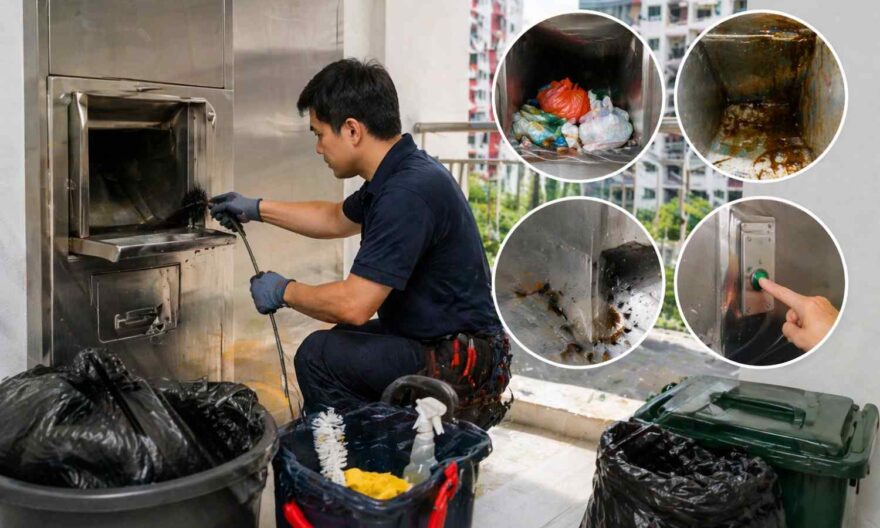
- Book expert deep cleaning for the whole chute inside every two years. Strong steam removes rotting food bits stuck to the inner walls. This cleaning kills odour-causing germs at their source.
- Use a deodorising spray inside the chute after each heavy use. Pick products made just for rubbish chutes. A quick spray stops smells before they grow.
After using these three methods, your kitchen should smell fresh and clean again. The mix of a new seal, deep cleaning, and regular spraying fights odours from every side. Most homeowners see a fast improvement after changing the rubber seal alone. Follow up with expert cleaning for the best long-term results.
Blockages That Stop Waste From Dropping Down
Nothing frustrates me more than a jammed chute that won’t take your trash. Blockages happen when people drop oversized items or wet waste without proper bagging. Big boxes or tied newspapers can get stuck inside the narrow pipe. A blocked HDB rubbish chute makes you carry rubbish downstairs by hand. Worse, the waste rots inside the shaft and brings cockroaches and flies.
- Use a chute, snake or auger to break up packed rubbish stuck in the pipe. Put the bendy metal tool in slowly and turn the handle. The spinning head hooks onto stuck items or breaks them into smaller pieces.
- Teach every family member which items go into the chute and which do not. Tie all waste tightly in plastic bags before dropping them in. Never send liquids, sharp things, or big packages down the shaft.
- Book regular auger services from a pro if blockages keep happening. Some town councils lend auger tools to residents for free. A specialist with a motorised auger can clear even the hardest jams.
Following these three pointers stops nine out of ten blockage problems. Good habits make the biggest difference over time. A well-kept HDB rubbish chute should carry waste down smoothly without any sticking. Teach children early which items go into the bin and which need separate disposal.
Pests Coming Through the Chute System
Cockroaches, ants, and rats love the dark, warm space of a rubbish chute. These pests crawl up from the main bin and enter flats through gaps. A poorly sealed HDB rubbish chute door acts like an open road for bugs. You might see roaches scatter when you open the chute or find droppings inside the cabinet. Rats can squeeze through holes as small as a coin. Ignoring pest signs leads to full invasions throughout your home.
- Putting in a Pest-Proof Chute Door
Newer chute doors have tighter seals and spring-loaded parts that close by themselves. These designs leave no gap for insects or rats to squeeze through. Rubbish chute replacement of the whole door assembly gives the best long-term defence. Many town councils offer cheaper upgrades for older flats. The new door also has a metal flap that covers the opening when not in use.
- Using Regular Pest Control Treatments
Even the best-sealed chute cannot stop pests already living inside the shaft. Expert pest control means putting gel baits and bug growth stoppers inside the chute. These treatments target cockroaches and ants at their source. A good HDB chute pest plan includes four visits a year from a licensed expert. They also check nearby pipes and false ceilings for hidden nests. Using both barriers and chemical controls gives full protection.
Rusty or Stuck Chute Doors That Won’t Close Right
Metal chute doors rust over time, especially in wet Singapore. Rust makes the hinges get stuck or the latch stop catching. A door that won’t close leaves a big hole in the rubbish shaft. This open HDB chute brings odours, pests, and even fire risks. Rust also flakes off onto your hands or nearby stored items. Some older doors become so stiff that people leave them open out of frustration.
- Oiling Hinges and Latches
Put a silicone-based oil on all moving parts of the chute door. Spray into the hinge pin and the locking part. Open and close the door a few times to spread the oil evenly. A well-kept HDB chute door should move smoothly with one finger. Do not use grease or cooking oil, as these attract dirt and get sticky over time. Do this oiling every six months to stop rust from coming back.
- Changing a Very Rusty Door
When rust eats through the metal, oiling will not save the door. The build gets weak, and the latch may break off fully. Rubbish chute replacement of the whole door frame becomes necessary for safety. Call your town council to ask for a change to a stainless steel model. These newer doors fight rust and have better sealing technology. Putting it in usually takes less than an hour and makes little mess.
Comparing Different Chute Problems and Fixes
The table below helps homeowners quickly spot common issues and match them with good fixes.
| Problem | Main Cause | Best Fix |
| Bad smells | Worn rubber seal | Change gasket |
| Blockages | Oversized items | Use the auger tool |
| Pest invasion | Gaps around the door | Put in a pest-proof door |
| Stiff closure | Rusty hinges | Apply oil |
| Stuck latch | Broken part | Change the door assembly |
Matching the right fix to the right problem saves time and money.
Final Thoughts
A well-working HDB rubbish chute makes daily living much easier. Regular checks catch small problems before they become costly fixes. Change worn seals quickly, oil hinges twice a year, and teach your household the right way to throw rubbish.
For big issues like rusty doors or deep blockages, get rubbish chute replacement help from skilled pros. A little care keeps your chute working well for many years. Do not wait until a bad smell or a pest sighting forces your hand. Act early, and enjoy a clean, smell-free home.
Frequently Asked Questions
- Can I do the HDB rubbish chute care myself?
Yes, you can change the rubber seal and oil hinges on your own. For deep cleaning or using an auger, hire a pro. Town councils may offer free checks for older flats.
- How often should I book rubbish chute replacement of old parts?
Change the rubber seal every two to three years. Oil hinges every six months. Think about a full door change when rust causes weak build or latch failure.
- What items should never go into an HDB rubbish chute?
Never drop hot ashes, sharp glass, paint cans, or big boxes. Do not send liquids, chemical containers, or electronic waste. Always bag wet rubbish tightly before dropping.
- Who fixes a broken chute door?
The town council fixes common chute issues in most HDB flats. For damage caused by wrong use, residents may pay the cost. Call your local branch first for a check.