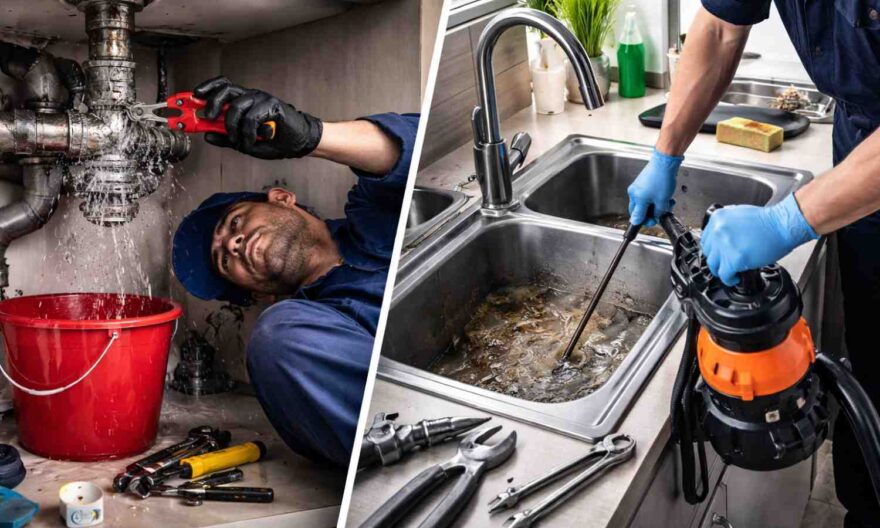
Water troubles at home can shake your peace of mind. A wet patch spreads across a wall. A sink fills up and refuses to drain. These problems disturb daily life. People from all walks of life search for fast answers to their problems. Plumbers who have received proper training follow specific steps that allow them to solve these problems permanently. The guide shows experts how to fix leaking pipe repair and remove clogs that cause major blockages in kitchen sinks. The process of their work becomes visible to you when you watch them use their equipment for their professional tasks.
Why Pipe Leaks And Sink Blockages Happen
Before fixing any problem, professionals hunt for the cause. Without finding the source, the issue returns.
Common Causes Of Pipe Leaks
Pipes crack and split for several reasons:
- Rust eats through old metal pipes
- High water pressure strains joints
- Loose fittings allow water to escape
- Poor installation weakens the system
- Ground shifts place stress on pipes
Small cracks widen over time. Water slips out and soaks walls, floors, and cabinets. Even a slow drip can stain surfaces and invite mould.
Common Causes Of A Blocked Kitchen Sink
A kitchen sink choke builds up bit by bit. Grease, soap, and food scraps slide into the drain. These materials cling to the inner pipe walls. Over time, they narrow the space for water to pass.
Common causes include:
- Grease and oil
- Coffee grounds
- Rice and pasta
- Soap residue
- Small foreign objects
A plunger may shift light debris. However, deep clogs demand expert care.
How Professionals Approach Leaking Pipe Repair
Experts never rush. They move step by step. This method keeps the home safe and dry.
Step 1: Careful Inspection
First, plumbers scan the area. They search for:
- Damp patches
- Water stains
- Bubbling paint
- Weak water flow
They also examine nearby pipes to rule out hidden leaks. Sometimes they use moisture meters or thermal cameras. These tools uncover water behind walls or beneath floors.
Water often travels away from its source. Therefore, this stage matters a great deal.
Step 2: Shutting Off The Water Supply
Next, they turn off the main water valve. This action stops the flow at once. It prevents further damage and keeps the space secure.
Without cutting the supply, water can flood the room.
Step 3: Identifying The Type Of Damage
Now the plumber studies the pipe material and the crack itself.
- Copper pipes corrode
- PVC pipes split
- Steel pipes rust
This careful check shapes the repair plan.
Step 4: Performing The Repair
At this point, the plumber carries out the leaking pipe repair. Depending on the damage, they may:
- Cut out and replace a broken pipe section
- Tighten loose joints
- Secure a pipe clamp
- Fit a fresh connector
If corrosion spreads wide, they remove the damaged length and install a new run. This step guards against future trouble.
Plumbers cut pipes with care and fit parts with firm precision. As a result, the repair holds strong.
Step 5: Testing The System
After finishing the repair, they reopen the water supply. They watch closely for drips. They test the pressure and check the flow.
Only when the pipe stays dry do they seal the wall or ceiling.
How Professionals Handle A Severe Kitchen Sink Choke
A blocked sink can halt simple tasks. Dirty water gathers in the bowl. Unpleasant smells rise from the drain. In worst cases, water spills back up.
Professionals tackle this issue with focus and skill.
Step 1: Visual Inspection
Plumbers begin by examining the sink and the pipes beneath it. They remove the trap and inspect it for trapped debris.
If the clog sits near the surface, they lift it out by hand.
Deep blockages require stronger tools.
Step 2: Drain Snaking
For stubborn clogs, plumbers guide a drain snake through the pipe. This long, flexible cable twists through bends and corners. It breaks apart grease and food clumps.
As the cable spins, it hooks debris and drags it out.
This method clears many cases of kitchen sink choke.
Step 3: Hydro Jetting
When grease coats the pipe walls, snaking may not clear the full blockage. In such cases, professionals use hydro jetting.
This tool fires a strong stream of water through the pipe. The force scours away grease, soap, and sludge. It washes the inner walls clean.
Because hydro jetting clears the full width of the pipe, it reduces the risk of repeat clogs.
Step 4: Checking The Drain Line
After clearing the blockage, plumbers slide a small camera into the drain line. This camera reveals cracks or weak joints.
If they spot damage, they plan repairs before the problem grows.
Step 5: Final Testing
Finally, they run water through the sink. They watch the flow and listen for strange sounds.
A healthy drain swallows water with ease and stays silent.
Tools Professionals Use
Professional plumbers rely on solid tools. These tools speed up work and prevent harm.
Common Tools For Pipe Repair
- Pipe cutters
- Adjustable spanners
- Pipe clamps
- Replacement fittings
- Pressure testing tools
Common Tools For Drain Clearing
- Plungers
- Drain snakes
- Hydro jet machines
- CCTV drain cameras
Each tool serves a clear task. Skilled plumbers handle them with care.
Why Professional Methods Work Better Than DIY Fixes
Many people attempt quick home fixes. However, these methods often fail.
Chemical cleaners can eat into pipes. Tape patches may loosen. Poor fittings can burst under pressure.
Professionals understand how water moves through pipes. They trace the root cause and fix it. Therefore, they prevent repeat trouble and protect the home.
Preventing Future Leaks And Blockages
After repairs, simple habits help guard the system.
Tips To Prevent Pipe Leaks
- Check water pressure
- Replace old pipes
- Insulate exposed pipes
- Inspect joints for damp spots
Regular checks help you catch small issues early.
Tips To Prevent A Kitchen Sink Choke
- Never pour grease into the sink
- Use a sink strainer
- Throw food scraps into the bin
- Rinse the drain with hot water
These habits keep pipes clear and strong.
Signs You Should Call A Professional
Certain signs demand swift action.
For Leaks
- Sudden jump in water bills
- Damp odours
- Ceiling stains
- Weak water flow
These signs point to hidden pipe damage. Quick leaking pipe repair protects your home from mould and decay.
For Sink Blockages
- Slow drainage
- Gurgling noises
- Water backing up
- Lingering smells
If you notice these issues, a professional can clear the kitchen sink choke before it worsens.
The Importance Of Acting Early
Small problems grow fast. A tiny crack can burst. A slow drain can clog fully.
When professionals step in early, they limit damage and protect the home. Early action reduces stress and keeps plumbing systems reliable.
Conclusion
Water systems shape daily comfort. Leaks and blockages disrupt that comfort. Professionals handle leaking pipe repair with sharp inspection, precise work, and firm testing. They clear a severe kitchen sink clog with strong tools and steady skill. Because they fix the true cause, their solutions last. With care and quick response, you can keep your plumbing system healthy and dependable.
FAQs
1. How long does a leaking pipe repair take?
The time depends on the pipe type and the extent of the damage. Small joint repairs take less time. Larger pipe replacements require more effort.
2. What causes a recurring kitchen sink choke?
Grease buildup, food waste, or damaged pipes often trigger repeat blockages. A full inspection reveals the source.
3. Can I fix a leaking pipe myself?
You can apply a short-term patch. However, without proper tools, the leak may return. Professional repair offers a stronger result.
4. How can I tell if a blockage sits deep in the pipe?
If water drains slowly and plunging fails, the clog may sit deep inside the drain line. A camera check can confirm the problem.