

Ballet looks graceful and effortless when you watch skilled dancers perform. Yet every beautiful movement starts with a strong foundation. Many children join a ballet class full of excitement, but parents often wonder where the learning process begins.
Ballet is not only about dancing. It teaches posture, balance, discipline, coordination, and confidence. Without the right fundamentals, young dancers may struggle to progress and enjoy the art form fully.
Understanding these basics helps children build skills safely and steadily. Whether you are searching for a ballet in Singapore, a beginner dance class, or a ballet class for kids, knowing these essentials can help you choose the right path.
Why Ballet Fundamentals Matter
Ballet performance requires more than attractive costumes because it involves artistic movement and dance execution. At its core, it is a discipline that builds a child’s body and mind together.
Children who learn proper basics at an early age will develop improved body alignment and enhanced motor skills and rhythmic understanding, which benefits their entire development beyond dance activities.
Starting with solid basics also prevents injury. The development of incorrect techniques during the kids beginner dance class becomes impossible to fix when they appear in later training periods.
The Core Ballet Fundamentals Every Beginner Should Learn
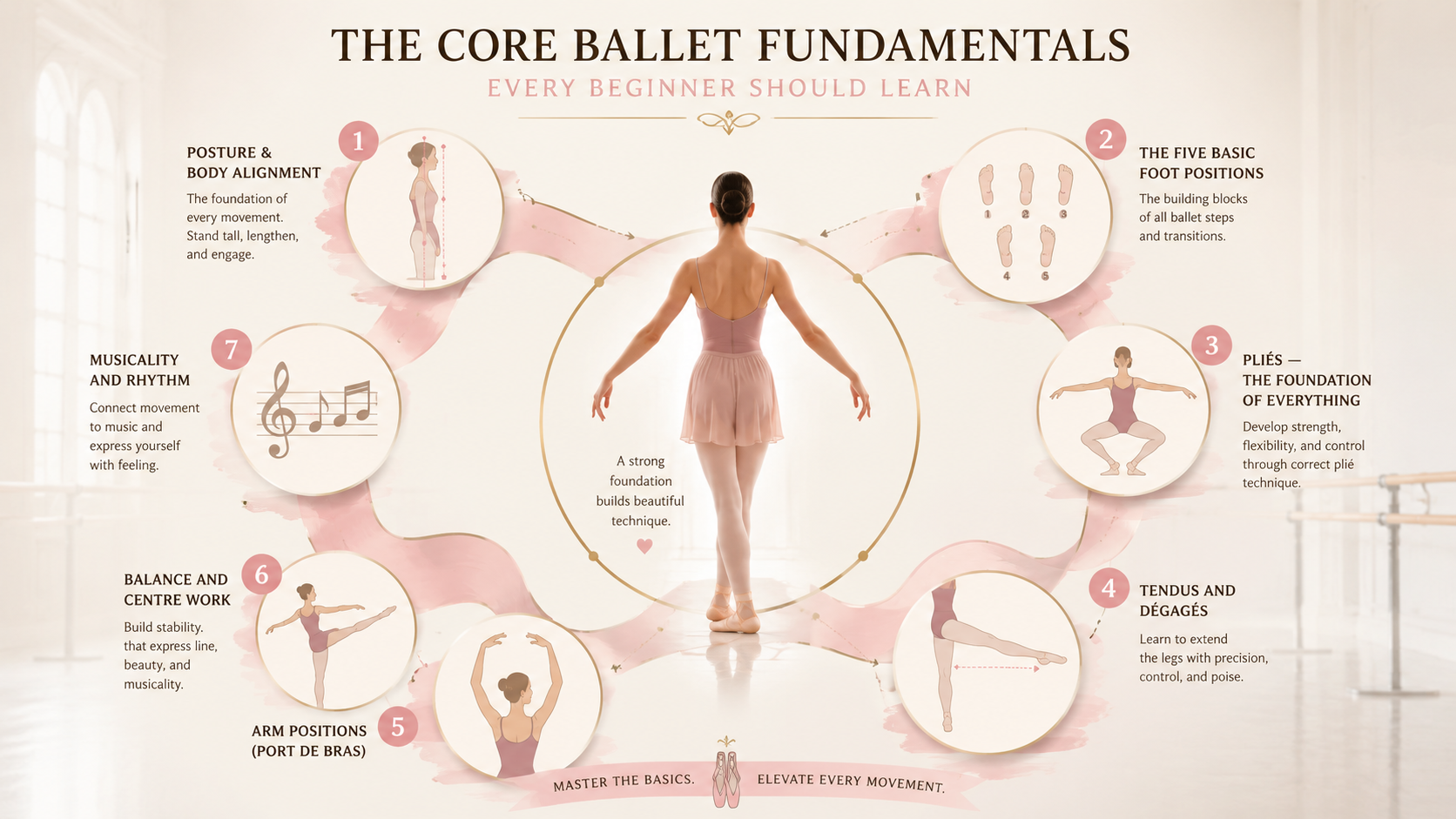
Every ballet skill is built on a few key fundamentals. When children learn these basics properly, they develop stronger technique, better confidence, and a solid foundation for future progress.
1. Posture and Body Alignment
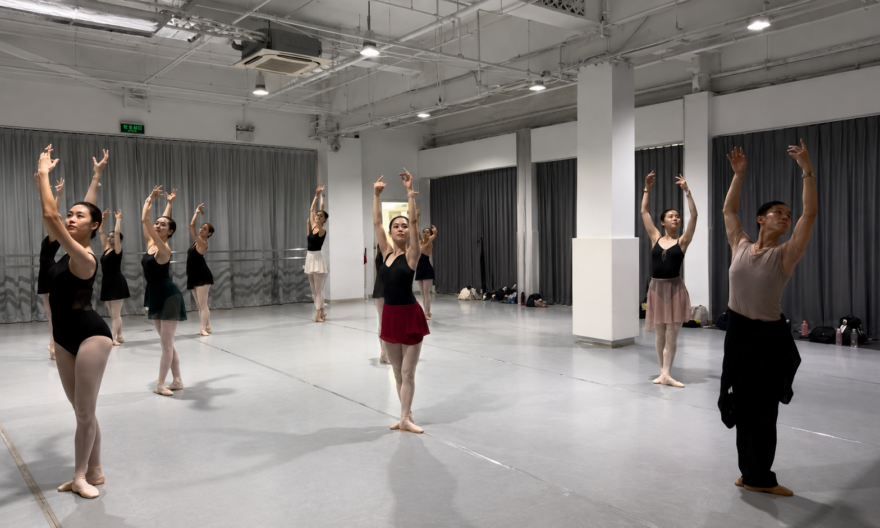
All ballet movements begin with the dancer’s body position. Children must first learn correct body positioning and self-awareness before they can begin learning dance movements.
- Shoulders relaxed and down
- Core gently engaged
- Head lifted with the chin parallel to the floor
Strong posture helps dancers move with control and elegance.
2. The Five Basic Foot Positions
Every ballet movement requires the five fundamental ballet positions as its base.
- First Position: The heels must touch while the toes should point outward.
- Second Position: Feet apart with toes turned outward.
- Third Position: One foot is placed slightly in front of the other.
- Fourth Position: One foot in front with space between both feet.
- Fifth Position: Feet crossed closely with turnout maintained.
These positions help children build balance, control, and proper technique.
3. Pliés — The Foundation of Everything
Children learn Pliés as their initial ballet exercise when they start their training. These exercises, which appear basic, serve as essential elements for developing strength and movement control.
- Improve leg strength
- Develop flexibility
- Prepare the body for jumps and turns
Almost every ballet class begins with pliés for a reason.
4. Tendus and Dégagés
These exercises teach children how to extend and point their feet correctly. The exercises function to build the required power, which enables students to perform better ballet techniques.
- Strengthen the feet and ankles
- Improve leg extension
- Develop precise footwork
Strong feet create cleaner and more graceful movements.
Related Post: How to Help Your Child Overcome Dance Challenges and Setbacks
5. Arm Positions (Port de Bras)
Ballet requires dancers to master their feet, yet their performance depends on their entire body.
- Learn basic arm positions
- Develop smooth transitions
- Improve overall coordination
Soft and controlled arms help dancers look more polished.
6. Balance and Centre Work
Children who learn to trust the barre start to practice their movements at room while they let go of their support.
- Standing on one leg
- Relevés and balance exercises
- Controlled body movement
Balance develops gradually through consistent practice.
7. Musicality and Rhythm
Ballet shows kids how to express themselves through musical movement instead of following basic dance steps.
- Follow the beat of the music
- Understand rhythm and timing
- Respond to different musical styles
Good musicality brings every ballet movement to life.
What a Good Ballet Class for Children Actually Looks Like
| Element | What to Look For |
| Class size | Small groups (8–12 children max) |
| Teacher qualification | Trained in the RAD or CSTD syllabus |
| Barre work | Included from early levels |
| Music use | Live piano or quality recorded music |
| Progression | Clear syllabus with graded levels |
| Environment | Safe, encouraging, and structured |
What Makes Elevate Dance Academy Different
Dance schools show different approaches to teaching beginners because they operate with various methods.
Elevate Dance Academy conducts ballet class for children, which help them develop proper technique while they gain self-assurance and artistic expression.
What sets Elevate apart:
- Offers a structured curriculum which follows the requirements of official dance examination boards.
- Students receive individualised instruction because the program maintains restricted student numbers.
- Teachers at this school bring their dance expertise to their instruction of young students.
- Children obtain their learning and development through an environment which supports them.
Elevate Dance Academy provides parents with a suitable beginner dance program for children, which offers professional instruction together with enjoyable activities.
Is Ballet in Singapore Right for Your Child?
Ballet in Singapore maintains an active network of educational institutions and performance venues which support the local dance community.
Children who start dance lessons early gain real benefits because they can learn body control and mental focus, which will help them throughout their entire lifespan.
Children who enjoy classical ballet and those who like to dance to music need to establish a strong basic foundation, which will open all possible paths for their future development.
Conclusion
Every great ballet dancer starts with the basics. The fundamental dance abilities, which include posture and balance, turnout and basic movements, serve as the base for dancers to perform with self-assurance and find pleasure in their dance activities.
Anyone who wants to join ballet in Singapore should select their first class from the basic fundamental training, which delivers vital information. Young dancers at Elevate Dance Academy obtain professional training through their safe space, which helps them develop their ballet skills while they become passionate about the art form.
Ready to take the first step? Contact Elevate Dance Academic today to learn more about our kids’ beginner dance class programmes and find the perfect ballet class for children to start their dance journey with confidence.
Frequently Asked Questions
At what age should my child start ballet?
Experts agree that children should begin their first dance lessons when they reach the age range between three and six years old. Formal dance training through technique lessons starts when students reach the age bracket of five to seven.
How often should a beginner attend ballet class?
For young beginners, one class per week is plenty. Children who prove their dedication to dance should attend two classes every week. Quality matters far more than quantity at the early stages.
What should my child wear to their first ballet class?
Most studios require a simple ballet leotard, tights, and soft ballet shoes. Hair should be pulled back neatly, ideally in a bun. Check with your specific school, as many have a dress code for uniformity and professionalism.
Is ballet good for shy or anxious children?
Ballet serves as an effective method through which parents can help their quiet children develop self-assurance. Shy children decrease their social anxiety because they understand their duties when they operate within a structured setting.