

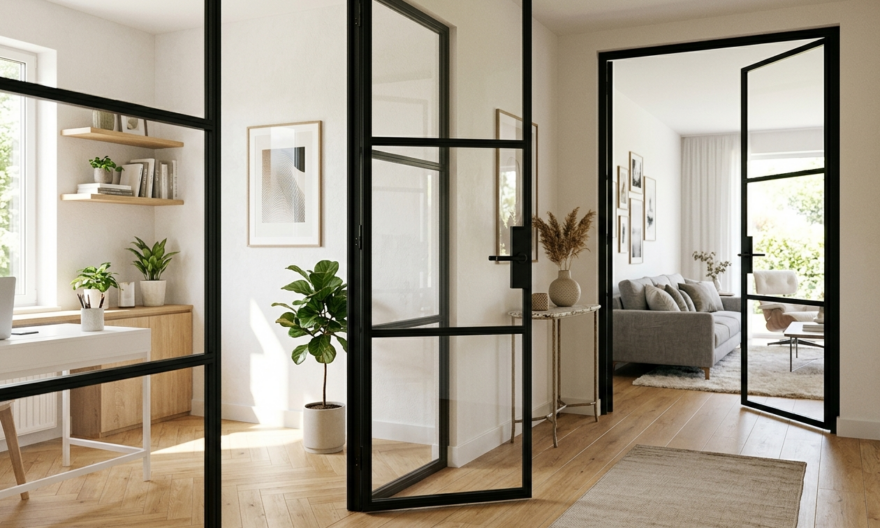
An aluminium glass door combines slim, durable framing with transparent panels to create spaces that feel open, connected, and well-lit. In Singapore’s compact urban homes, this combination addresses two persistent challenges at once — making rooms feel larger without sacrificing defined zones. It suits HDB flats, condominiums, and landed properties equally well.
If you’re renovating or redesigning your home in Singapore, upgrading to an aluminium glass door is one of the most impactful decisions you can make — both aesthetically and functionally.
What Makes Aluminium Glass Doors Different From Other Door Options?
Most traditional doors — timber, PVC, or hollow-core — close off space visually and block natural light. Aluminium frames, by contrast, are structurally strong yet incredibly thin. This allows for larger glass panels, more light transmission, and a cleaner line profile that works perfectly with minimalist interiors.
Aluminium also doesn’t warp, swell, or rot — all real concerns in Singapore’s humid tropical climate. A timber door installed in 2019 may already show signs of warping by the third year. Aluminium holds its shape and finish for decades with minimal upkeep.
Key Benefits of Aluminium Glass Doors for Singapore Homes
1. Natural Light Without Sacrificing Privacy
One of the biggest advantages is the ability to flood interiors with daylight. In many Singapore HDB units and condominiums, interior rooms have no windows. Installing a glass door between a bedroom and a corridor, or between a study and a living room, allows light to travel through without opening the space entirely.
Frosted, fluted, or tinted glass variants offer privacy where needed — for bathrooms, bedrooms, or home offices — while still keeping the light flowing.
2. Space Optimisation in Compact Layouts
Singapore’s average new HDB flat sits at around 85 to 105 square metres. Every design decision matters at this scale. Replacing a solid door with a sliding glass door removes swing clearance entirely, freeing up usable floor area in tight corridors and small rooms.
Pocket sliding variants take this further — when open, the door disappears into the wall cavity, leaving a completely unobstructed opening. This is particularly effective for connecting living and dining areas or opening up a kitchen to the main living space.
3. Contemporary Aesthetic That Ages Well
Contemporary glass doors have become a defining feature of modern Singapore interior design. Their clean geometry pairs effortlessly with current trends: Japandi styling, industrial minimalism, and Scandinavian-influenced palettes all rely on the kind of restrained, functional elegance that aluminium framing delivers.
Unlike wood or laminate finishes that date quickly, a matte black or brushed silver aluminium frame door remains relevant across multiple renovation cycles.
4. Durability in Singapore’s Climate
Singapore’s average relative humidity sits between 70% and 80% year-round, according to the Meteorological Service Singapore. Materials that absorb moisture — timber, MDF-based products — deteriorate faster in this environment. Aluminium frame doors are non-porous and corrosion-resistant, making them one of the most climate-appropriate framing materials available for local conditions.
The glass panels themselves are typically tempered, which increases impact resistance and ensures safety — a requirement under Singapore’s building standards for interior glazing in residential settings.
Where to Use Aluminium Glass Doors in Your Home
Not every door in the home needs to be replaced. Here’s where aluminium glass doors deliver the greatest impact:
- Study or Home Office: Maintain visual connection with the rest of the home without noise bleed. A fluted glass panel gives just enough privacy while keeping the space from feeling isolated.
- Kitchen Partition: Open kitchens are popular in Singapore, but not always practical for cooking odours and heat. A sliding glass door lets you close off the kitchen when needed while keeping the open-plan look intact.
- Master Bedroom En-Suite: Frameless or slim-frame glass panels between bedroom and bathroom create a hotel-suite feel in even a modest HDB master bedroom.
- Balcony Access: Aluminium frame doors are an ideal material for balcony-facing doors due to their weather resistance and ability to accommodate large glass panels that maximise views.
- Room Dividers: In studio or one-bedroom units, a full-height aluminium glass partition with a sliding door can define zones without making the space feel boxed in.
Aluminium vs. Other Frame Materials: A Quick Comparison
| Feature | Aluminium Frame | Timber Frame | PVC Frame
|
|---|---|---|---|
| Humidity Resistance | Excellent | Poor | Good |
| Slim Profile Options | Yes | Limited | No |
| Lifespan | 20–30 years | 10–15 years | 10–20 years |
| Design Flexibility | High | Medium | Low |
| Maintenance | Minimal | High | Low |
What to Look for When Choosing an Aluminium Glass Door
Not all aluminium glass doors are built the same. Here are the specifications that matter most for Singapore homeowners:
- Glass Type: Tempered glass (minimum 6mm for interior use) is the safety standard. For bathrooms or high-privacy zones, opt for frosted or reeded glass.
- Frame Finish: Anodised finishes last longer than powder-coated options in humid conditions. Matte black, brushed silver, and champagne gold are the most popular current choices in Singapore residential projects.
- Track Quality: For sliding glass doors, the track and roller mechanism determine how the door feels after five years, not just on installation day. Look for stainless steel bottom tracks and sealed bearings.
- Panel Height: Floor-to-ceiling panels (2.4m to 3m) create a significantly more elevated visual effect than standard door heights. If ceiling height permits, go full height.
Do Aluminium Glass Doors Fit Into Singapore’s Renovation Approval Process?
For most interior glass door installations in HDB flats — where the door replaces an existing interior doorway and no structural walls are altered — no HDB approval is required. However, if you’re modifying a wall opening or creating a new partition that involves structural work, approval from HDB or a Licensed Engineer is necessary.
For condominiums and landed property, the same principle applies: non-structural interior installations typically fall within permitted renovation works under the Building and Construction Authority (BCA) guidelines. Always verify with your renovation contractor before proceeding with any structural modifications.
Is the Investment Worth It?
Interior design professionals consistently note that glass and aluminium elements tend to retain their appeal across multiple renovation cycles — unlike heavily trend-driven finishes. In Singapore’s competitive property resale market, well-executed interior upgrades, especially those that improve perceived space and light, can positively influence buyer impressions during viewings.
Beyond resale value, the day-to-day quality of life improvement is immediate. A home that feels brighter, more open, and better connected to natural light is simply more pleasant to live in — and that’s a return that starts the moment the installation is complete.
For homeowners and interior designers looking for quality aluminium glass door options that combine craftsmanship with considered design, Cubo Collective offers a curated range built for modern Singapore living.
Frequently Asked Questions
Are aluminium glass doors suitable for HDB flats in Singapore?
Yes. Aluminium glass doors are widely used in HDB flats for interior applications such as bedroom partitions, kitchen separators, and study rooms. They are lightweight, humidity-resistant, and do not require structural modification in most standard installations, making them practical and compliant for typical HDB renovation projects.
What type of glass is best for an aluminium glass door in a home?
Tempered glass is the recommended choice for home aluminium glass doors due to its safety properties — it shatters into small, blunt pieces rather than sharp shards. For privacy-sensitive areas like bathrooms or bedrooms, frosted or fluted tempered glass provides the right balance of light transmission and visual discretion.
How much does an aluminium glass door cost in Singapore?
Pricing varies based on panel size, glass type, frame finish, and hardware. Standard interior aluminium glass doors in Singapore typically start from around SGD 800 to SGD 1,500 for single panels, with full-height or custom configurations ranging higher. Always request an itemised quote that includes installation, track hardware, and any carpentry work required.
Do aluminium glass doors require a lot of maintenance?
Aluminium glass doors are low maintenance. The frames do not rust, warp, or require repainting under normal indoor conditions. Regular wiping with a damp cloth keeps the glass clean, and occasional lubrication of sliding tracks ensures smooth operation. This makes them one of the most practical door choices for Singapore’s humid climate.
Can a sliding glass door help make a small room feel bigger?
Yes. A sliding glass door eliminates the swing clearance required by hinged doors, freeing up usable floor space. The transparency of the glass panel also extends the visual depth of a room by allowing sightlines to pass through. Both effects contribute meaningfully to how spacious a compact Singapore interior feels.
What frame colours are trending for aluminium glass doors in Singapore?
Matte black frames remain the most popular choice for contemporary and minimalist interiors in Singapore, followed by brushed silver and champagne gold. These finishes complement current interior trends including Japandi, industrial, and Scandinavian-influenced styles, and they hold their aesthetic relevance across multiple renovation cycles without looking dated.