


A Chinese custom funeral is a series of rites that start immediately after death and end with burial or cremation. The process normally lasts three to seven days and includes body preparation, a wake ceremony, religious rites, a funeral procession and final committal. Traditions vary from dialect group to religion to family preference, but the basic sequence is similar among most Chinese funerals in Singapore.
Losing a family member is overwhelming. Knowing what to expect — step by step — helps families navigate this period with clarity and intention. A Chinese custom funeral is more than a farewell. It is a carefully observed practice rooted in respect for the deceased and comfort for those left behind.
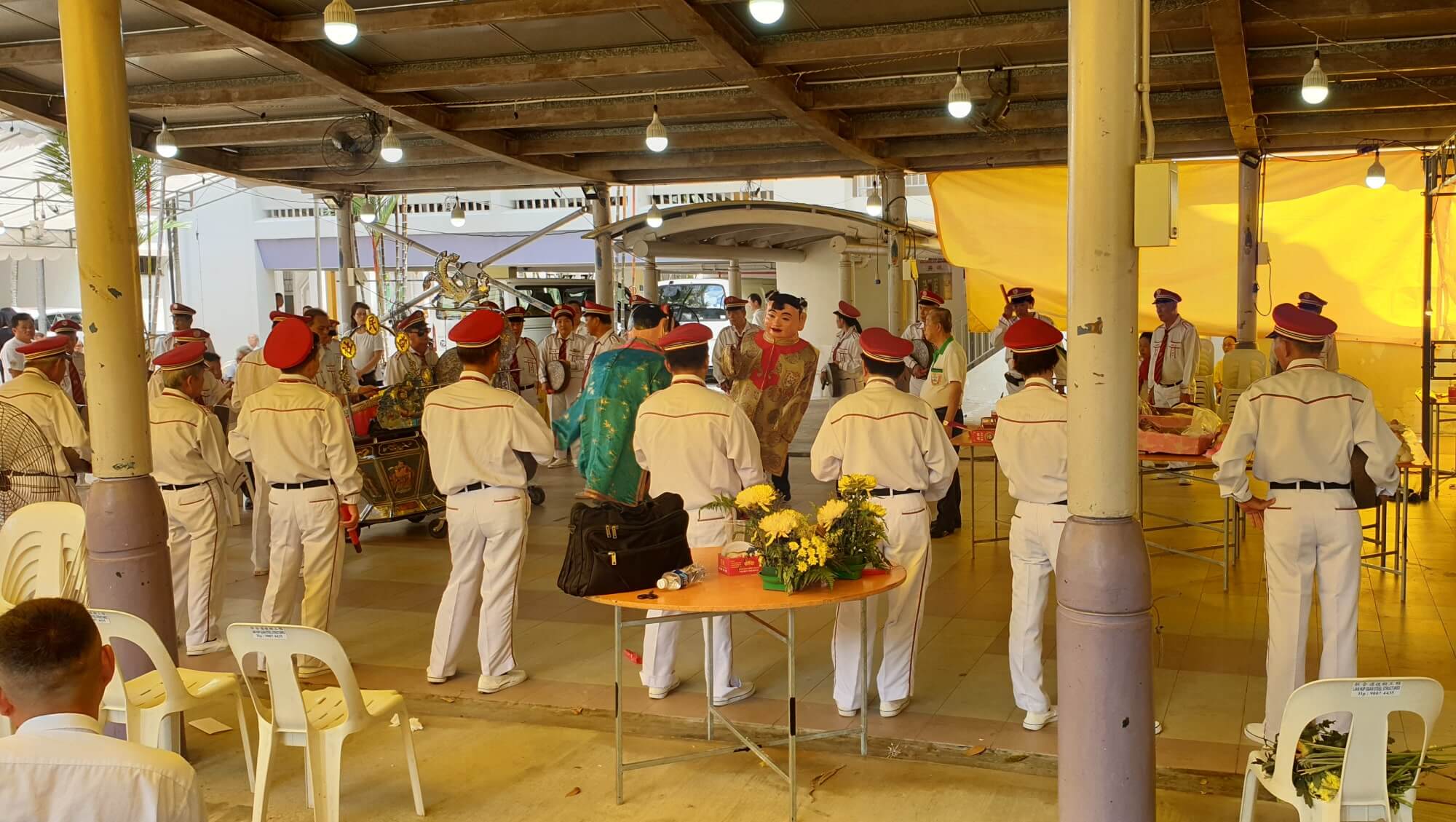
Step 1: Notification and Initial Preparations (Day 1)
The moment a loved one passes, the family notifies close relatives and contacts a funeral service provider. In Singapore, a death must be certified by a registered doctor, and a Death Certificate is issued before funeral arrangements can proceed — this is a legal requirement under the Registration of Births and Deaths Act.
The funeral director then assists with:
- Collecting the body from the hospital or home
- Performing ritual cleansing and dressing of the deceased
- Selecting an auspicious date and time for the wake and funeral
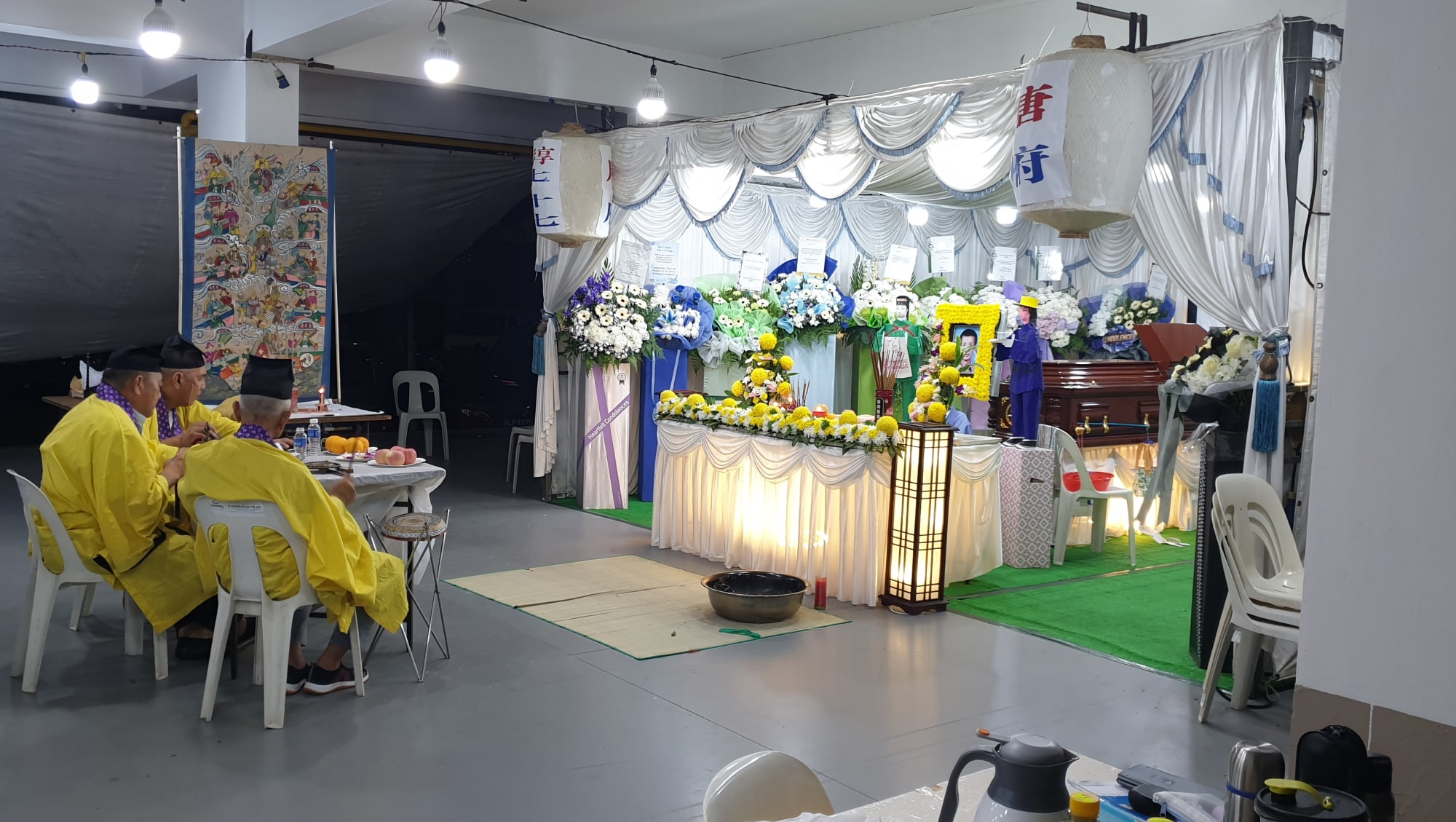
- Setting up the wake venue — typically a void deck, funeral parlour, or private residence
Many families in Singapore choose a void deck setup, which allows the community to pay respects in a familiar, accessible space. The body is placed in a casket and positioned facing the entrance so visitors can approach to offer condolences.
Step 2: The Wake Ceremony — Receiving Mourners (Days 1–3)
The wake is the central gathering period. It typically lasts two to three days, though some families extend it to five or seven days based on tradition or logistical needs. During this time, friends and colleagues visit to offer their respects, sign the condolence register, and present funeral wreaths or white envelopes (pek kim) to help the family with funeral expenses.
What Happens at the Wake Altar
Beside the casket is an altar with a framed picture of the deceased, incense, candles and offerings of fruit, food and paper items. Incense is kept burning continuously – it is believed to guide the deceased’s spirit.
The immediate family (and other family members) wear white or dark mourning clothes. Children may wear mourning clothes of sackcloth as a sign of filial piety. The overnight watch is usual, with family members taking turns to sit beside the coffin.
Religious Rites During the Wake
The religious component varies by the family’s belief system:
- Taoist funerals involve priests chanting scriptures, performing rituals to transfer merit, and conducting symbolic ceremonies to ease the soul’s transition.
- Buddhist funerals include monks or nuns chanting sutras, prayers for the deceased, and offering of vegetarian food.
- Free-thinker or secular funerals may involve simple prayer sessions and music, without formal religious rites.
Paper offerings — such as paper money, houses, cars, and clothes — are burned during the wake so the deceased has provisions in the afterlife. This practice remains deeply embedded in Singaporean Chinese funeral culture.
Step 3: The Funeral Procession
On the final day of the wake, the funeral procession takes place. This is an emotionally significant moment where the family accompanies the deceased on their final journey from the wake venue to the crematorium or burial ground.
Key elements of the procession include:
- A final prayer or chanting session at the wake venue
- Family members bowing or kneeling before the casket
- The casket being carried out — often by male family members or pallbearers
- A hearse leading the procession, followed by family vehicles
- Burning of paper offerings and firecrackers (where permitted)
In Singapore, funeral processions must comply with local traffic and noise regulations. Most funeral service providers manage the logistics and liaise with relevant authorities on the family’s behalf.
Step 4: Cremation or Burial
Singapore’s land constraints mean that cremation is far more common than burial today. According to the National Environment Agency (NEA) of Singapore, cremation is the predominant choice, with most Chinese families opting for cremation at facilities such as Mandai Crematorium.
At the Crematorium
The family gathers for a final service before the casket is committed. A short ceremony — prayers, eulogies, or chanting — is held in the chapel. The casket is then cremated, and ashes are collected in an urn. Families may choose to store the urn at a columbarium niche or scatter the ashes at sea through NEA-approved sea burial arrangements.
Burial Option
For those who choose burial, Bukit Brown and Choa Chu Kang Cemetery are among the designated sites in Singapore. Burial plots are allocated under NEA guidelines, and families must adhere to set timeframes for grave maintenance and renewal.
Step 5: Post-Funeral Rites and the Third Day Ceremony
The funeral ceremony in Singapore does not end at cremation or burial. Most Chinese families observe follow-up rituals in the days after.
- Third day return (回魂): The spirit of the deceased is believed to return home on the third day after death. Family members prepare offerings and wait for the spirit’s visit before dismissing it with prayer.
- Seven-day intervals: Prayers and offerings are made every seven days for up to 49 days, especially in Buddhist and Taoist traditions.
- 100-day observance: Some families observe a full mourning period of 100 days, during which certain joyful activities are avoided as a mark of respect.
These post-funeral rites give the family ongoing structure and community support during the grieving process — they are not formalities but meaningful expressions of love and remembrance.
Practical Tips for Families Arranging a Chinese Funeral in Singapore
- Engage a funeral director early — they manage permits, venue bookings, and religious coordination.
- Check HDB void deck booking requirements with your town council in advance.
- Ask your funeral home in Singapore about package inclusions — most cover casket, hearse, altar setup, and cremation coordination.
- Clarify dialect-specific customs with your funeral provider, as Hokkien, Teochew, Cantonese, and Hakka traditions differ in ritual details.
- Inform overseas family members early so they can arrange travel in time for the wake.
When the time comes, having a trusted, experienced team by your side makes all the difference. Singapore Buddhist Funerals brings deep knowledge of Chinese funeral customs and a compassionate approach to every family they serve — giving you the space to grieve while they handle every detail with care. Visit the Singapore Buddhist Funerals homepage to learn more about their services.
Frequently Asked Questions
How long does a Chinese custom funeral typically last in Singapore?
A Chinese custom funeral in Singapore is usually held for three to seven days from the day of death. The period of mourning lasts for two to three days, and on the last day the funeral procession and cremation or burial are performed. Depending on the religious tradition, post-funeral rites can last up to 49 or 100 days.
What should I wear to a Chinese wake in Singapore?
Guests attending a Chinese wake should dress in dark, muted colours such as black, grey or dark blue. Avoid bright colours, especially red, which is associated with celebration. Close family members usually dress in white or in formal mourning to show respect for the dead.
What is the difference between a Taoist and Buddhist Chinese funeral?
In a Chinese Taoist funeral , priests perform rituals to guide the soul and transfer merit . Often there are more elaborate ceremonies and paper burning . Buddhist funeral services focus on chanting sutras and prayers for rebirth by monks. Both pay respects to the dead but have different scriptural traditions and ritual structures in the wake and procession.
Is burial or cremation more common for Chinese funerals in Singapore?
In Singapore, limited land availability means that cremation is far more common. The National Environment Agency (NEA) manages cremation facilities at Mandai Crematorium. Families may choose to place ashes in a columbarium niche or for a sea burial. Burial will still be available at designated cemeteries like Choa Chu Kang, subject to NEA regulations.
What is pek kim and is it required at a Chinese wake?
Pek kim, white envelope of cash given by guests to help the bereaved family with funeral expenses. It is a common and widely practiced gesture at wakes at Chinese funerals in Singapore. Not really required but culturally expected and a good way to show condolences and support for the family.
Can I arrange a Chinese funeral if the deceased had no prior religious affiliation?
Yes. Many of Singapore’s funeral providers offer free-thinker or secular Chinese funeral packages that respect cultural customs but do not involve formal religious rites. These services may include simple prayers, music and incense. A good funeral home in Singapore will assist families in making the ceremony personalized to the values of the dead and the family.
