


Choosing between an emerald cut and a round cut comes down to four things: sparkle style, shape aesthetics, overall silhouette, and how the stone looks on the hand. Round cuts deliver maximum brilliance through their 58 facets, while emerald cuts offer a sleek, hall-of-mirrors effect with a more architectural elegance. Both are timeless — the right choice depends on personal style.
If you are exploring emerald cut engagement rings and wondering how they compare to the ever-popular round brilliant, this guide breaks down everything you need to know — from light performance and finger coverage to price differences and the styles each shape naturally suits.
What Is the Core Difference Between Emerald and Round Cut Diamonds?
These two shapes sit at opposite ends of the diamond design spectrum. One is built for fire and flash. The other is built for clarity and cool elegance.
A round cut diamond features 58 precisely angled facets engineered to maximise light return. The result is intense brilliance — small bursts of white and coloured light that flash with every movement. It is the world’s most popular diamond shape for a reason.
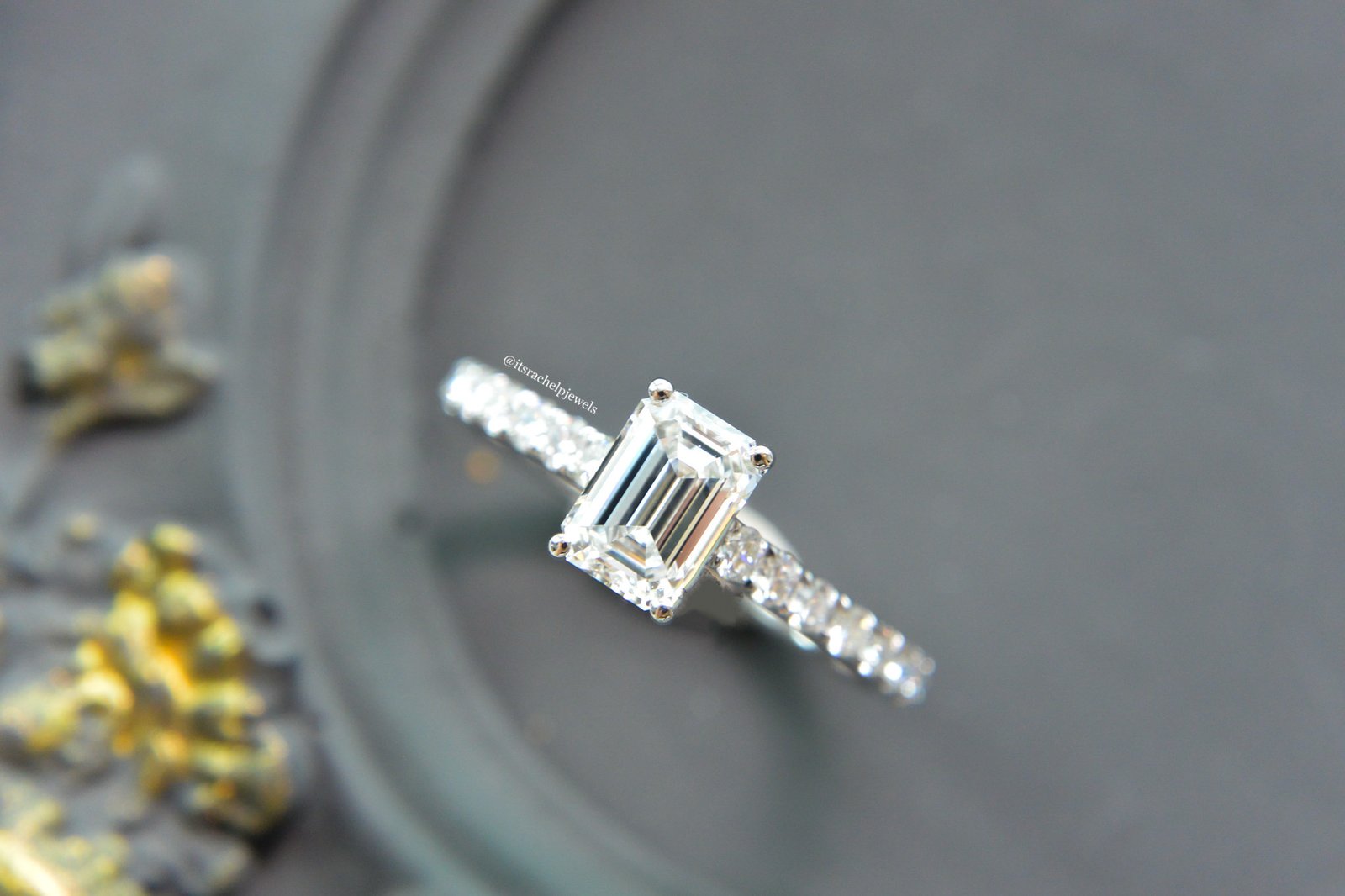
An emerald cut diamond has a rectangular shape with cut corners and step-cut facets. Instead of sparkling, it creates long, dramatic reflections — what jewellers call a “hall of mirrors” effect. It is a shape associated with old Hollywood glamour and quiet confidence.
Sparkle: Which Cut Has More Brilliance?
Round cuts win on raw sparkle. Their brilliant-cut facet arrangement is specifically designed to maximise light dispersion, producing both brilliance (white light) and fire (coloured light flashes). Even in low light, a round diamond looks alive.
Emerald cuts, by contrast, do not produce the same level of brilliance. Their step-cut facets create broad flashes of light rather than a scattered sparkle. Think of it as the difference between a disco ball and a wide mirror — both catch light beautifully, just in very different ways.
Bottom line on sparkle:
- Round cut = high brilliance, fire, and scintillation
- Emerald cut = elegant, broad light reflection with a sophisticated glow
Shape and Silhouette: How Each Cut Looks on the Hand
Shape matters enormously when an engagement ring sits on your finger every day. The two cuts create very different visual impressions.
Round Cut: Classic and Universally Flattering
The round brilliant is a timeless circle — symmetrical, balanced, and versatile. It suits virtually every hand shape, finger length, and band style. It is the go-to if you want a ring that looks stunning in every setting, from a simple solitaire to an elaborate halo design.
Emerald Cut: Elongated, Sleek, and Modern
The emerald cut’s rectangular silhouette naturally elongates the finger, making it a popular choice for those who prefer a leaner, more minimalist look. The open table facet also means the stone displays prominently — which makes it ideal for showcasing exceptional clarity.
One practical note: because the emerald cut has a larger face-up surface area than a round diamond of the same carat weight, it can appear bigger to the eye. That is a meaningful advantage for buyers working within a specific budget.
Emerald Cut vs Round Cut: Side-by-Side Comparison
| Feature | Emerald Cut | Round Cut |
|---|---|---|
| Facet Style | Step-cut (rectangular facets) | Brilliant-cut (triangular facets) |
| Sparkle Type | Broad, glassy flashes | High brilliance and fire |
| Shape | Rectangular with cut corners | Perfectly round |
| Finger Effect | Elongates the finger | Balanced, versatile look |
| Face-up Size | Larger appearance per carat | Smaller face-up per carat |
| Clarity Requirement | Higher (inclusions more visible) | Lower (brilliance hides inclusions) |
| Price (same carat) | Generally 20–30% less | Higher demand = higher premium |
| Style Association | Modern, minimalist, vintage-glam | Classic, romantic, universally loved |
Clarity and Colour: Why the Cut Affects More Than Just Shape
Here is something many buyers overlook: the cut style directly affects how much you need to spend on clarity and colour grades.
The emerald diamond ring’s open, step-cut facets act like a window. Inclusions and colour tints are far more visible to the naked eye than they would be in a round diamond. If you choose an emerald cut, jewellers typically recommend prioritising a higher clarity grade — VS2 or above — and a colour grade of H or better.
With a round diamond ring, the brilliant facet arrangement scatters light so effectively that inclusions and slight colour differences become much harder to detect. You can often choose a lower clarity grade — SI1 or even SI2 — without it affecting the stone’s visual appeal.
Practical guidance:
- For an emerald cut: prioritise clarity and colour
- For a round cut: you can comfortably trade down slightly on clarity to invest in carat size or cut grade
Price Difference: Is an Emerald Cut More Affordable?
Yes — typically by a meaningful margin. Round brilliant diamonds command a significant price premium because demand is higher and more rough diamond material is lost during cutting. Emerald cut diamonds, on average, cost 20 to 30 per cent less per carat than a comparable round stone.
However, the total price equation is not completely one-sided. Because emerald cuts demand higher clarity grades, you may spend more per carat on the quality tier you choose. Still, for many buyers, the emerald cut offers exceptional value — especially if the goal is a visually large stone within a set budget.
Which Style Suits the Emerald Cut Best?
The emerald cut’s clean geometry looks especially powerful in certain settings:
- East-West solitaire: The stone is set horizontally for a striking, unconventional look
- Three-stone ring: Flanking baguettes or trillion-cut side stones complement the step-cut facets beautifully
- Bezel setting: Highlights the rectangular outline while protecting the cut corners
- Art Deco-inspired settings: The geometric lines of Art Deco design are a natural match
Round cut diamonds are more setting-agnostic — they look equally at home in a six-prong solitaire, a pavé band, a halo, or a vintage milgrain setting.
Who Should Choose an Emerald Cut Engagement Ring?
An emerald cut suits someone who values understated elegance over high-impact sparkle. It is the shape for the person who gravitates towards clean lines, architectural fashion, and timeless style that does not shout for attention — it simply commands it.
It is also the right choice if:
- You want the stone to appear larger than its carat weight suggests
- You prefer a longer, leaner look on the hand
- You are drawn to Art Deco, minimalist, or vintage-inspired aesthetics
- Budget efficiency matters and you are willing to invest more in clarity
Who Should Choose a Round Cut Engagement Ring?
The round brilliant is the undisputed classic. If you want a ring that sparkles brilliantly in every lighting condition, suits every setting style, and never goes out of fashion — the round cut is your answer.
Choose a round diamond ring if:
- Maximum brilliance and fire are your top priorities
- You prefer a universally flattering, timeless shape
- You want flexibility across different ring settings and band styles
- You are less concerned about face-up size and more focused on sparkle quality
The Final Verdict: Which Cut Is Right for You?
There is no objectively better choice — only the one that fits your style, priorities, and how you want the ring to make you feel every time you look at it.
Choose a round cut if brilliance, tradition, and versatility matter most. Choose an emerald cut if you are drawn to sleek elegance, a larger visual presence, and a shape with genuine fashion-forward personality.
If you are leaning towards the emerald cut, Rachel P Jewels offers a curated collection of emerald cut engagement rings designed for couples who want something both refined and distinctive — crafted with care in Singapore.
Frequently Asked Questions
Is an emerald cut engagement ring more expensive than a round cut?
No — emerald cut diamonds are typically 20 to 30 per cent less expensive per carat than round brilliant diamonds. However, emerald cuts require higher clarity grades since inclusions are more visible, which can partially offset the savings depending on the quality tier you choose.
Does an emerald cut diamond look bigger than a round cut of the same carat weight?
Yes. The emerald cut has a larger face-up surface area than a round diamond of equivalent carat weight, making it appear visually bigger. This makes the emerald cut a smart choice for buyers who want maximum visual presence within a defined budget.
Which diamond cut has more sparkle — emerald or round?
Round cut diamonds produce significantly more brilliance and fire due to their 58 brilliant-cut facets. Emerald cuts create a different kind of beauty — broad, glassy light reflections rather than scattered sparkle. The round cut wins on raw sparkle; the emerald cut wins on elegance.
What clarity grade should I choose for an emerald cut diamond?
For an emerald cut diamond, aim for VS2 clarity or higher. The step-cut facets act like a window, making inclusions more visible than in brilliant-cut diamonds. Investing in better clarity ensures the stone looks clean and striking to the naked eye.
Are emerald cut engagement rings trending in Singapore?
Yes. Emerald cut engagement rings have seen growing popularity in Singapore among couples who favour minimalist, modern aesthetics. The shape’s clean geometry suits contemporary ring settings and aligns well with the preference for understated luxury that is increasingly common among Singapore buyers.
Can an emerald cut ring suit all finger shapes?
The emerald cut’s elongated rectangular shape is particularly flattering on shorter or wider fingers, as it visually lengthens the hand. It works well across most finger types, though a round cut offers slightly more universal versatility across all hand shapes and sizes.