


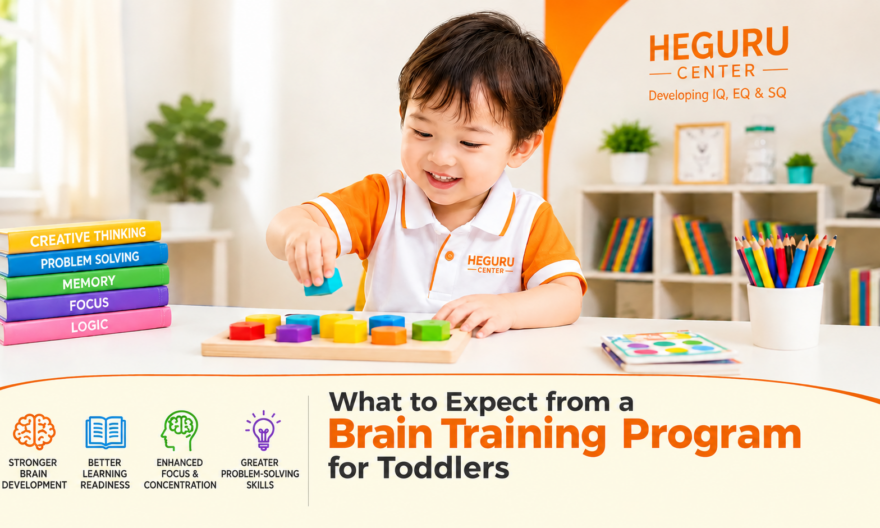
A brain training program for toddlers uses structured, play-based activities to stimulate both the left and right hemispheres of the brain during the critical early development window. These programs typically involve memory exercises, sensory input, music, flashcards, and imaginative play — all designed to build cognitive foundations before formal schooling begins.
If you’re a parent exploring brain training for kids, it’s completely natural to wonder what actually happens inside the classroom. What does your toddler do for an hour? Will they sit still? Will they enjoy it? This guide walks you through a typical session, the learning environment, and what developmental outcomes to realistically expect.
Why Early Brain Stimulation Matters for Toddlers
The first three years of life are the most neurologically active period a human being will ever experience. According to the National University of Singapore’s research on early childhood development, brain connections form at an extraordinary rate in children under three — with neural pathways shaped by every sound, touch, and interaction a child encounters.
This is precisely why structured early learning programs have grown in demand across Singapore. Parents aren’t just looking for childcare. They’re looking for intentional environments that make the most of this narrow developmental window.
What Does a Brain Training Class for Toddlers Actually Look Like?
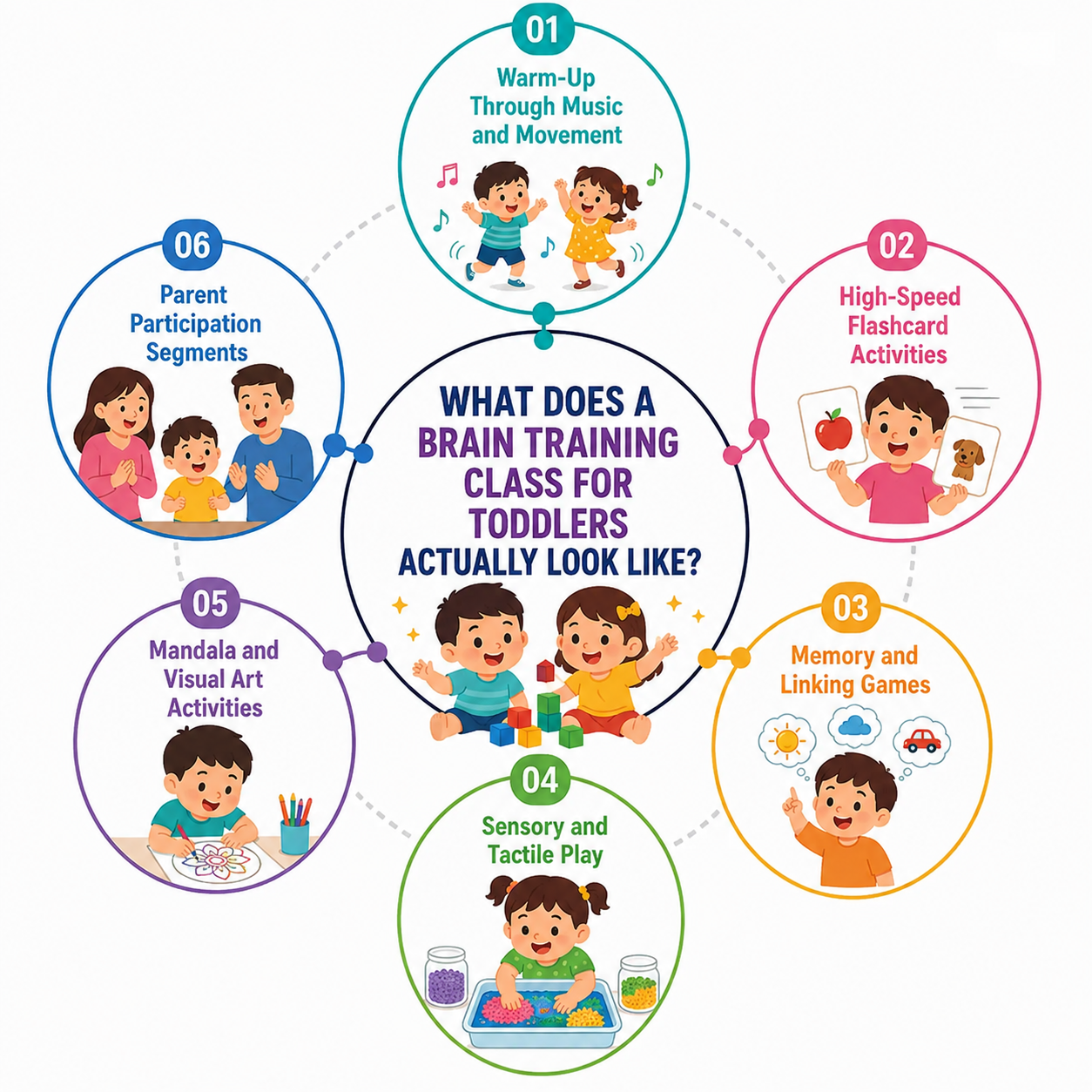
This is the most common question parents ask before enrolling. The short answer: it looks nothing like a traditional classroom. There are no desks, no worksheets, and no sitting quietly for extended periods.
A typical session lasts between 50 and 65 minutes and is structured in rotating segments, each targeting a different cognitive or sensory function. Here’s a general breakdown of what to expect:
1. Warm-Up Through Music and Movement
Sessions often begin with songs, clapping rhythms, or call-and-response activities. This isn’t just fun — it activates auditory processing and helps toddlers transition into a focused state. Rhythm-based activities are a known tool for improving phonological awareness, an early predictor of literacy.
2. High-Speed Flashcard Activities
One of the most distinctive features of right brain training for toddlers is rapid image presentation. Flashcards containing words, numbers, nature images, or patterns are shown at speed — sometimes 50 to 100 cards in under two minutes. This trains photographic memory and right-brain image processing, which peaks before age six.
3. Memory and Linking Games
Children are introduced to short memory chains — linking unrelated objects through a story or visual image. For example, a toddler might link a banana, a clock, and a frog through a silly narrative. This builds associative memory skills that support future learning across all subjects.
4. Sensory and Tactile Play
Toddlers engage with textured materials, sand trays, and physical objects to activate proprioceptive input. Sensory activities strengthen neural connections between the body and brain, supporting emotional regulation alongside cognitive development.
5. Mandala and Visual Art Activities
Drawing, tracing, or coloring structured visual patterns helps develop spatial reasoning and fine motor control simultaneously. These activities also foster calm, focused attention — a skill that serves children well into their school years.
6. Parent Participation Segments
In infant and toddler programs, parents are typically in the room and are actively guided to participate. This co-learning approach reinforces activities at home and builds attachment, which itself is a positive factor for cognitive development.
Also Read: How Preschool Enrichment Programs Prepare Your Child for Primary School (2026 Guide)
What Is the Learning Environment Like?
The physical environment is just as deliberate as the curriculum. You would expect an energetic, well-organized classroom environment with visual aids, soft play areas, and objects placed at child level for fostering independence. Creating an exciting but not an over-stimulating environment is the objective of the design.
Class sizes remain small, normally consisting of 6 to 10 children, allowing individual attention to each child and the ability to alter the speed of the activities based on their needs. The facilitators are expected to sense the energy in the class and change the activities accordingly.
The atmosphere is very positive and nurturing, which means there are no failure situations. A child who fails to pay attention to a flash card proceeds to another activity.
What Developmental Outcomes Can Parents Expect?
Results are gradual and cumulative. Most parents report noticeable changes after 3 to 6 months of consistent attendance. Common developmental gains observed in children attending structured brain training programs include:
- Improved memory recall — children begin remembering sequences, stories, and visual details more accurately
- Stronger concentration span — even brief structured activities build the habit of sustained focus
- Enhanced language development — regular exposure to rich vocabulary in context accelerates word acquisition
- Emotional regulation — routine and sensory activities contribute to calmer, more confident behaviour
- Early numeracy and literacy readiness — not formal reading or maths, but the neural groundwork that supports them
It’s important to set realistic expectations. Brain training is not a shortcut to academic performance. It is an investment in cognitive flexibility, learning endurance, and curiosity — qualities that compound over time.
Is a Brain Training Program Right for Your Toddler?
The ideal age to begin is between 6 months and 3 years, though many programs accept children up to age 6. Younger children benefit from the sensory and rhythmic elements; older toddlers begin to engage more consciously with memory and pattern activities.
Ask yourself these questions before enrolling:
- Does the program involve parent participation, or is drop-off only?
- How are facilitators trained, and what methodology do they follow?
- Is the curriculum research-backed or purely commercial?
- Are class sizes small enough for individual engagement?
- Does the environment feel welcoming to your child’s temperament?
Most reputable programs offer trial classes. Attending one is the most reliable way to assess whether the environment and teaching style are a good fit.
A Trusted Option in Singapore
For parents in Singapore exploring this space, Heguru Singapore offers a structured infant and toddler program built on the right-brain education methodology developed in Japan. The curriculum integrates flashcard training, memory activities, music, and sensory play into a coherent developmental framework. With trained facilitators and small class sizes, the program is designed to make the most of the early learning window — in a way that feels engaging and natural for young children.
Frequently Asked Questions
At what age should my toddler start a brain training program?
Most brain training programs for toddlers take in children starting at the age of 6 months old. The younger a child is when they are enrolled, the greater their benefits from the critical period of neuroplasticity. Nevertheless, even children aged up to 6 years old may receive significant developmental gains from early education programs.
What is right brain training for toddlers?
Training of the right brain involves stimulating the brain’s right hemisphere that controls creativity, intuition, and visual spatial memory. It involves the use of fast flash cards, images association, and sensory exercises. This kind of training is most effective during pre-school age when the right hemisphere is dominant and very responsive to images.
How long does it take to see results from toddler brain training?
Most parents observe noticeable improvements in memory, focus, and language after 3 to 6 months of consistent attendance. Brain development is gradual — results accumulate over time rather than appearing after a single session. Regular participation and reinforcement at home significantly enhance the outcomes.
Do parents need to attend the class with their toddler?
In almost all the infant and toddlers’ programs, parental involvement is welcomed or even mandatory. This helps the parents to understand the methodologies involved and carry out the activities at home. Furthermore, it will create emotional stability for the child that enhances learning readiness and cognitive development.