

Custom steelwork fabrication is custom made. Custom steelwork fabrication helps eliminate manufacturing errors. It provides precisely constructed fixtures that keep work pieces in consistent, repeatable positions throughout the production process. When components are fastened properly every time, dimensional variation is reduced, rework rates are reduced and failures at quality inspection are significantly less common – leading directly to improved throughput and reduced material waste on the shop floor.
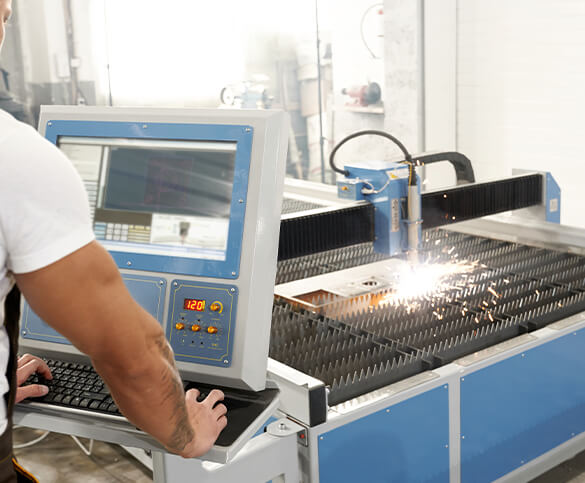
Why Positioning Errors Are Costing Manufacturers More Than They Realise
Manufacturing faults never happen in a vacuum. One part that is out of position early in the production process can cascade down the line, influencing downstream operations, causing several inspection failures, and ultimately delaying delivery. The root cause is frequently inconsistent work holding.
When parts are manually placed by operators without specified fixtures, the operators are relying on their own judgment. That adds human variability. Every shift is different from the next. Fatigue begins. Slightly off-centre loading of parts. These micro mistakes aggregate over hundreds of cycles into large reject rates.
That unpredictability is eliminated at the source with custom steel fixtures.
What Makes Steelwork Fabrication Effective for Error Reduction
Not every fixture is the same. While off-the-shelf clamping methods are convenient, they seldom meet the accuracy tolerances required for complicated components. Custom fabricated steel fixtures, built to the geometry of a part and the machining or assembly process, provide engineered repeatability that generic tooling is unable to replicate.
And this has to do with the substance steel. Its stiffness withstands deflection from the cutting forces. Its thermal characteristics are steady over normal working temperature ranges. And when made to close tolerances, steel fixtures will retain their accuracy for long production runs without the creep or wear of softer materials.
Repeatability: The Core Principle
Repeatability means a fixture returns a part to exactly the same position every single time it is loaded. This is the foundation of process control. When position is guaranteed by the fixture design — rather than the operator’s eye — measurement variation shrinks, and process capability scores improve.
In precision manufacturing environments, achieving a Cpk of 1.33 or higher is a common quality target. Inconsistent workholding is one of the fastest ways to undermine that. A well-fabricated steel fixture can hold positional tolerances to within fractions of a millimetre, run after run, shift after shift.
Secure Workholding Under Real Production Conditions
A fixture that shifts during machining is worse than no fixture at all — it gives operators false confidence while introducing errors invisibly. Custom steel fixtures are designed with the actual cutting forces, vibration profiles, and access requirements of the specific process in mind.
Clamping arrangements, locating pins, and datum surfaces are all engineered together. There is no guessing about whether the workpiece will stay put. The fixture holds it, and it stays held — regardless of whether it is a five-minute cycle or a four-hour one.
Fabrication Accuracy: Where Design Meets the Shop Floor
Fabrication accuracy in custom steel fixtures begins at the design stage. The best fixture fabricators work closely with quality managers and process engineers to understand not just the part geometry, but the full context — where variation currently occurs, what tolerances the finished component must meet, and how the fixture will integrate with existing machinery and inspection routines.
This collaborative approach is what separates effective fixtures from those that look right on paper but cause problems in production. Tolerances specified in the design must be achievable in fabrication and maintainable in use. Steel construction, combined with precision machining of critical datum faces and locating features, ensures those tolerances hold across the fixture’s service life.
How Custom Steel Fixtures Support Quality Inspections
Fixtures do not just support production — they support measurement. Many custom steel fixtures are designed with inspection in mind, providing dedicated datum surfaces or probe access points that allow CMM or gauge measurement directly in the fixture. This eliminates re-datumming between machining and inspection, removing a common source of measurement error.
When the measurement datum matches the machining datum, discrepancies caused by re-fixturing disappear from your measurement system. First-article inspection becomes more reliable. In-process checks take less time. And non-conformances, when they do occur, are far easier to trace to their actual cause.
Reducing Production Errors Across the Full Manufacturing Sequence
The impact of custom steelwork on error reduction extends well beyond a single operation. Consider a typical production sequence: raw material preparation, roughing, finishing, assembly, and inspection. At each stage, how a part is located and held directly influences the quality output of that stage — and every stage that follows.
Custom fixtures, designed as a system rather than as individual stand-alone tools, can maintain a consistent datum reference throughout the sequence. This means errors do not compound. A part machined correctly in stage one arrives at stage three still correctly referenced — not re-clocked from scratch by a different operator using a different method.
Common Sources of Manufacturing Error That Custom Fixtures Address
- Datum shift between operations — fixtures that share a common datum strategy eliminate re-referencing errors
- Operator-to-operator variation — fixtures remove reliance on individual skill for positioning
- Part movement during machining — rigid steel construction and engineered clamping prevent mid-cycle shift
- Incorrect part orientation — foolproofing features (poka-yoke) can be built directly into fixture design
- Thermal drift — steel’s dimensional stability minimises positional change across temperature variations
The Business Case: What Reduced Errors Actually Means in Practice
Quality managers often feel the cost of errors acutely — rework hours, material scrap, customer returns, and the hidden cost of re-inspection. What is harder to quantify is how much of that cost is simply absorbed as “the cost of doing business” when it could be engineered out.
Custom steel fixtures represent a capital investment, but one with a clear return mechanism. Fewer rejects mean less scrap material. Less rework means more productive machine time. Consistent first-pass quality means fewer inspection holds and faster throughput. For manufacturers running medium-to-high volumes of precision components, the payback period is often measured in months, not years.
| Error Source | Without Custom Fixture | With Custom Steel Fixture |
|---|---|---|
| Part positioning | Operator-dependent, variable | Engineered, repeatable |
| Datum consistency | Re-established each operation | Maintained across sequence |
| Movement during machining | Risk of shift under load | Rigid, force-resistant clamping |
| Inspection reliability | Separate fixturing required | Integrated datum surfaces |
| Operator training requirement | High — judgement-based | Low — process is self-guiding |
Choosing the Right Fabrication Partner
The quality of a custom fixture is only as good as the fabrication capability behind it. Tolerance control during fabrication, material selection, surface treatment, and build verification all determine whether the finished fixture performs as designed. Quality managers should look for fabricators who can demonstrate process capability in their own manufacturing — not just claim it.
Traceability matters too. Fixtures used in regulated industries or automotive supply chains may require documented evidence of build accuracy, material certification, and dimensional verification. A fabrication partner with robust quality processes produces fixtures that arrive ready to validate, not requiring extensive incoming inspection before they can be used.
The team at Superadv Technologies brings this level of precision and process awareness to every fixture fabrication project — working directly with quality and production teams to engineer out the variability that drives manufacturing errors, and build fixtures that perform consistently across long production runs.
Frequently Asked Questions
How does steelwork fabrication improve manufacturing accuracy?
Custom steelwork fabrication produces more accurate results because it provides sturdy, precisely built fixtures that position and retain workpieces in the same place during each cycle. This removes operator-dependent positioning, prevents datum shift across operations and assures machining and inspection share a consistent reference – directly reducing dimensional variance and reject rates.
What is the difference between a custom steel fixture and an off-the-shelf solution?
Custom steel fixtures are tailored to the exact geometry of a part and process requirements, offering tolerances and clamping configurations that generic tooling cannot provide. “Off the shelf” is convenient for low precision work but introduces unpredictability that specialized fixtures are designed to avoid.
Can custom fixtures help reduce scrap and rework costs?
Yes. Custom fixtures help reduce scrap and rework non-conformances by consistently locating parts and securely retaining them in place. Fewer mistakes at any step mean less wasted material, less machine time spent on corrective operations and lower overall cost-per-part across a manufacturing run.
How long does a custom steel fixture typically last in production?
A good quality steel fixture, if properly maintained, can maintain dimensional accuracy for hundreds of thousands of production cycles. We favor steel in high-volume or long-run manufacturing applications because of its stiffness and wear resistance, making it more durable than aluminum or polymer options.
What information does a fabricator need to design a custom fixture?
The fabricator normally requires the CAD model of the part or detailed drawings, the machining or assembly process it will be used for, the needed positional tolerances and specifics about the machine tool or workstation where it will be utilized. The process context, e.g. the cutting pressures and the cycle time, also influence the design of the clamp.
Are custom steel fixtures suitable for regulated or automotive supply chains?
Yes. Full material certification, dimensional verification records and traceability paperwork can be supplied with custom steel fixtures to suit the requirements of regulated industries and automotive supply chains. This makes them well suited for use in applications where fixture certification and ongoing calibration records are required quality system criteria.