

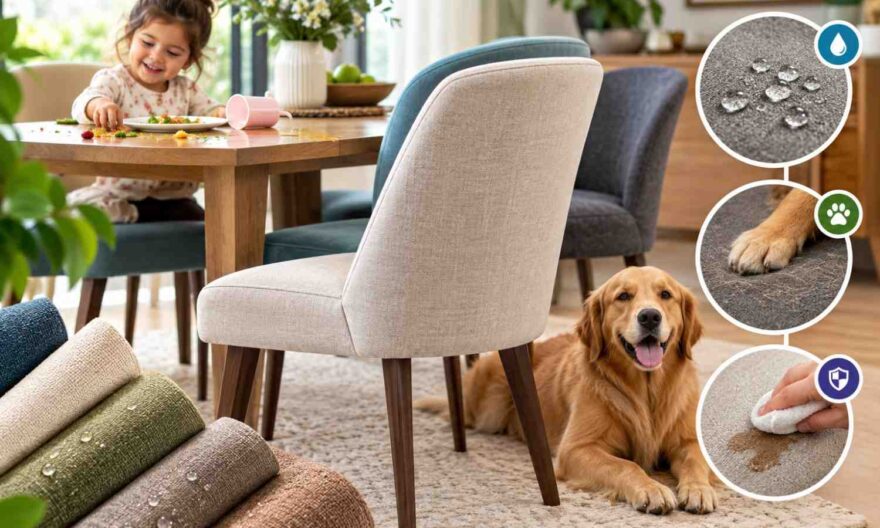
Performance velvet, microfiber, solution-dyed acrylic and coated or treated weaves are the best stain-resistant fabrics for dining chairs. These fabrics resist spills, repel pet hair and stand up to daily scrubbing without fading or fraying. If you have children or pets, the type of fabric you choose is the single most important factor in how long your chairs will actually last.
If you have a toddler who treats every meal like a finger-painting session or a dog who considers your dining chair their personal throne, choosing the right dining chair upholstery is not a matter of aesthetics alone — it is a matter of survival. The wrong fabric means constant cleaning, early replacement, and a lot of frustration in between.
Why Standard Upholstery Fails in Family Homes
Traditional upholstery fabrics such as linen, cotton or silk-blend weaves are beautiful in a showroom. In a real family home, they soak up spills instantly, trap pet dander and pill or tear with repeated washing. If a fabric can’t take a weekly wipe-down, it simply isn’t made for the realities of family life.
Research from the British Cleaning Council shows households with children and pets clean hard surfaces and soft furnishings far more often than the national average — so your upholstery fabric needs to be durable, not just decorative .
The Best Stain-Resistant Fabrics for Dining Chair Upholstery
1. Microfibre
Microfiber is one of the most practical choices. Its ultra-fine fibers are woven tight enough to repel liquid naturally before it can soak in. Most spills will bead on the surface, allowing you time to blot them clean. It’s also soft under foot, resists pet scratching and comes in a wide range of colors. For everyday maintenance you usually just need a damp cloth.
2. Performance Velvet
Don’t confuse performance velvet with traditional velvet. Modern performance velvet is made to last. It is moisture resistant and easily cleaned with a mild detergent. It has a tight pile that resists pet hair embedding. It looks plush like traditional velvet, but can handle the mayhem of a family dining room.
3. Solution-Dyed Acrylic
Solution dyed acrylic was developed for outdoor and marine use and is virtually indestructible in a domestic environment. The color is embedded into the fiber itself rather than applied as a surface dye, and so it resists both stains and fading. It can withstand a bleach-based cleaning without breaking down, a rare feature that makes it ideal for pet accidents or stubborn food stains.
4. Crypton and Stain-Treated Fabrics
Crypton is a performance fabric technology that is incorporated into the manufacturing process to create a moisture and stain barrier within the fiber structure. This is protection that isn’t some surface spray that washes off. Many furniture fabrics now are graded as “Crypton treated,” and for households that need durability over the long term, the added cost is well worth it.
5. Faux Leather (PU or PVC)
Faux leather offers a completely wipeable surface — the closest thing to maintenance-free dining chair upholstery. It handles juice, pet saliva, and food mess with a single swipe of a cloth. The trade-off is that cheaper versions can crack or peel over time, particularly at seam edges, so quality matters here. Look for PU-coated options with a strong backing fabric for the best longevity.
What to Avoid When Choosing Dining Chair Fabric
- Open-weave fabrics: Crumbs and pet hair embed deeply and are difficult to remove without specialist tools.
- Untreated cotton or linen: Highly absorbent — spills set fast and staining is almost inevitable.
- Silk or silk-blend upholstery: Delicate, dry-clean only, and completely impractical in a family setting.
- Light-coloured untreated fabric: Even with the best intentions, pale fabrics in family dining rooms show every mark within weeks.
Practical Features to Look For Beyond the Fabric Type
Fabric type is only part of the equation. When evaluating dining chair upholstery options, also consider:
- Rub count (Martindale test): A rating above 25,000 rubs is considered suitable for heavy domestic use. For family homes, aim for 30,000 or higher.
- Removable covers: Chairs with zip-off or tie-on seat pads can be machine-washed, which is a genuine game-changer for parents and pet owners.
- Double-stitched seams: Repeated cleaning and movement puts stress on seams. Reinforced stitching significantly extends the life of the chair.
- Anti-bacterial treatment: Particularly relevant for households with young children — some performance fabrics now carry anti-microbial finishes.
Dining Chair Upholstery Trends Worth Knowing
You don’t have to sacrifice practicality to go with today’s dining chair upholstery trends. The good news is, performance fabrics have stepped boldly into mainstream interior design. At the moment, performance velvet, textured microfiber in muted neutrals and bouclé-style weaves with stain-resistant treatments are all on trend, and all good for busy family homes.
Sustainability has played a part in fabric selection as well. Many performance upholstery fabrics now incorporate recycled fibers or use low-impact dye processes, so you can make a practical choice that reflects environmentally conscious values as well.
Quick Comparison: Best Fabrics for Family Dining Chairs
| Fabric Type | Stain Resistance | Pet Hair | Durability | Ease of Cleaning
|
|---|---|---|---|---|
| Microfibre | High | Good | Very High | Easy |
| Performance Velvet | High | Very Good | High | Easy |
| Solution-Dyed Acrylic | Very High | Good | Very High | Very Easy |
| Crypton-Treated Fabric | Very High | Good | High | Easy |
| Faux Leather (PU) | Excellent | Excellent | Medium–High | Very Easy |
| Untreated Cotton/Linen | Low | Poor | Medium | Difficult |
For families navigating the daily reality of spills, muddy paws, and sticky fingers, the right fabric choice makes a measurable difference to both your home and your stress levels. DKS International specialises in professional dining chair upholstery that combines durability with design — helping you find a solution that works as hard as your household demands.
Frequently Asked Questions
What is the most stain-resistant fabric for dining chairs?
Solution-dyed acrylic and Crypton-treated fabrics offer the highest stain resistance for dining chairs. Both repel liquid at the fibre level rather than relying on surface coatings. Faux leather (PU) is also excellent for quick, wipe-clean maintenance in households with young children or pets.
Is velvet a good choice for dining chairs with kids?
Standard velvet is not ideal for family homes, but performance velvet is a completely different product. It is engineered to resist moisture and staining, cleans easily with a damp cloth, and its tight pile means pet hair does not embed the way it does in traditional velvet weaves.
How do I clean pet hair from upholstered dining chairs?
A rubber-bristle brush or a barely damp rubber glove works well for lifting pet hair from upholstered dining chairs. Performance fabrics with tight weaves, such as microfibre or faux leather, make this task considerably easier as hair sits on the surface rather than weaving into the fabric.
What Martindale rub count should I look for in dining chair fabric?
For heavy domestic use in a family home, look for a Martindale rub count of at least 30,000. This indicates the fabric can withstand significant friction before showing wear. High-traffic areas like dining chairs benefit from ratings closer to 40,000 for maximum longevity.
Can I reupholster my existing dining chairs with a stain-resistant fabric?
Yes — reupholstering is a cost-effective and sustainable way to upgrade your existing dining chairs with performance fabric. A professional upholsterer can replace the existing material with microfibre, faux leather, or a Crypton-treated weave, giving your chairs a completely new level of practicality without replacing the whole piece.