


When selecting a warehouse company in Singapore, you need to think about storage capacity, location, service flexibility, technology infrastructure, license, and cost structure. Businesses should consider if a provider is scalable to demand, can handle particular types of cargo, and offers value-added services such as inventory management or last mile delivery. The proper partner eliminates operational risk and allows the organization to flourish.
Singapore’s logistics industry is among the most advanced in Asia. According to the Singapore Economic Development Board, logistics and supply chain management are key contributors to the country’s GDP. The need for warehouse space has continuously increased due to the growth of e-commerce and regional trade. For SMEs, retailers and importers, choose a warehouse company in Singapore is not only a matter of cost. It is a matter of strategy.
Get it wrong and you’re looking at delayed delivery, poor inventory management and dissatisfied customers. Get it correctly, and you’ve got a competitive advantage in your supply chain.
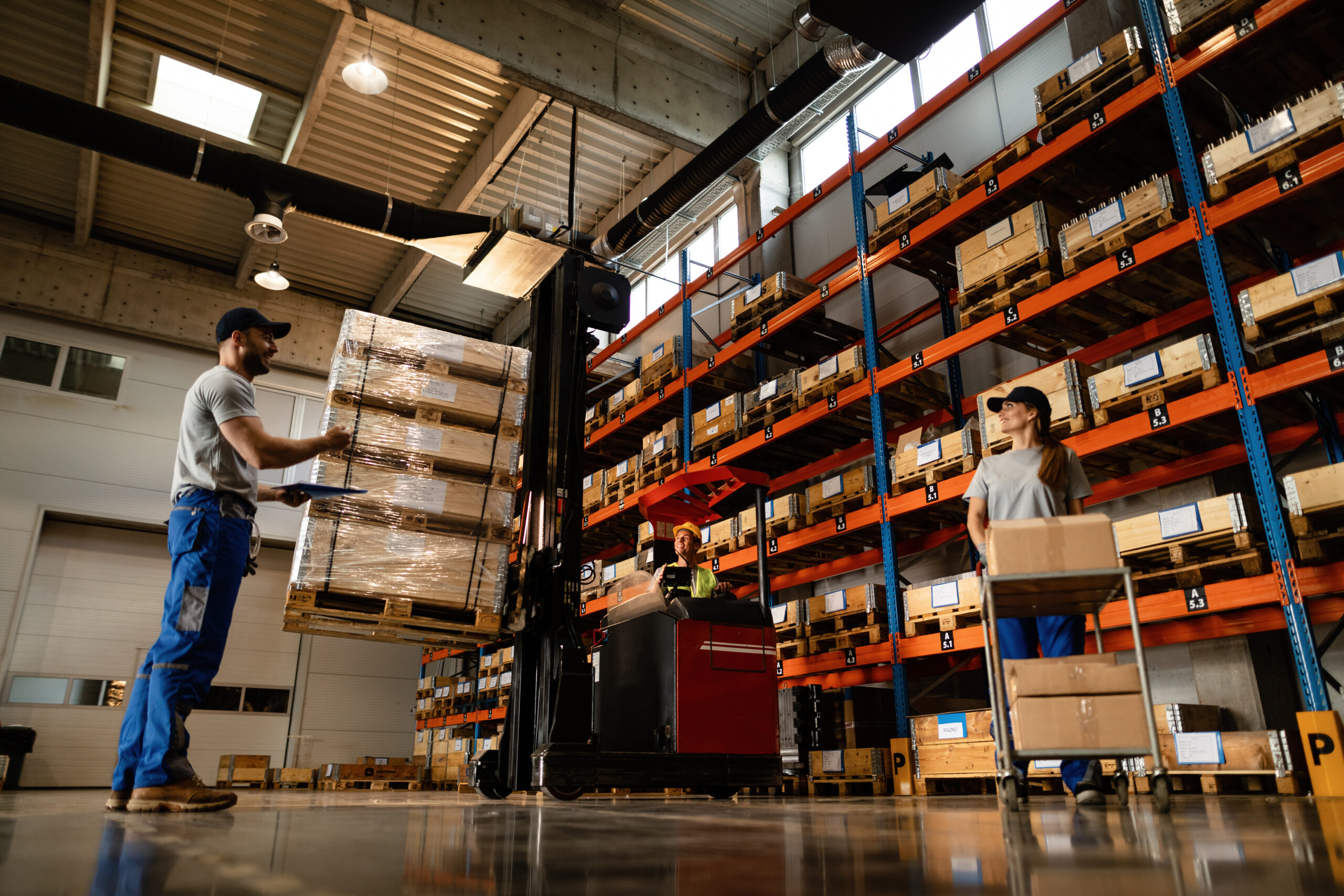
Why Your Choice of Warehouse Provider Matters More Than You Think
To many companies, warehousing is a commodity – a box to hold stock until it’s needed. That’s an expensive mindset. A warehouse supplier impacts order fulfillment speed, stock tracking accuracy, and your business’ ability to react to demand surges or outages.
Warehouse selections by importers and retailers in Singapore have a direct impact on the schedule for customs clearance, GST compliance and the speed of distribution across Southeast Asia. A bad partner creates bottlenecks that you’ll be spending months attempting to fix.
Key Factors to Evaluate Before Choosing a Warehouse Company in Singapore
1. Location and Accessibility
Warehouse location affects everything downstream — delivery lead times, transport costs, and access to key trade hubs. Singapore has several established logistics clusters: Jurong, Tuas, Penjuru, and the areas surrounding Changi Airport and the Port of Singapore.
Ask yourself where your goods are coming from and where they’re going. If you’re importing by sea, proximity to Pasir Panjang Terminal matters. If you’re distributing locally or to the region by air, Changi-linked facilities carry a clear advantage.
2. Type of Storage and Cargo Compatibility
Not every warehouse handles every type of goods. Before signing a contract, confirm the facility is equipped for your specific cargo requirements.
- Ambient storage — suitable for general merchandise, electronics, and dry goods
- Cold chain / temperature-controlled — required for food, pharmaceuticals, and perishables
- Hazardous materials storage — must comply with Singapore Civil Defence Force (SCDF) regulations
- Bonded warehouse facilities — allow deferred duties for goods in transit or awaiting customs clearance
Mismatching your cargo type to the wrong facility leads to compliance issues and spoilage. Always verify that the provider holds the relevant licences for your product category.
3. Warehouse Services Singapore Businesses Actually Need
Standard storage is rarely enough. Modern warehouse services in Singapore increasingly include pick-and-pack, kitting, labelling, cross-docking, returns management, and inventory auditing. Evaluate what value-added services are offered and whether they’re priced fairly or bundled into inflated base rates.
For e-commerce retailers, fulfilment speed is non-negotiable. Look for providers with established systems for same-day or next-day pick-and-pack processing. For importers, ask specifically about customs documentation support and how the provider liaises with freight forwarders.
4. Technology and Inventory Visibility
A capable warehouse provider should operate a Warehouse Management System (WMS) that gives you real-time visibility into stock levels, inbound and outbound movements, and order status. Without this, you’re managing inventory blind.
Ask whether the system integrates with your existing ERP, e-commerce platform (Shopify, Lazada, Shopee), or order management tools. Data accuracy at the warehouse level prevents overselling, stockouts, and reconciliation headaches at month-end.
5. Commercial Warehouse Singapore: Understanding Space and Scalability
Evaluating a commercial warehouse in Singapore requires more than checking the square footage. What matters is usable space — clear height, racking systems, floor load capacity, and dock access. A well-designed facility uses vertical space efficiently and can accommodate pallet storage alongside shelving for smaller SKUs.
Scalability is equally critical. Your storage needs in Q4 may be double what they are in Q1. A quality provider will offer flexible space arrangements — monthly rolling contracts or tiered storage bands — rather than locking you into a fixed footprint that wastes money during slow periods.
6. Regulatory Compliance and Licensing
Singapore Customs, the Singapore Food Agency (SFA), the Health Sciences Authority (HSA), and SCDF all have jurisdiction over different categories of warehoused goods. Any warehouse provider you work with must hold the appropriate licences for your product type.
If you’re dealing in controlled goods, food products, or health supplements, non-compliant storage is not just operationally risky — it exposes you to regulatory penalties. Always request copies of valid licences and check them against the relevant authority’s registry where possible.
7. Pricing Structure and Hidden Costs
Warehousing quotes can be deceptively low at the headline level. Scrutinise the full pricing schedule, including:
- Inbound and outbound handling fees
- Pallet storage rates vs. cubic metre billing
- Minimum monthly charges
- Value-added service fees (labelling, kitting, returns)
- Insurance and liability coverage
- Surcharges for oversized or fragile items
Compare total cost of ownership across providers, not just the base storage rate. A slightly higher base rate with transparent all-in pricing is almost always better than a low entry price riddled with add-on fees.
Questions to Ask a Singapore Storage and Warehouse Provider Before Committing
Use this checklist when evaluating any Singapore storage and warehouse partner:
- What is your average order fulfilment turnaround time?
- How do you handle peak season volume spikes?
- What WMS do you use, and can it integrate with our systems?
- What are your SLAs for accuracy and damage rates?
- How are discrepancies or damaged goods handled?
- What is your contract notice period?
The answers reveal operational maturity far more than a sales brochure ever will.
Comparing Warehouse Provider Models: Which Suits Your Business?
| Model | Best For | Key Consideration |
|---|---|---|
| Dedicated warehouse | Large-volume businesses with consistent throughput | Higher fixed cost, full control |
| Shared / multi-user warehouse | SMEs, seasonal businesses, importers | Flexible, cost-efficient, less control |
| 3PL fulfilment partner | E-commerce retailers needing pick-pack-ship | Integrated services, depends on provider quality |
| Bonded warehouse | Importers deferring duties or re-exporting goods | Customs-regulated, specific licensing required |
For most SMEs and mid-sized retailers in Singapore, a shared or multi-user warehouse with 3PL capabilities offers the best balance of flexibility and service depth.
Red Flags to Watch Out For
Not every provider presenting a polished website and competitive rates will deliver on their promises. Watch for these warning signs:
- Vague or verbal-only SLAs with no written documentation
- Reluctance to provide licence copies or client references
- No WMS or manual stock tracking processes
- Inflexible contract terms with long lock-in periods
- Poor communication responsiveness during the sales process
If a provider struggles to answer basic operational questions clearly during onboarding conversations, that’s a reliable preview of how they’ll perform under pressure.
Making the Final Decision
Narrow it down to two or three providers and ask for a site visit before you sign anything. No brochure will tell you about facility cleanliness, racking organization, personnel professionalism and true operational capacity – you will see these things via a practical inspection. Ask for a live demo of their WMS dashboard and get to chat with the operational team, not simply the sales contact.
Palline provides scalable storage and logistics solutions for companies seeking a trusted warehouse provider in Singapore that delivers a combination of operational capabilities with service flexibility, supporting SMEs, retailers and importers in Singapore and the region.
Frequently Asked Questions
What should I look for in a warehouse company in Singapore?
Look for a provider with the proper licences for your type of cargo, a dependable WMS for inventory visibility, flexible storage capacity, transparent pricing and proven fulfillment accuracy. Consider also the location relative to your primary freight entrance points – port or airport – when making your decision.
How much does it cost to use warehouse services in Singapore?
Costs vary depending on the type of storage, volume and services required. Shared warehouse arrangements generally charge per pallet or per cubic meter per month plus handling charges. Always ask for a full rate card so you can evaluate the overall cost, not just the headline storage rates.
Do warehouse providers in Singapore need specific licences?
Yeah. Depending on the items that are stored, permissions may be required from Singapore Customs, the Singapore Food Agency, the Health Sciences Authority or the SCDF, the suppliers said. Always check your provider holds legal and current licences relevant to your product category before you sign any deal.
What is a bonded warehouse and do I need one?
A bonded warehouse is a place where you can hold imported products without paying the customs charges until the commodities are freed for sale locally or re-exported. It is especially valuable for importers of large shipments or using Singapore as a regional distribution center.
Can SMEs afford professional warehouse services in Singapore?
Yes. Many providers offer shared or multi-user warehouse models designed specifically for SMEs, with flexible monthly terms and no requirement for large minimum volumes. This makes professional warehouse services accessible without the overhead of a dedicated facility.
How do I know if a warehouse provider can scale with my business?
Ask directly about their capacity during peak periods and whether they offer flexible space arrangements. A scalable provider will have tiered storage options, surge capacity planning, and a track record of supporting clients through seasonal or growth-driven volume increases.