


Preserved flowers can endure 1 to 3 years when preserved appropriately, and sometimes much longer. They are subjected to a specific preservation procedure in which a solution based on glycerin replaces the natural moisture and preserves the shape, texture and color. Unlike fresh flowers, they don’t require water, sunlight or much attention to look nice.
If you’ve been considering a preserved flower Singapore arrangement as a gift or home accent, learning how they are manufactured and how long they last will help you make a smarter choice. This guide has it all – from basic preservation to practical care suggestions for Singapore’s tropical environment.
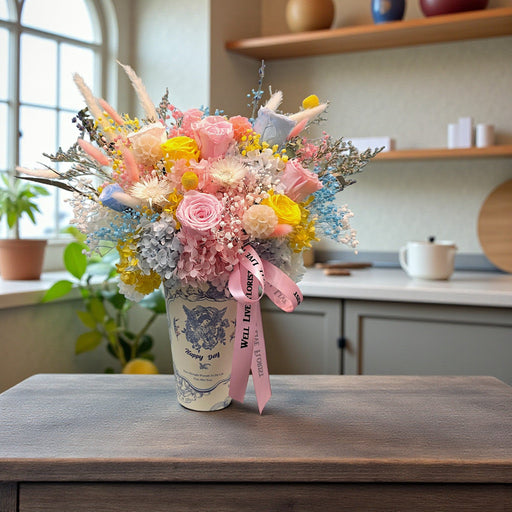
What Are Preserved Flowers?
Preserved flowers are real natural flowers, not artificial or silk flowers. They are then carefully preserved shortly after they are harvested at their greatest bloom. The flower’s natural sap is substituted with a blend of glycerin and plant-based colors, which maintains the petals smooth, vivid and lifelike.
The final product looks and feels quite similar to a fresh flower, but without any of the maintenance. No watering Not a leaf fell. One week, no falling petals.
How Long Do Preserved Flowers Last in Singapore?
This is the most common question buyers ask — and the honest answer is: it depends on how you care for them. Here’s a general breakdown:
| Condition | Expected Lifespan |
|---|---|
| Ideal indoor conditions (air-conditioned, low humidity) | 2–3 years or more |
| Average indoor conditions (fan-cooled, moderate humidity) | 1–2 years |
| High humidity or exposed to direct sunlight | 6–12 months |
Singapore’s humidity — which regularly sits above 80% — is the biggest challenge for preserved flowers. Moisture reactivates the organic compounds in the petals, causing them to feel sticky or begin to droop. Keeping them in an air-conditioned space makes a significant difference.
Preserved Flowers vs Fresh Flowers: Key Differences
Understanding the difference helps you decide which is right for the occasion.
| Feature | Fresh Flowers | Preserved Flowers |
|---|---|---|
| Lifespan | 5–10 days | 1–3 years |
| Watering needed | Yes, daily | No |
| Fragrance | Natural scent | Minimal to none |
| Appearance over time | Wilts and fades | Maintains shape and colour |
| Suitable for gifting | Short-term occasions | Long-lasting keepsakes |
| Allergen risk | Higher (pollen) | Lower |
For milestone gifts — anniversaries, birthdays, Valentine’s Day — preserved flowers offer far more sentimental value. The recipient gets to hold on to the arrangement for years, not days.
The Preservation Process Explained
Most commercial preserved flowers go through a process called glycerin preservation or freeze-drying. Here’s how the glycerin method works:
- Harvest at peak bloom — Flowers are cut at the exact point of full bloom to lock in the most vibrant appearance.
- Dehydration — Natural water and sap are drawn out of the petals using a solvent solution.
- Glycerin infusion — A plant-derived glycerin mixture is absorbed into the cellular structure, replacing the moisture.
- Colour treatment — Plant-based dyes may be added to enhance or alter the flower’s colour.
- Drying and quality check — Flowers are dried in controlled conditions and inspected for consistency.
The outcome is a flower that retains its physical structure but no longer needs any biological support — no water, no nutrients, no photosynthesis.
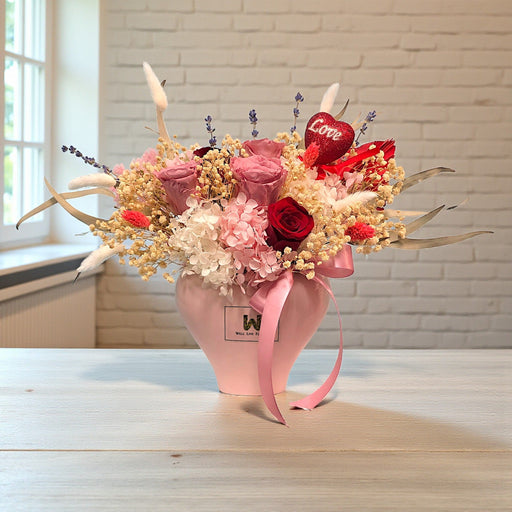
Preserved Rose Singapore: Why Roses Are the Most Popular Choice
Roses are, by far, the most requested preserved flower and for good reason. Their rich, layered petals preserve remarkably well with glycerin, keeping their form and velvety feel for years. A preserved rose Singapore arrangement is a particularly thoughtful present, because it provides the symbolic of a rose without the fragility.
Preserved roses are a luxury gifts alternative for weddings, anniversaries & business gatherings and can be given as a single stem in a glass dome or organized in a full bouquet.
What About Dry Flower Bouquets?
Are Dry Flowers and Preserved Flowers the Same Thing?
Not quite. Basically, a Singapore arrangement of dry flowers means flowers that have been naturally dried using the air drying or hanging upside down method to eliminate moisture. This is a simpler and cheaper procedure but the output is more fragile and prone to color fade.
Preserved flowers are immersed in a glycerin solution that retains their softness and flexibility. A preserved flower arrangement will normally look fresher and stay longer than a dry flower bouquet Singapore choice – but both are a lot more durable than fresh flowers.
How to Care for Preserved Flowers in Singapore’s Climate
Singapore’s heat and humidity can shorten the lifespan of preserved flowers if you’re not careful. Follow these care tips:
- Keep them indoors — Avoid placing preserved arrangements near windows, doors, or balconies where outdoor humidity enters.
- Stay in air-conditioned spaces — Rooms kept at 22–25°C with lower humidity are ideal.
- Avoid direct sunlight — UV exposure causes colour fading, even on preserved petals.
- Don’t water them — This is the most common mistake. Preserved flowers do not need water and will be damaged by it.
- Dust gently — Use a soft brush or a cool-setting hairdryer to remove dust without touching the petals directly.
- Avoid bathrooms and kitchens — Steam and moisture from cooking or showering accelerate degradation.
Simple habits go a long way. A well-placed, well-maintained preserved arrangement can hold its beauty for well over two years even in Singapore.
When Should You Choose Preserved Flowers?
Preserved flowers aren’t always the right choice — but for certain occasions and needs, they’re clearly the better one:
- Long-distance gifting where the recipient needs something that travels well
- Weddings and solemnisations — as bridal bouquets or decor meant to be kept
- Corporate gifting where a premium, lasting impression matters
- Home décor that maintains a curated aesthetic over time
- Memorial or sympathy arrangements that should endure beyond the moment
If the occasion calls for something that lasts, preserved flowers deliver in a way that fresh blooms simply cannot.
Where to Find Quality Preserved Flowers in Singapore
Not all preserved flowers are made equal. The quality of the preservation process, the source flowers, and the arrangement skill all affect how long and how well they hold up. When choosing a florist, look for one that uses high-quality glycerin-preserved roses and provides clear care guidance with every purchase.
Wellive Florist offers a curated range of preserved flower arrangements designed for Singapore’s climate and gifting culture — from elegant single-stem pieces to full bouquet collections built to last.
Frequently Asked Questions
How long do preserved flowers last in Singapore’s humidity?
In Singapore’s high humidity, preserved flowers typically last 1 to 2 years in fan-cooled spaces. In air-conditioned environments with controlled humidity, they can last 2 to 3 years or more with minimal care.
Do preserved flowers need water?
No. Preserved flowers must never be watered. The glycerin preservation process removes the need for moisture entirely. Adding water will rehydrate the petals and cause them to deteriorate quickly.
What is the difference between preserved flowers and dried flowers?
Dried flowers are air-dried and tend to be brittle and prone to fading. Preserved flowers are treated with glycerin, which keeps them soft and vibrant. Preserved flowers generally look fresher and last longer than traditionally dried ones.
Are preserved roses real flowers?
Yes. Preserved roses are real, natural roses that have undergone a preservation process. They are not artificial or silk. The glycerin infusion replaces moisture while keeping the petal structure, texture, and appearance intact.
Can I display preserved flowers outdoors in Singapore?
It is not recommended. Singapore’s outdoor humidity, direct sunlight, and heat will significantly shorten the lifespan of preserved flowers. They are best kept indoors, away from windows and high-moisture areas.
How do I clean preserved flowers without damaging them?
Use a soft-bristled brush or a hairdryer on its coolest setting to gently remove dust. Avoid touching the petals directly, and never use water or cleaning sprays, as moisture is the primary cause of damage.


