

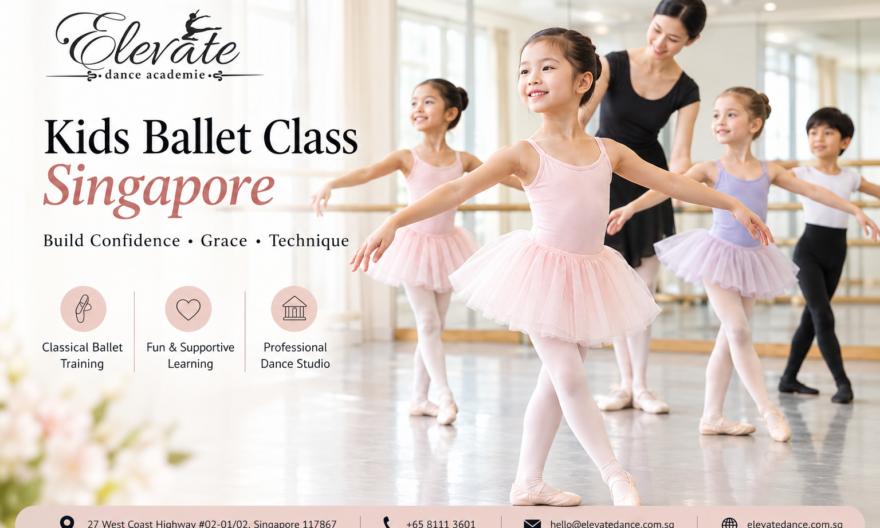
The best kids ballet class in Singapore depends on your child’s age, attention span, and readiness to follow structured movement. Toddlers aged 2–3 benefit from creative movement programmes, children aged 4–6 thrive in pre-ballet foundations, and those 7 and above can begin formal RAD or CSTD syllabi. Matching the programme to the developmental stage makes all the difference in a child’s progress and enjoyment.
Choosing the right ballet class is one of the most common questions parents in Singapore ask, and it is rarely just about proximity or price. It is about finding a programme where your child feels ready, challenged, and genuinely excited to move. This guide breaks it down by age so you can make a confident, informed decision. If you are already exploring options, the kids ballet class Singapore offerings at Elevate Dance Academies are structured across multiple age groups with that exact progression in mind.
Why Age-Appropriate Placement Matters in Ballet
Ballet is a physically and cognitively demanding discipline. Children develop balance, coordination, and spatial awareness at different rates. Placing a child too early in a structured syllabus can cause frustration, while placing them too late in a beginner class can lead to boredom and disengagement.
According to the Singapore Sports Council’s guidelines on youth physical development, structured movement training introduced progressively from early childhood supports better motor skill development and long-term physical confidence. Ballet, when age-matched, fits neatly within those recommendations.
Ballet Classes by Age Group: What to Look For
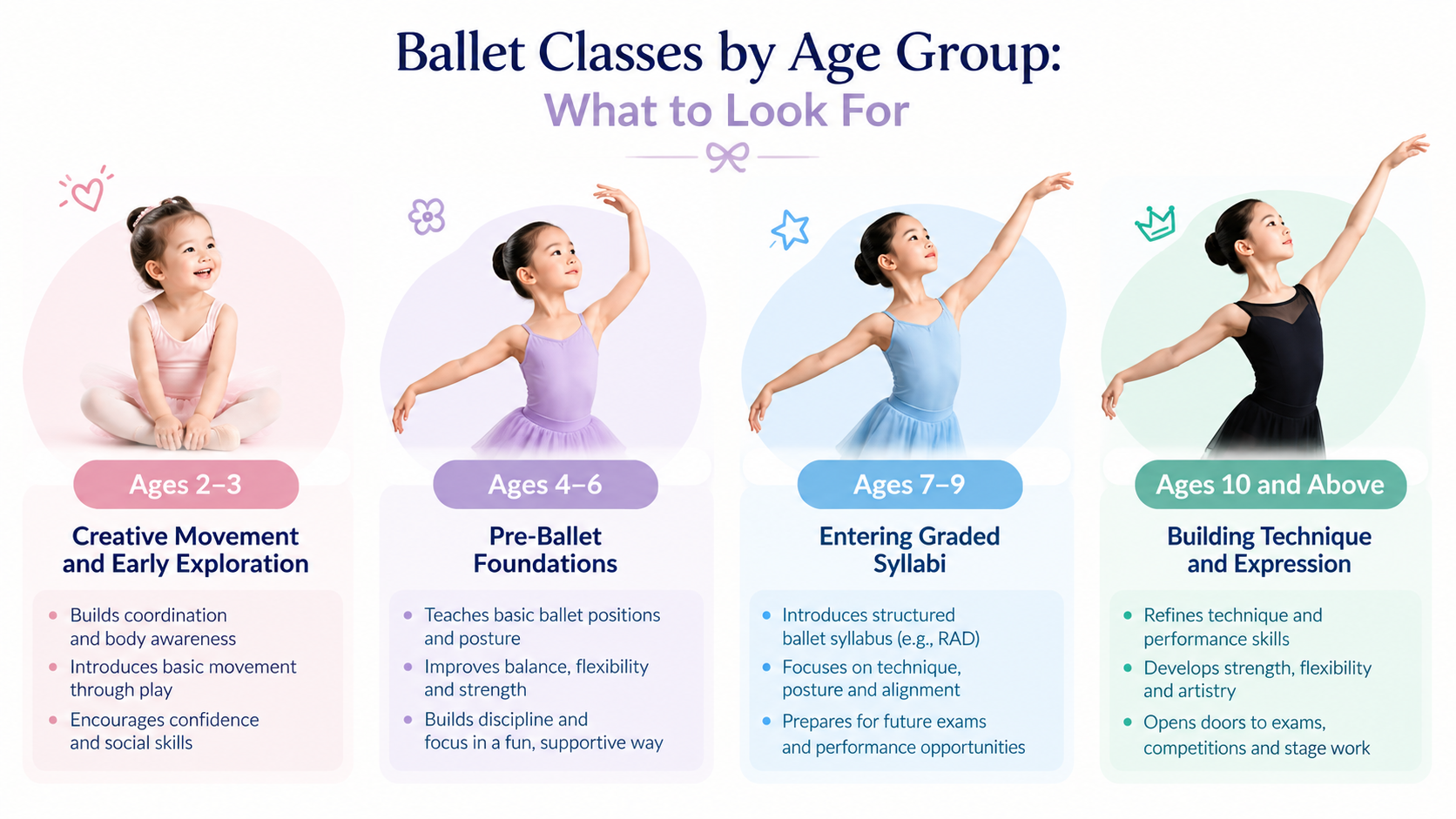
Ages 2–3: Creative Movement and Early Exploration
At this stage, children are still developing basic gross motor skills. Classes should feel like play, not performance. Look for programmes that focus on imaginative movement, simple rhythmic responses, and body awareness rather than formal technique.
Key features of a good toddler ballet class:
- Short class durations (30–45 minutes)
- Story-based or music-driven movement
- Parent participation or observation allowed
- No rigid corrections — encouragement over precision
Do not expect turned-out feet or plié technique here. The goal is building a positive association with movement, music, and a dance space.
Ages 4–6: Pre-Ballet Foundations
This is where structured learning begins. Children at this age can follow multi-step instructions, hold attention for longer periods, and start understanding concepts like posture, lines, and musicality. Pre-ballet at this stage introduces the vocabulary of classical dance without the physical demands of formal syllabus work.
What strong pre-ballet programmes include:
- Introduction to barre exercises in a simplified form
- Basic positions of feet and arms
- Coordination exercises and simple across-the-floor combinations
- End-of-term or annual showcases to build confidence
Many quality studios in Singapore, including those following the Royal Academy of Dance (RAD) or Commonwealth Society of Teachers of Dancing (CSTD) frameworks, begin graded syllabi from age 5 or 6 once a child demonstrates readiness.
Related Post: Kids Beginner Dance Classes in Singapore: A Parent’s Complete Guide
Ages 7–9: Entering Graded Syllabi
By age 7, most children have the physical coordination and focus to begin formal graded examinations. RAD’s Primary and Grade 1 levels, for example, are commonly introduced at this stage. This is where technical vocabulary solidifies — tendus, dégagés, and simple port de bras become part of regular vocabulary.
Parents should look for:
- Qualified teachers with RAD, CSTD, or equivalent accreditation
- Structured progression towards examinations
- Small class sizes for individual correction
- Appropriate class frequency — two sessions per week is common at this stage
Ages 10 and Above: Intermediate Development and Specialisation
Children who have been dancing for several years can pursue higher graded levels or begin exploring pointe work (typically introduced no earlier than age 11–12, and only after professional assessment). At this stage, commitment level, physical readiness, and personal goals all shape the right programme choice.
For children starting ballet for the first time at age 10 or older, look for studios that offer beginner streams for older children — not classes with much younger students, which can feel discouraging.
How to Assess Your Child’s Readiness Beyond Age
Age is a useful guide, but it is not the only factor. Consider these alongside it:
| Readiness Factor | What It Looks Like |
|---|---|
| Attention span | Can the child follow a 2–3 step instruction without distraction? |
| Physical coordination | Can they balance briefly on one foot or hop with control? |
| Emotional readiness | Are they comfortable in a group setting without a parent present? |
| Interest level | Does the child ask about dancing or respond positively to music? |
A good studio will offer a trial class before enrolment — this is standard practice in Singapore and gives both parent and child a low-pressure opportunity to assess fit.
What to Ask a Ballet Studio Before Enrolling
Before committing to any ballet Singapore programme, run through these questions:
- What syllabus does the studio follow? RAD and CSTD are internationally recognised and examiner-assessed.
- What are the teacher’s qualifications? Look for teaching diplomas from accredited bodies, not just performance backgrounds.
- How are classes grouped? By age, level, or both? Mixed-ability grouping can slow progress for more advanced students.
- Is there a trial class option? Any reputable studio will offer one.
- What is the recital or assessment structure? Regular performance opportunities build confidence and accountability.
Finding the Right Fit in Singapore
Singapore has a strong dance education ecosystem, with studios operating across neighbourhoods like Buona Vista, Tampines, Toa Payoh, and the Central Business District. When assessing a programme, think about sustainability — a class that is convenient to attend regularly is better than one that requires two MRT changes after school.
Elevate Dance Academie offers structured ballet programmes across different age groups and experience levels, with a curriculum designed to progress children from their first creative movement class through to graded syllabi work. Their approach is both rigorous and nurturing — the kind of balance that helps children stay in the art form long-term rather than burning out early.
Frequently Asked Questions
What is the right age to start ballet classes in Singapore?
Most studios in Singapore accept children from age 2.5 to 3 for creative movement classes. Formal pre-ballet begins around age 4 to 5, and graded syllabus work typically starts at age 6 to 7. Starting earlier is not always better — readiness and interest matter more than rushing into structured training.
Do kids need prior experience to join a ballet class?
No prior experience is needed for beginner or pre-ballet classes. Most studios place children by age and developmental readiness, not prior training. If your child is older and starting for the first time, look for a studio that offers age-appropriate beginner streams rather than placing them with much younger students.
How often should children attend ballet classes per week?
For young children aged 3 to 6, one class per week is sufficient. From age 7 onwards, two sessions per week becomes more appropriate to support syllabus progression. Children training seriously towards examinations or performances may attend more frequently as they advance through graded levels.
What is the difference between RAD and CSTD ballet syllabi?
Both RAD (Royal Academy of Dance) and CSTD (Commonwealth Society of Teachers of Dancing) are internationally recognised examination boards used widely in Singapore. RAD is more globally prevalent and has a strong emphasis on classical technique. CSTD also incorporates performance and musicality. Both are credible pathways for children progressing through structured ballet training.