

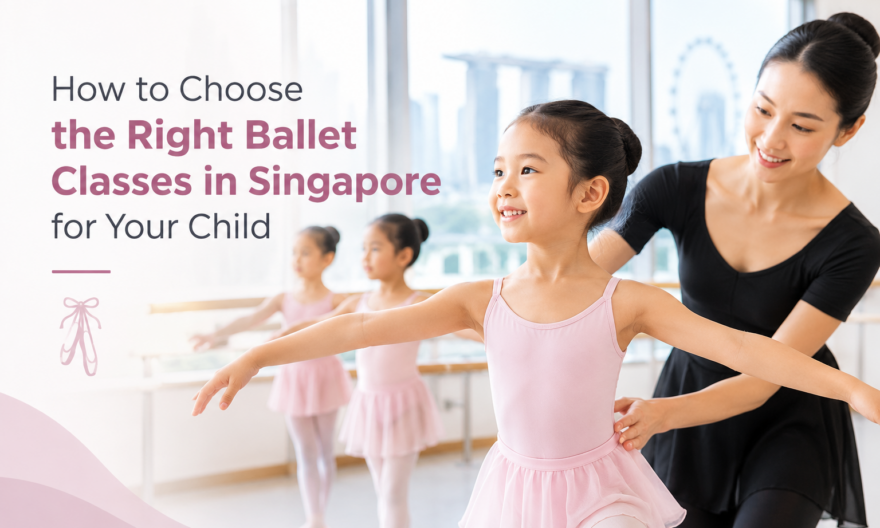
Choosing the right ballet classes in Singapore means looking at your child’s age, the teaching methodology, class structure, and instructor qualifications. A good ballet school will offer age-appropriate programmes, clearly defined progression levels, experienced teachers, and a welcoming trial class. These factors together determine whether your child builds a strong, lasting foundation in dance.
Why Starting Age Matters More Than You Think
Most children can begin structured ballet lessons from around 3 to 4 years old. At this stage, classes focus on coordination, rhythm, and imaginative movement rather than technical drilling. Formal technique — correct posture, turnout, and barre work — typically begins around age 6 to 7 when children have the physical and cognitive readiness for structured instruction.
Starting too early with overly rigid training can discourage a child. Starting at the right age with the right approach builds genuine love for movement. Look for schools that clearly segment their programmes by developmental stage, not just age alone.
What Teaching Approach Should a Ballet School in Singapore Follow?
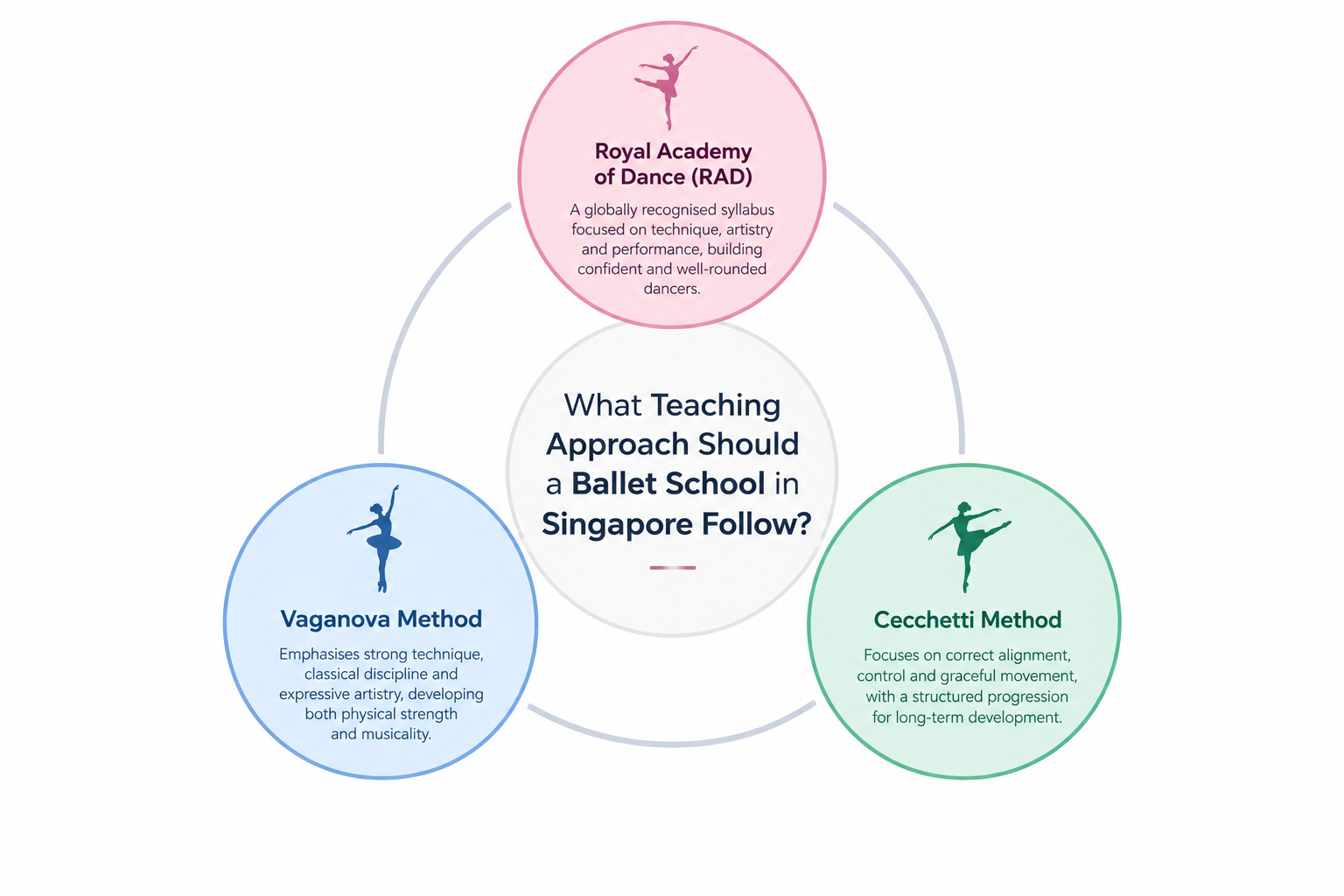
The teaching methodology is one of the most important factors to evaluate. Several internationally recognised syllabi are used across ballet schools in Singapore:
- Royal Academy of Dance (RAD): A structured, graded system developed in the UK with global examinations. Widely used across Singapore studios.
- Vaganova Method: A Russian classical training system known for its emphasis on musicality, fluid arm movements, and strong foundational technique. Particularly valued for developing technically proficient dancers.
- Cecchetti Method: An Italian-origin syllabus focusing on port de bras and formal posture training.
The Vaganova method, developed at the Vaganova Academy of Russian Ballet in St. Petersburg, is widely regarded as one of the most comprehensive classical ballet training systems in the world. Schools in Singapore that follow this approach tend to place strong emphasis on artistic expression alongside technical rigour.
How to Evaluate Class Levels and Progression Structure
A well-structured ballet school will have clearly defined levels — from pre-primary and primary through to intermediate and advanced grades. Ask these questions before enrolling:
- How are students assessed before placement? Placing a child in the wrong level can either frustrate or under-challenge them.
- How is progression tracked? Look for schools that conduct regular assessments or examinations.
- Is there a pathway for serious students? Some children discover a genuine passion. Ensure the school has an advanced or vocational stream if needed.
Clear level structures also signal that the school has a long-term vision for student development — not just a casual activity programme.
Instructor Experience and Qualifications: What to Look For
Your child’s first ballet teacher has an outsized influence on how they develop technically and emotionally. Check for the following:
- Formal training from a recognised institution (not just performance experience)
- Teaching qualifications from bodies like RAD or equivalent
- Experience teaching children specifically, not just adult or professional students
- A calm, encouraging teaching style that balances discipline with warmth
In Singapore’s competitive dance education landscape, qualified instructors with international training backgrounds are worth prioritising. Teachers trained under the Vaganova system, for instance, often bring a depth of classical knowledge that directly benefits students from the very early stages.
Children Ballet Classes: Understanding the Right Class Size and Environment
Class size directly affects the quality of attention your child receives. For young children aged 3 to 6, smaller classes of 8 to 12 students allow instructors to correct technique individually and keep energy focused. Larger classes may suit older, more independent students.
Beyond numbers, visit the studio space itself. A proper ballet studio should have:
- Sprung or semi-sprung flooring to protect developing joints
- Full-length mirrors for self-correction
- Ballet barres at child-appropriate heights
- Good ventilation and adequate space per student
The physical environment is not just comfort — it directly affects safety, especially for kids ballet classes where young bodies are still developing.
The Value of Trial Classes in Ballet Lessons
A trial class is not just a courtesy — it is a practical evaluation tool for both parent and child. During a trial, observe:
- How the teacher engages with and corrects students
- Whether your child responds positively to the environment
- The pacing and structure of the class
- How well the class is managed in terms of discipline and flow
Most reputable ballet schools in Singapore offer introductory or trial sessions. Use them. Your child’s first impression of ballet is often formed in that first class, and it sets the tone for their entire relationship with the art form.
Related Post: Why Parents in Singapore Choose Structured Ballet Training Over Recreational Dance Classes
Recitals, Exams, and Performance Opportunities
Regular performances and examinations are healthy motivators for children. They build confidence, stage presence, and a sense of achievement. Ask whether the school:
- Holds annual concerts or end-of-year showcases
- Offers formal grade examinations (RAD, ISTD, or equivalent)
- Provides opportunities for students to perform beyond the classroom
Participation in performances teaches children how to work as an ensemble, take direction, and perform under pressure — life skills that extend well beyond the studio.
Making the Final Decision on Ballet Lessons in Singapore
There is no single perfect school for every child. The right fit depends on your child’s temperament, goals, and stage of development. A school that suits a competitive young dancer with professional aspirations looks different from one that serves a child who simply loves to move and express themselves through music.
Use this checklist before you decide:
|
Factor |
What to Ask |
|---|---|
| Age appropriateness | Is there a programme designed for my child’s developmental stage? |
| Teaching syllabus | Which method is used, and is it internationally recognised? |
| Instructor qualifications | Where did the teachers train, and are they certified? |
| Class size | How many students per class, especially for younger children? |
| Progression pathway | How are students assessed and moved through levels? |
| Trial class | Is a trial or introductory class available before full enrolment? |
| Performance opportunities | Are there recitals or examinations throughout the year? |
If you are looking for a school that combines classical rigour with nurturing instruction, the School of Russian Ballet Singapore offers programmes rooted in the Vaganova method — one of the world’s most respected classical training systems — taught by instructors with formal Russian ballet training backgrounds. It is a strong starting point for any parent exploring serious, structured ballet education in Singapore.
Frequently Asked Questions
What is the best age to start ballet classes in Singapore?
Most children are able to take classes in ballet at ages 3 and 4, and classes for more formal training will be suitable from age 6 to 7. However, beginning classes before that can be discouraging for your child, so look for an academy that suits the age development of your child.
How do I know if a ballet school in Singapore is reputable?
It is important to look for institutions that use well-known international syllabus like RAD or Vaganova style; those who hire teachers who are formally trained and certified; and those that provide level system and performance record. The best way to see everything for yourself is to visit the institution and take a trial class.
How many ballet classes per week should a child attend?
For younger students ages 3 through 6, once a week would be sufficient. However, for more mature students advancing in both age and skill, two to three times per week would be advisable in order to hone skills and improve endurance. It would be best to consult your child’s instructor regarding this matter.
What is the difference between RAD and Vaganova ballet training?
RAD is a graded syllabus from Britain that incorporates examinations. Vaganova is a Russian technique that places great emphasis on musicality, coordination and solid technical basis. Both systems have a good international reputation, and the choice usually lies with the philosophy of the particular school and the future aspirations of your child.