

A card access system for warehouses goes beyond locking the front gate. It controls who enters specific zones — storage rooms, server areas, loading docks, and staff-only corridors — at any time of day. With the right setup, warehouse managers can track movements, restrict sensitive areas, and respond to breaches in real time, all without relying on physical keys.
If you manage a warehouse in Singapore, you already know that a single unsecured door can compromise an entire operation. A robust card access system Singapore facilities rely on today does far more than control entry at the main gate — it creates layered security across every critical zone inside your facility.
Why the Main Entrance Is Not Enough
Most warehouses invest heavily in perimeter security, then leave internal zones largely unprotected. That’s a serious gap. Theft, inventory shrinkage, and unauthorised access to sensitive areas often happen from the inside — not from external intruders breaking through the front door.
According to the Singapore Police Force’s annual crime statistics, commercial theft and housebreaking remain consistent concerns for businesses operating in industrial estates. Internal controls — not just perimeter fencing — are the most effective countermeasure.
What a Card Access System Actually Controls in a Warehouse
A card-based access control system Singapore warehouses use typically covers multiple physical points beyond the main entrance. Here’s what a layered system looks like in practice:
- Main entrance and exit points — standard access for all staff, with time-based restrictions for shift hours
- High-value storage rooms — limited to supervisors or authorised personnel only
- Loading docks and bay areas — controlled separately to manage third-party logistics staff and delivery drivers
- Server rooms and IT infrastructure — strict access logs with override alerts
- Staff-only corridors and management offices — segregated from general warehouse floor access
- Hazardous material storage — compliance-driven restrictions that log every entry attempt
Each of these zones carries different risk levels. Treating them with the same access rules is how incidents happen.
How Card Access Works: The Basic Mechanics
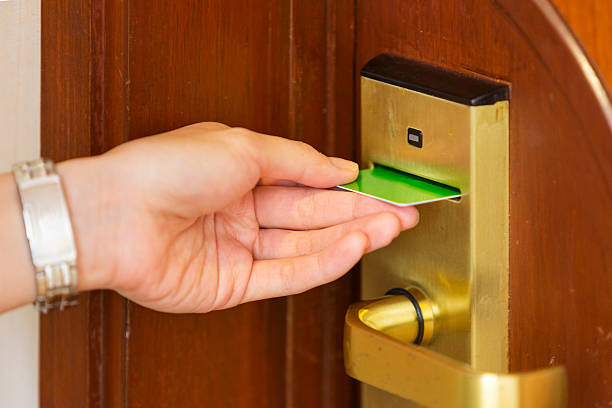
A proximity card or smart card reader is installed at each controlled door. When a cardholder presents their card, the reader communicates with a central access controller, which checks the card’s permissions against a pre-set schedule and zone profile. If approved, the door releases. Every event — access granted, access denied, door held open too long — is logged with a timestamp.
Modern systems use encrypted card technology such as MIFARE or DESFire cards, which are significantly harder to clone than older magnetic stripe or low-frequency formats. This matters in a warehouse environment where contractors, temp workers, and logistics partners regularly come and go.
Restricted Area Security: The Zones Most Warehouses Overlook
High-Value Inventory Rooms
Products awaiting dispatch, bonded goods, or high-SKU items stored in a separate cage or room should never be on a general access profile. Card access lets you assign room-specific permissions to named individuals, with full audit trails. If stock goes missing, the access log becomes an immediate investigative tool.
Loading Dock Management
Loading bays are high-traffic, high-risk zones. Third-party drivers, logistics contractors, and overnight staff all need conditional access — but only at specific times and to specific areas. A card access system with time-zone scheduling allows you to grant a delivery driver access between 8am and 5pm without giving them the ability to walk onto the warehouse floor after hours.
Staff Welfare and Administrative Areas
Canteens, locker rooms, and HR offices often sit adjacent to the main warehouse floor. Without proper segregation, a general warehouse badge can open doors it shouldn’t. Role-based access profiles prevent this without requiring separate physical infrastructure.
Industrial Security: Card Access vs. Traditional Key Systems
| Feature | Card Access System | Traditional Key System
|
|---|---|---|
| Audit trail | Full timestamp log per user | None |
| Lost credential response | Deactivate card remotely in seconds | Replace all locks and cut new keys |
| Multi-zone control | Granular per door, per user, per time | Single lock, single key |
| Temporary access | Time-limited card profiles | Physical key handover required |
| Scalability | Easily expandable | Costly and manual |
For any warehouse with more than 10 staff or multiple operational zones, the card access model wins on every practical measure.
Warehouse Access Control and Compliance in Singapore
Singapore’s Workplace Safety and Health Act requires employers to manage access to hazardous areas. For warehouses handling chemicals, flammables, or controlled goods under the Environmental Protection and Management Act, documented access controls are not optional — they are part of your compliance obligation.
A card access system provides an automatically generated audit log that satisfies inspection requirements from MOM, NEA, and the Singapore Civil Defence Force, depending on your facility type. That’s a direct operational benefit that goes beyond security.
What to Look for When Choosing a System
Not all warehouse access control setups are built the same. When evaluating options, focus on these practical criteria:
- Number of doors supported — ensure the controller can scale with your facility
- Integration with CCTV — access events tied to camera footage make investigations faster
- Cloud vs. on-premise management — cloud platforms allow remote access changes without being on-site
- Card technology standard — choose encrypted formats like MIFARE DESFire over legacy 125kHz proximity cards
- Anti-passback and door-held alerts — essential for loading docks and high-traffic zones
- Visitor management integration — allows temporary credentials for contractors and delivery personnel
A system that only covers the front door is not a warehouse security solution — it’s a single-point fix that leaves your operation exposed.
Making the Case Internally: ROI Beyond Security
For operations managers who need to justify the investment, the business case for a card access system extends beyond preventing theft. Consider reduced administrative overhead from eliminating physical key management, faster incident investigations using digital access logs, and compliance readiness that avoids regulatory penalties.
In warehouses where temp and contract workers rotate frequently, the ability to activate and deactivate access credentials instantly is a genuine operational efficiency — not just a security feature.
For warehouse owners looking to implement a properly layered solution in Singapore, Kirin CCTV provides card access and door access systems designed for industrial and commercial environments, with options that integrate with CCTV and alarm infrastructure for complete site coverage.
Frequently Asked Questions
What is a card access system and how does it work in a warehouse?
A card access system uses proximity or smart cards to control who can enter specific doors or zones. Each cardholder is assigned access permissions tied to locations and time schedules. When a card is presented at a reader, the system checks those permissions and either grants or denies entry, logging the event automatically.
Is a card access system suitable for small warehouses in Singapore?
Yes. Even smaller warehouses with a handful of staff benefit from card access, especially when managing loading docks, high-value storage, or contractor access. Entry-level systems are cost-effective and scalable, meaning you can start with two or three doors and expand as your operation grows.
How is card access different from a standard door lock for warehouse security?
Unlike physical keys, card access systems provide full audit logs, instant credential deactivation, and zone-specific permissions. If a card is lost or a staff member leaves, you deactivate it remotely — no locksmith required. This makes it far more practical and secure for multi-zone industrial environments.
Can a card access system integrate with CCTV cameras?
Most modern access control systems Singapore warehouses deploy can be integrated with CCTV. When an access event is triggered — especially a denied entry or a door held open too long — the system can flag corresponding camera footage, making it easier to investigate incidents quickly and accurately.
What Singapore regulations require access control in warehouses?
Singapore’s Workplace Safety and Health Act and the Environmental Protection and Management Act require documented controls for hazardous areas. Warehouses storing chemicals or controlled goods may also face inspection requirements from MOM, NEA, or SCDF. A card access system with automatic logging helps meet these compliance obligations directly.
How many access points does a typical warehouse card access system cover?
It depends on the facility, but a well-designed warehouse system typically covers the main entrance, loading docks, high-value storage rooms, server or IT areas, and staff-only corridors. Systems are modular, so coverage can be expanded over time without replacing the core infrastructure or controller hardware.