

Before installing solar panels, homeowners should assess roof condition, orientation, and shading, then match system size to actual electricity consumption. A solar battery for home use adds energy independence by storing surplus generation. In Singapore, grid-tied systems with optional battery backup are the most practical setup for landed properties.
Going solar is a meaningful investment but it rewards preparation. Homeowners who understand the technical groundwork before committing tend to see better returns, fewer surprises during installation, and systems that actually perform as expected over the long term.
Is Your Roof Ready for Solar?
Roof suitability is the single most important factor many homeowners overlook. A solar panel system is typically designed to last 25 years or more so if your roof is due for replacement within the next five years, address that first. Installing panels on an aging roof means costly removal and reinstallation later.
Key roof considerations include:
- Structural load capacity: Standard solar panels weigh roughly 10–12 kg per panel. Your roof structure needs to support this without compromise.
- Roof material: Concrete tile and metal sheet roofs are generally solar-compatible. Older clay tiles or brittle asbestos roofing may require reinforcement or replacement.
- Available roof area: A typical 5 kWp residential system requires approximately 30–35 square metres of unobstructed panel space.
- Roof pitch and orientation: In Singapore, a south-facing roof at a 10–20 degree pitch offers optimal sun exposure. East-west configurations also work well and can extend generation hours across the day.
How Much Sunlight Does Your Property Actually Receive?
Singapore benefits from consistent equatorial sunlight, averaging around 4.5 to 5 peak sun hours per day. However, shading from neighbouring buildings, trees, or rooftop structures can significantly reduce output. Even partial shading on a single panel can affect the performance of the entire string if the system is not designed with shade mitigation in mind.
A reputable solar installer will conduct a site assessment using shading analysis tools before recommending a system. This step is not optional it directly affects the accuracy of any energy yield estimate you receive.
Sizing the System Around Your Consumption
Bigger is not always better. A well-sized home solar system is one matched to your actual electricity usage, not the maximum your roof can hold.
Start by reviewing your electricity bills from the past 12 months. The average HDB household in Singapore consumes around 400–500 kWh per month, while landed properties with air-conditioning and larger appliances often exceed 700–900 kWh monthly. Your installer should use this data not generic estimates to size the system correctly.
Over-sizing wastes capital. Under-sizing means you export less and import more grid electricity than necessary. The sweet spot is a system that offsets the majority of your daytime consumption and, if paired with storage, extends that coverage into the evening.
The Role of a Solar Battery for Home Energy Management
A solar battery for home installation changes how you consume the energy your panels produce. Without storage, surplus solar electricity feeds back into the grid under Singapore’s Enhanced Central Intermediary Scheme (ECIS), which credits homeowners at a prevailing rate. With a Solar Energy Storage System, that surplus is captured and used later typically in the evening when panels are no longer generating.
This matters most for homeowners who are out during the day and use more electricity in the evenings. In that profile, a battery meaningfully increases self-consumption, which is the percentage of solar energy you actually use yourself rather than export.
Battery systems also offer a degree of resilience during brief outages, depending on configuration. However, a standard grid-tied battery setup in Singapore will not power your home during a full grid outage unless specifically designed with islanding capability.
What to Look for in a Home Battery System
- Usable capacity: A 10 kWh battery with 90% depth of discharge gives you approximately 9 kWh of usable storage.
- Cycle life: Look for systems rated at 4,000 cycles or more for long-term value.
- Warranty terms: Most quality batteries carry a 10-year warranty with a performance guarantee around 70–80% retained capacity.
- Integration: Ensure the battery is compatible with your inverter and monitoring system for seamless management.
Solar Installation Singapore: What the Process Actually Involves
Solar installation in Singapore follows a structured regulatory process. Residential systems above 1 kWp require approval from SP Group for grid connection under the simplified credit treatment or ECIS scheme. Your installer handles this application, but understanding the timeline helps set realistic expectations approval and grid connection can take four to eight weeks after installation.
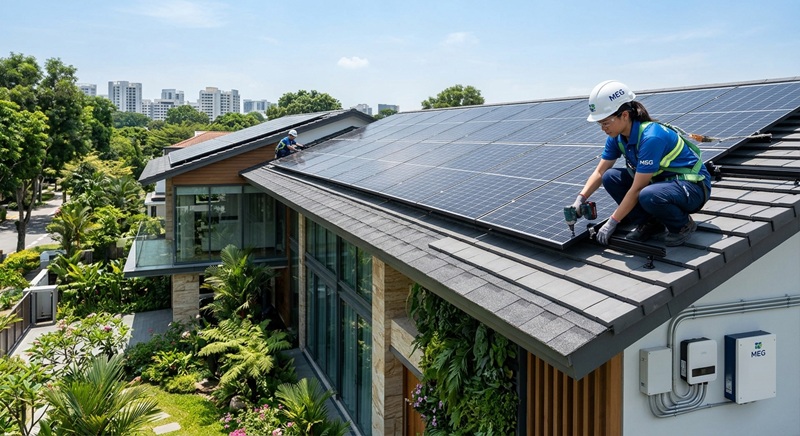
The physical installation itself typically takes one to two days for a standard landed property. A professional team will mount the racking system, install the panels, run DC cabling to the inverter, and connect the system to your distribution board. Minimal disruption to daily life is expected when the installation is well-managed.
Post-installation, your installer should provide a monitoring platform so you can track daily generation, consumption, and system health in real time. This data is also essential if any warranty claim arises later.
Financial Considerations: Beyond the Upfront Cost
The cost of a residential solar system in Singapore varies by size and configuration. A 5 kWp system without storage typically ranges from SGD 10,000 to SGD 15,000. Adding a quality battery adds SGD 8,000 to SGD 15,000 depending on capacity and brand.
Payback periods for grid-tied systems average between six to nine years, after which the system generates essentially free electricity for its remaining lifespan. With rising utility tariffs, that payback window has been shortening steadily.
There are currently no direct residential solar subsidies in Singapore, but the Energy Market Authority (EMA) actively supports residential solar adoption through streamlined net metering policies. Always verify current incentive frameworks with EMA or your installer before making financial projections.
Choosing the Right Installer
In Singapore, solar contractors are required to be registered with the Building and Construction Authority (BCA) and should hold relevant electrical work licences. Ask for case studies, warranties on both equipment and workmanship, and a detailed system proposal before signing anything.
A credible installer will always conduct a proper site assessment, explain the grid connection process, and provide transparent payback calculations based on your actual usage not best-case projections.
For homeowners in Singapore ready to move from consideration to commitment, Megawatts offers end-to-end residential solar solutions from system design and energy storage integration to installation and long-term monitoring support.
Frequently Asked Questions
How do I know if my roof is suitable for solar panels?
A qualified installer will assess your roof’s structural condition, available area, orientation, and shading during a site survey. South-facing roofs with minimal obstructions perform best in Singapore, but east-west configurations are also viable for many landed properties.
What does a solar battery for home use actually do?
A home solar battery stores excess electricity generated during the day so you can use it in the evening rather than drawing from the grid. It increases your self-consumption rate and, in some configurations, provides limited backup during short outages.
Is solar energy storage worth it for Singapore homeowners?
It depends on your usage profile. If most of your electricity consumption happens after sunset, a storage system improves your return on investment significantly. Homeowners who are present during the day and use electricity as it is generated may find storage less critical.
How long does solar installation in Singapore take?
Physical installation on a landed property typically takes one to two days. The full process, including SP Group grid connection approval, can take four to eight weeks. Your installer manages the regulatory submission on your behalf.
What system size should I install for my home?
System size should be based on your average monthly electricity consumption from the past 12 months. Landed properties in Singapore typically benefit from systems between 5 kWp and 10 kWp, but your installer should calculate this from your actual usage data.
Are there any grants or subsidies for residential solar in Singapore?
There are currently no direct cash subsidies for residential solar in Singapore, though the Energy Market Authority supports adoption through net metering schemes. Always check EMA’s latest guidelines before making financial projections, as policy frameworks are periodically updated.