

A water filter is a device that eliminates impurities from water using a physical or chemical filtering medium. A water dispenser. An appliance for storing and dispensing water, either pre-filled or connected to a water source, with or without filtration. The main distinction is that filters purify water and dispensers serve it. Some goods do both, although they have different primary goals.
If you’re trying to decide between a water filter and a water dispenser for your house, you’re not alone. This is the very question that trips up most first-time customers – and they end up buying the wrong thing. This guide explains how each works, what it really does and which one is right for your scenario.
How a Water Filter Works
You attach a water filter directly to your water supply, either at the tap, under the sink or via a countertop device. Water is passed through a media such as activated charcoal, reverse osmosis membranes or ceramic filters. These materials capture or neutralize pollutants like as chlorine, heavy metals, microorganisms, and silt.
The result is cleaner, safer drinking water flowing right out of your pipes. You don’t need to buy or lug around bottled water. Every time you turn on the tap or fill a jug, the filter does it.
Common Types of Water Filters
- Under-sink filters — installed beneath the kitchen sink, connected to a dedicated faucet
- Countertop filters — sit on the benchtop and attach to the tap via a diverter valve
- Pitcher or jug filters — portable, no installation needed, filter water as it pours through
- Whole-house filters — treat water at the point of entry for the entire home
- Reverse osmosis systems — multi-stage filtration for the highest level of purification
How a Water Dispenser Works
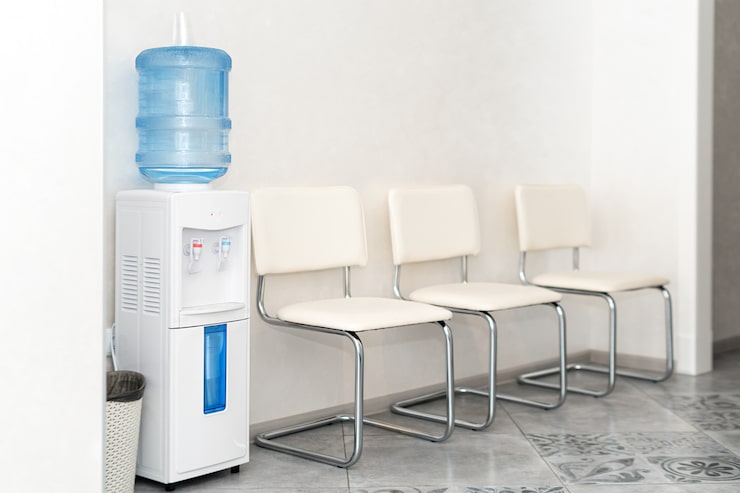
A water dispenser stores water in a tank or reservoir and dispenses it on demand — often at multiple temperatures. The most common types are freestanding bottle-fed units (using large 15L or 20L water bottles) and point-of-use (POU) dispensers connected directly to a water line.
Dispensers focus on convenience and temperature control. They typically offer chilled, room temperature, and hot water at the press of a button. While some modern dispensers include a built-in filter stage, many simply store and serve water without treating it.
Common Types of Water Dispensers
- Freestanding bottled dispensers — use large water bottles loaded on top or bottom
- Point-of-use (POU) dispensers — plumbed in, no bottles required, often include basic filtration
- Countertop dispensers — compact units suitable for smaller kitchens or offices
- Hot and cold units — provide both chilled and boiling water, replacing a kettle and fridge jug
Water Filter vs Water Dispenser: Side-by-Side Comparison
| Feature | Water Filter | Water Dispenser |
|---|---|---|
| Primary function | Removes contaminants from water | Stores and dispenses water |
| Filtration included | Yes — core function | Sometimes — varies by model |
| Temperature control | No | Yes — hot, cold, ambient |
| Installation required | Often yes (tap or under-sink) | Not always (bottled units are plug-and-play) |
| Ongoing cost | Filter cartridge replacements | Water bottles or filter changes |
| Best for | Improving tap water quality | Convenient access to multiple temperatures |
| Space required | Minimal (under-sink or countertop) | More — especially freestanding units |
Water Purifier vs Dispenser: Is There Another Option?
The water purifier vs dispenser question comes up when buyers are looking at more advanced filtration — particularly reverse osmosis or UV purification systems. A purifier goes further than a standard filter by eliminating dissolved solids, bacteria, and viruses at a microscopic level.
In Australia, the National Health and Medical Research Council (NHMRC) publishes the Australian Drinking Water Guidelines, which outline acceptable limits for over 250 water quality parameters. If your local water supply tests near the upper limits for heavy metals or microbiological contaminants, a purifier may be more appropriate than a basic filter or dispenser.
A dispenser, by contrast, does not treat water at that level unless it includes a dedicated purification stage. It is primarily a delivery mechanism, not a treatment solution.
Which One Is Right for You?
Choose a Water Filter If:
- Your main concern is water quality — taste, odour, or chemical content
- You want to improve your existing tap water without storing it separately
- You’re looking for a permanent, low-maintenance solution
- You want filtered drinking water available instantly from the tap
Choose a Water Dispenser If:
- You want instant access to hot and cold water throughout the day
- Your household drinks large volumes of water and values convenience
- You rent and cannot install plumbing-based systems
- You want to replace both a kettle and a fridge water jug with one unit
Consider a Combined Unit If:
- You want both filtered drinking water and temperature-controlled dispensing
- You prefer an all-in-one home water solution that handles purification and delivery
- You have a larger family or office environment with high daily water consumption
What About Running Costs?
Running costs are a practical factor many first-time buyers overlook. With a water filter, the main expense is replacing the filter cartridge — typically every 3 to 12 months depending on usage and the type of filter. Most cartridge replacements in Australia range from $30 to $150.
With a bottled water dispenser, you pay per bottle — standard 15L bottles in Australia typically cost between $6 and $12 each. For a family of four drinking two to three litres per person daily, costs add up quickly. POU dispensers connected to the mains eliminate bottle costs but may require periodic filter maintenance.
Do Water Dispensers Filter Water?
Not all dispensers filter water. Bottled dispensers serve whatever quality of water is in the bottle — they don’t process or treat it further. Some POU dispensers include activated carbon filters or multi-stage filtration, but the level of purification varies significantly between brands and models.
If clean, filtered drinking water is your priority, always check whether a dispenser includes genuine filtration — and what contaminants it is certified to reduce. Look for units with NSF/ANSI certification or equivalent local standards as a benchmark for filtration performance.
For homeowners looking for both quality and convenience, Amglow offers a range of home water solutions designed to deliver clean, great-tasting water — whether you need a filtration system, a dispenser, or a combination of both.
Frequently Asked Questions
What is the main difference between a water filter and a water dispenser?
A water filter removes contaminants from your water supply using filtration media. A water dispenser stores and serves water at different temperatures. Filters focus on water quality; dispensers focus on convenience and delivery. Some units combine both functions.
Can a water dispenser replace a water filter?
Not in most cases. A standard bottled dispenser does not purify water — it simply serves it. Only dispensers with built-in filtration stages can offer similar water quality benefits. If clean water is your priority, a dedicated filter or a dispenser with certified filtration is the better choice.
Is filtered drinking water safer than tap water in Australia?
Australian tap water is generally safe to drink and meets national standards under the NHMRC Drinking Water Guidelines. However, filtered drinking water can improve taste, reduce chlorine, and lower levels of certain metals or sediment, making it a preferred option for many households.
What is a point-of-use water dispenser?
A point-of-use (POU) dispenser connects directly to your home’s water line, eliminating the need for bottled water. It often includes a filter stage and delivers chilled, ambient, and hot water on demand. It is a practical long-term solution compared to bottle-fed units.
How often do water filter cartridges need replacing?
Most water filter cartridges need replacing every 3 to 12 months, depending on the filter type and household usage. Manufacturers provide recommended replacement schedules. Using an expired cartridge reduces filtration effectiveness and may allow contaminants to pass through into your drinking water.
Which is better for a rental property — a filter or a dispenser?
A water dispenser is often more suitable for renters as it requires no installation or plumbing changes. Countertop or freestanding bottled dispensers are plug-and-play. If you prefer filtration, a countertop or jug-style filter also works without any permanent modifications to the property.