

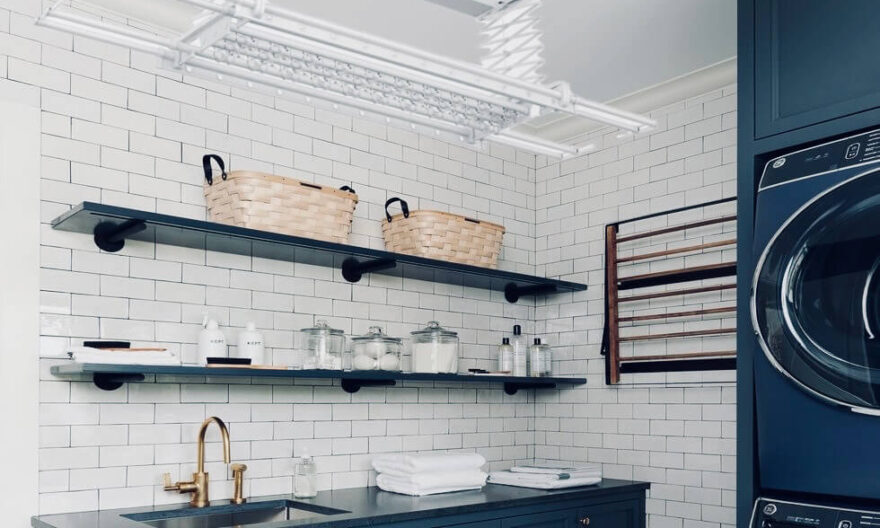
The automatic laundry system is an app-controlled, motorized drying rack, which lifts and lowers at the touch of a button, using ceiling height to free up floor space. These systems are the most practical drying solution available for HDB flats and condominiums in the high-humidity climate of Singapore. Pole racks reduce the physical strain, improve the airflow and dry clothes faster than traditional pole racks.
If you’ve ever fought a bamboo pole over a kitchen window, or tripped over a free-standing rack in your living room, you know the problem. Singapore homeowners face a unique problem. With limited square footage, year-round humidity of 70-90% and little outdoor drying space, an automatic laundry system solves all three at once — without a renovation.
Why Singapore Homes Need Smarter Solutions For Laundry Drying
According to the Housing Development Board, over 80% of Singapore’s resident population lives in HDB flats. The average three-room flat has about 60–70 square meters of living space. Every inch counts. Traditional drying racks take up valuable floor space and look cluttered — not exactly a good fit for compact modern living.
There’s also the problem of humidity out there in space. If your service yard is poorly ventilated, laundry drying on a stationary rack can take hours to dry and may get musty. Motorized ceiling systems help to place garments at the optimum height near windows or ventilation, thereby increasing air movement and greatly reducing drying time.
What is an Automatic Laundry System & How Does it Work?
An automatic laundry system clips to your ceiling – usually in the service yard, kitchen or utility room – and uses a motorized mechanism to lower and raise a horizontal drying rack. Most systems are controlled by a wall switch or remote control. Premium models connect to smartphone apps so you can adjust height remotely, activate built-in fans or switch on UV sterilization features.
The main parts typically consist of:
- Motor unit – ceiling mounted, provides vertical movement
- Aluminum or stainless steel rods – corrosion resistant, supports full laundry loads
- Belt drive or wire cables – link the rack frame to the motor
- Control panel or remote – controls height adjustment
- Optional add-ons – LED lighting, drying fan, UV lamp or humidity sensor
It usually takes a professional two to four hours to install and requires that the ceiling be drilled for anchor points. The majority of systems in Singapore are compatible with ceilings of 2.4 to 3.0 meters – which fits most HDB and condominium units.
Automatic Laundry System vs Traditional Drying Rack: A Straight Comparison
| Feature | Automatic Laundry System | Traditional Drying Rack
|
|---|---|---|
|
Space usage |
Uses ceiling space, zero floor footprint | Occupies floor or window space |
|
Drying efficiency |
Higher — better airflow at elevation | Variable — depends on placement |
| Physical effort | Minimal — one button operation |
Manual hanging and retrieval |
|
Load capacity |
Typically 15–30 kg per system | Usually 5–10 kg freestanding |
| Long-term cost | Higher upfront, lower effort cost |
Low upfront, higher inconvenience |
| Aesthetics | Clean, hidden when not in use |
Visible, often cluttered-looking |
What to look for in the best automated laundry rack
Not all motorized systems are alike. When you buy an automatic laundry rack, think about these features carefully for your home’s needs.
Power Capacity
For a family of four, you want to find a motor with a rating of at least 15 kg. Heavier-duty motors accommodate 25-30 kg for larger households or regular drying of bedding and towels. Underpowered motors wear out sooner. More cable stress over time.
Quality of Material
Humid environments in Singapore require corrosion-resistant materials. Aluminum alloy frames and stainless steel hanging rods are the best long-term performers. Chrome plated steel parts are not good , they rust in 1-2 years in high humidity conditions.
Smart Controls & Connectivity
Wi-Fi and Bluetooth systems can be height-adjusted using a smartphone app. Humidity sensors on some premium models alert you when the laundry is dry or automatically turn on fans. These are especially helpful for busy households where nobody is home during the day.
Safety Features
An automatic stop feature protects the motor from overload if the rack jams in the middle of its movement. Consider using child-safety locks on control panels if you have small children.
Choosing the Right System for Your Singapore Home
The right choice depends on your ceiling height, service yard layout and budget. Here’s a practical guide:
- HDB BTO flats (3-5 rooms) – a single-bar motor with 20 kg capacity works for most layouts. Small motorized units fit nicely into service yards without blocking utility connections.
- Older HDB resale units – Condition of ceiling varies. Have a structural integrity check done by a professional before drilling anchor points. Choose systems with larger mounting brackets to spread out the load.
- Condos with utility rooms – Installation is more flexible. Enclosed spaces are optimized for efficiency by twin-bar or multi-bar systems with integrated fans and UV lights.
- Landed properties – Wider-span or customized systems on offer. Weatherproof motors suitable for outdoor use are needed for partially covered drying areas.
Installation and Maintenance: What You Can Expect
Professional installation is highly recommended for safety and warranty reasons over DIY. Installers will determine ceiling joist/slab depth, locate anchor points and set motor tension. Most reputable brands in Singapore will give a one to three year warranty on motors and hardware.
Maintenance is little but crucial. Cable pulleys should be lubricated with a silicone-based lubricant every six to Twelve months. Wipe aluminum bars regularly with a damp cloth. Cables should be inspected for fraying once a year, especially in coastal areas or high humidity areas like Punggol or Pasir Ris where salt air can speed up wear.
Energy Use: Is it economical?
A typical motorized laundry system uses 30 to 80 watts per operation cycle – the equivalent of a low energy bulb. Even for daily use, the monthly electricity bill would only add less than S$2 to your utility bills based on SP Group’s current residential tariff of around 31.84 cents per kWh (rates as of Q3 2025). The energy cost over the seven to ten years of the system’s life is negligible.
Units with built-in drying fans consume more electricity — typically between 50 and 150 watts — but they greatly reduce the drying time, so your clothes will be ready in two to three hours, rather than six to eight on a humid day.
Are Automatic Laundry Systems Suitable for All Singapore Homes?
The answer is almost always yes with a couple caveats. Generally, ceiling-mounted laundry systems in your service yard are allowed without approval from HDB. However, you should check with your building’s management or refer to HDB’s latest guidelines prior to installation. You might need written permission from the management corporation to drill into common ceiling slabs – make sure you check this out before you book your installer.
Rental unit systems are either removable or tension-mounted, but they have a lower load capacity. They do a good job for single people or couples with lighter loads of laundry.
Oikia has a curated selection of reliable, well-designed motorized drying solutions for Singaporean homes, if you’re after an automatic laundry system designed specifically for the local market. You can opt for compact single-bar systems suitable for studio flats, or feature-rich smart models with UV sterilization and app control. Their products are developed with Singapore’s climate and ceiling dimensions in mind, so they make a practical starting point for any homeowner looking to upgrade their laundry setup.
FAQs
What is an automatic laundry system? How does it work?
An automatic laundry system is a motorized rack installed on the ceiling, which can be lowered and raised using a remote control or a smartphone app. It has a motor and cable arrangement to raise and lower the drying height, so you can put up and take down laundry without straining your back.
Will the automatic laundry system work in HDB flats in Singapore?
Yes, most motorized laundry systems are suitable for ceiling heights of 2.4 to 3.0 meters in Singapore HDB. The installation of a service yard generally does not require HDB approval but it is always better to check the latest HDB guidelines before proceeding.
What is the cost of an automatic laundry system in Singapore?
Prices in Singapore generally range from S300toS1,200 depending on brand, motor capacity and features such as fans, UV lamps and smart connectivity. Professional installation is often included or available as an added feature.
How long do automatic laundry systems last?
A good quality motorized laundry system, well maintained, will last between seven and ten years. The unit’s lifespan is extended by regular cable lubrication and periodic motor checks. Most reputable brands provide a one- to three-year warranty on motor and structural components.
Does a laundry rack use too much electricity automatically?
No, the motor is normally 30 to 80 watt per cycle. With the current residential electricity tariff in Singapore, the daily usage costs less than S$2 a month and is one of the most energy efficient home appliances available.
Can we install an automatic laundry system in a Singapore condominium?
Yes, but you need to get written approval from your management corporation before drilling into the ceiling slabs. There are many installers familiar with Singapore condos who can assist you with the approval paperwork before they start installation.