


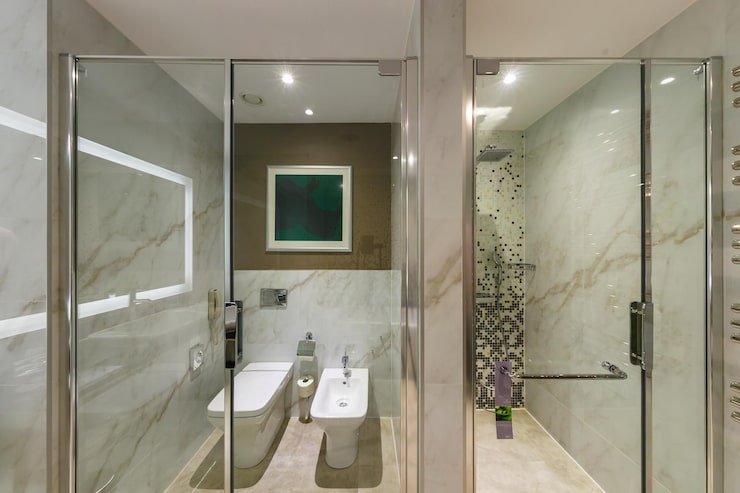
Frameless glass shower screens make small bathrooms feel larger by eliminating visual barriers. The uninterrupted transparency of clear glass draws the eye across the full width of the room, creating the illusion of depth and space. For compact HDB and BTO bathrooms in Singapore — typically ranging from 3 to 5 square metres — this single design choice can transform how the entire room feels.
Frameless shower screens have become one of the most popular renovation choices among Singapore homeowners looking to maximise their bathroom space without knocking down walls. Here’s how to use them effectively in a small bathroom.
Why Transparent Glass Works So Well in Compact Bathrooms
Traditional shower curtains and framed enclosures divide the bathroom into visual zones. Your eye stops at the frame or fabric, and the room feels cut in half. A frameless glass panel removes that visual interruption entirely.
When light — whether natural from a window or artificial from ceiling lights — passes through clear glass, it bounces around the entire room rather than being absorbed or blocked. This effect is especially powerful in Singapore’s HDB bathrooms, where windows are often small and ventilation shafts are the norm.
Interior designers in Singapore often recommend glass-heavy bathrooms for units under 5 square metres precisely because of this light-multiplication effect. The shower zone becomes part of the room visually, even while remaining functionally separate.
Design Ideas for Using Frameless Shower Screens in Small Bathrooms
1. The Single Fixed Panel Layout
A single fixed frameless glass panel between the shower head and the rest of the bathroom is the simplest and most cost-effective approach. It contains water splash without enclosing the space.
This works particularly well in wet-dry bathroom configurations, which are common in BTO flat layouts. The panel is typically installed at 900mm to 1000mm wide and floor-to-ceiling in height for maximum visual continuity.
2. Corner Shower Enclosures Without Bulk
Corner installations use two walls of the bathroom as natural barriers. A frameless glass panel on the open sides means you’re only adding glass — no frame profiles eating into floor area, no visual clutter.
For a 3-square-metre bathroom, this layout often frees up enough visual breathing room to make the space feel nearly double its actual size. Pair it with wall-hung fixtures and a floating vanity to compound the effect.
3. Walk-In Shower with a Partial Glass Panel
Walk-in showers without doors are trending in Singapore HDB renovations because they feel open and are easy to maintain. A single angled or straight frameless panel at one end keeps water contained while keeping sightlines open.
This design also eliminates the door swing radius — a practical gain in bathrooms where every centimetre matters. There’s no door to bang against the toilet or vanity.
4. Floor-to-Ceiling Glass for Maximum Height Illusion
HDB ceilings are typically around 2.6 metres. A floor-to-ceiling frameless shower screen draws the eye vertically, making the room feel taller rather than just wider.
The absence of a top rail — which framed systems require — keeps the ceiling line clean and unbroken. This is a subtle but powerful detail that experienced interior designers leverage in tight spaces.
5. Pairing Glass with Reflective Surfaces
The transparency of frameless glass works even harder when paired with large-format floor tiles, mirrored cabinet fronts, or light-coloured grout. Each reflective surface multiplies the light that the glass lets through.
Popular pairings in Singapore HDB renovations include:
- White or cream large-format tiles (600mm x 600mm or larger)
- Matte or brushed chrome fixtures to reduce visual noise
- Frameless mirrors that extend from vanity to ceiling
- Recessed niches instead of protruding shower shelves
Frameless Shower Screens for Small Bathrooms: What to Look For
Not all frameless glass is the same. When selecting frameless shower screens for small bathrooms, there are a few specifications that matter.
| Feature | Recommended Spec for Small Bathrooms
|
|---|---|
| Glass thickness | 10mm or 12mm tempered safety glass |
| Glass type | Clear (not tinted or frosted) for maximum transparency |
| Hardware finish | Brushed stainless steel or chrome — minimal profiles |
| Height | Floor-to-ceiling where possible |
| Coating | Easy-clean nano-coating to reduce watermarks |
Tempered glass is mandatory under Singapore’s Building and Construction Authority (BCA) guidelines for wet area glazing, so make sure your installer is using certified tempered panels rather than standard float glass.
Common Mistakes to Avoid When Installing Glass Screens in Small Bathrooms
Using frosted or tinted glass: It may feel private, but it blocks light and reintroduces visual weight into the space. In a small bathroom, that defeats the entire purpose of going frameless.
Installing a swinging door on a tight floor plan: A hinged glass door requires clearance. If your toilet is directly opposite the shower, measure the swing arc before committing to a door configuration. A sliding panel or open walk-in design avoids this issue entirely.
Ignoring waterproofing behind the glass: Frameless screens rely on precise silicon seals at wall junctions. Poor workmanship here causes leaks over time. Always verify that your installer waterproofs the screed layer before tiling, particularly important in Singapore’s humid climate where moisture issues escalate quickly.
How Much Space Can a Frameless Screen Actually Save?
A standard aluminium-framed shower enclosure uses frame profiles that are typically 40mm to 60mm wide on each side. In a 900mm shower recess, that’s losing nearly 120mm of usable width — about 13% of the space — to metal frames alone.
Frameless screens use minimal wall-mounted brackets or channel fittings at the base, reclaiming that floor area completely. In practice, this doesn’t just recover centimetres — it removes the visual interruption that makes small rooms feel cramped.
The Right Time to Install: Renovation vs. Retrofit
The best time to install a frameless shower screen is during a full bathroom renovation, when waterproofing, tiling, and plumbing are all being done simultaneously. Wall anchor points can be positioned precisely, and the screed can be levelled to accommodate a clean glass base seal.
Retrofit installations are possible but require careful assessment of existing tile and wall integrity. An experienced glazing specialist can often work around existing finishes, though custom measurement and templating become even more critical.
For Singapore homeowners planning a BTO renovation or an HDB resale upgrade, scheduling the glass installation as part of the main ID package ensures the bathroom is designed as a cohesive system rather than assembled in pieces.
If you’re looking for quality frameless glass solutions backed by expertise in Singapore, Vindar offers a range of frameless shower glass options designed specifically for local bathroom configurations — from compact HDB wet rooms to larger condominium suites.
Read More: Best Layout Ideas for a 2 Bedroom Condo in Singapore | Mediumspot – Guest Posting & Listing Services
Frequently Asked Questions
Are frameless shower screens suitable for very small HDB bathrooms?
Yes. Frameless shower screens are ideal for small HDB bathrooms because clear glass eliminates visual barriers and makes the room feel larger. They work particularly well in 3 to 5 square metre bathrooms where framed enclosures would add bulk and reduce the sense of openness.
What glass thickness is recommended for a frameless shower screen in Singapore?
10mm to 12mm tempered safety glass is the standard recommendation for frameless shower screens in Singapore. Tempered glass is required under BCA wet area glazing guidelines and provides the structural rigidity needed for unsupported panels without frames or top rails.
Do frameless shower screens make bathrooms harder to clean?
Not if you choose panels with a nano easy-clean coating. This hydrophobic layer causes water to bead and run off, significantly reducing soap scum and watermark buildup. A quick squeegee after each shower keeps frameless glass looking clean with minimal effort.
Can frameless shower screens be installed in an existing bathroom without full renovation?
Yes, retrofit installations are possible if the existing tiles and walls are structurally sound. A glazing specialist will measure and template on-site before fabricating custom panels. Wall anchor points are drilled into the existing tiled surface, and silicon seals manage the waterproofing at joints.
What is the difference between a frameless and semi-frameless shower screen?
A fully frameless screen uses only minimal hardware brackets with no surrounding metal frame. A semi-frameless screen has a frame on one or two sides but leaves other edges open. For maximum transparency in a small bathroom, fully frameless is the better choice as it removes all visual frame weight.
How long does a frameless shower screen installation take in Singapore?
Fabrication typically takes 5 to 10 working days after site measurement, with the physical installation completed in half a day to a full day depending on complexity. Silicon seals require 24 hours to cure before the shower can be used.