

In Singapore’s humid climate, choosing the right toilet door material is essential. Waterproof toilet doors resist moisture, prevent warping, and reduce mould growth — making them far more durable than standard interior doors. The best materials include aluminium, PVC, and engineered composites, each offering different levels of water resistance, maintenance requirements, and aesthetic appeal suited to local home conditions.
If you’ve ever dealt with a swollen door frame, peeling paint, or rust streaks near your bathroom entrance, you already know the problem. Singapore’s year-round humidity — averaging between 70% and 90% according to the Meteorological Service Singapore — puts tremendous stress on any surface exposed to moisture. For toilet door Singapore buyers, the choice of material isn’t just about looks. It directly affects how long your door lasts, how much maintenance it needs, and whether it stays safe and functional in the years ahead.
Why Toilet Door Material Matters More Than You Think
Most people spend a lot of time selecting tiles, vanities, or lighting for their bathrooms — but the door often gets chosen last. That’s a mistake. A poorly chosen bathroom door Singapore homes use can deteriorate within two to three years when exposed to constant steam, splashback, and humidity.
Standard timber doors, for instance, absorb moisture over time. They expand, contract, and eventually warp — making them difficult to close properly and prone to mould on the interior surface. In HDB flats and BTO units, where bathrooms are typically compact and ventilation is limited, this is a very real and common issue.
Top Materials for Waterproof Bathroom Doors in Singapore
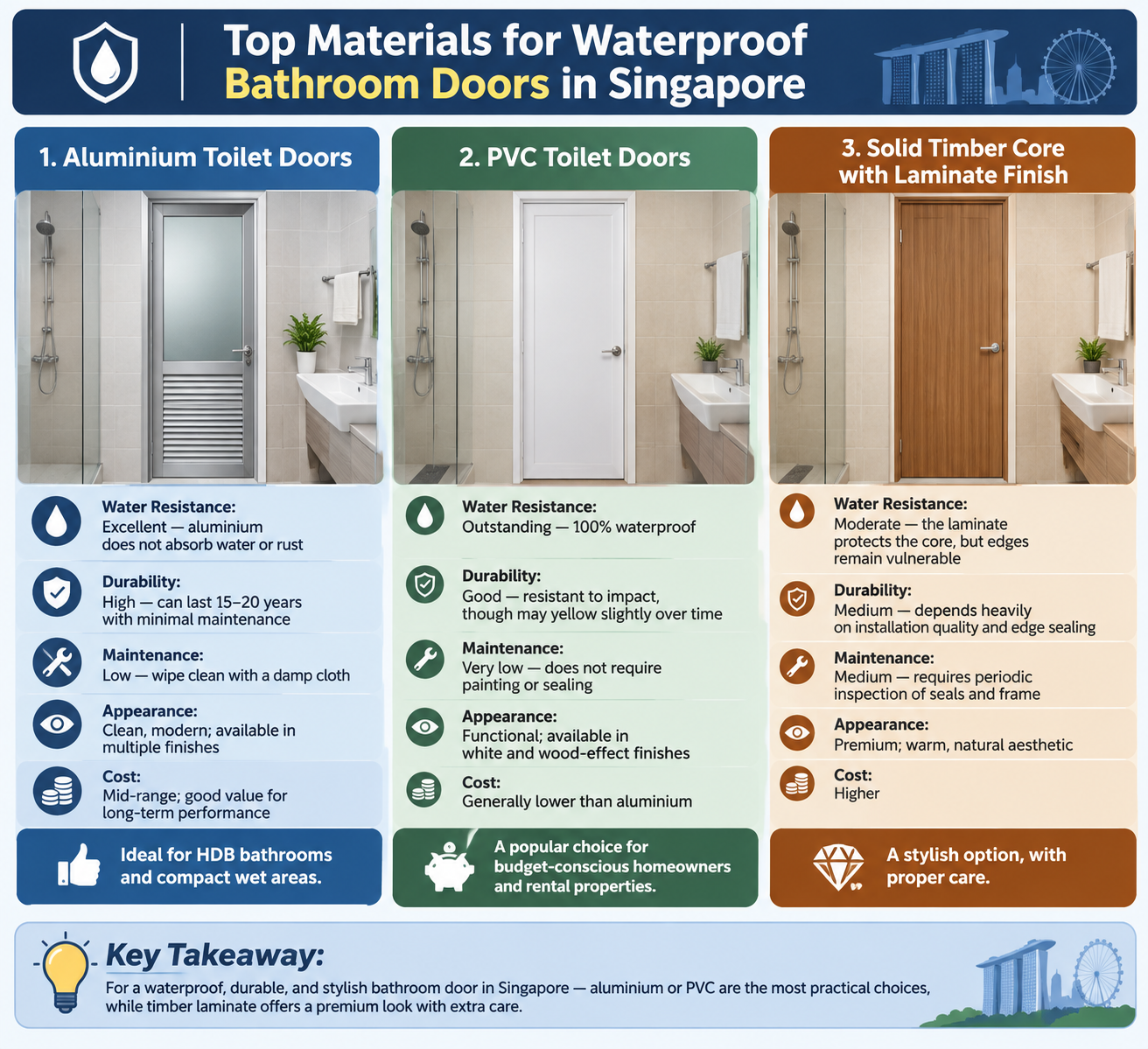
Not all waterproof bathroom door options are built the same. Here’s a practical breakdown of the most commonly used materials, evaluated across the factors that matter most to Singapore homeowners.
1. Aluminium Toilet Doors
Aluminium is one of the most popular materials for toilet doors in Singapore — and for good reason. It’s fully rustproof, lightweight, and handles moisture without warping or degrading. An aluminium toilet door typically features a hollow aluminium frame with a frosted glass or louvred panel, which also supports ventilation.
- Water resistance: Excellent — aluminium does not absorb water or rust
- Durability: High — can last 15–20 years with minimal maintenance
- Maintenance: Low — wipe clean with a damp cloth
- Appearance: Clean, modern; available in multiple finishes
- Cost: Mid-range; good value for long-term performance
Aluminium doors are especially well-suited for HDB bathrooms and compact wet areas where both durability and a slim profile matter. They’re also compatible with most digital lock systems, which is important if you’re planning a smart home setup.
2. PVC Toilet Doors
PVC (polyvinyl chloride) is a fully waterproof, non-porous material that has gained significant traction in Singapore’s residential renovation market. A PVC toilet door won’t warp, rot, or absorb humidity — making it one of the most moisture-resistant toilet door options available.
- Water resistance: Outstanding — 100% waterproof
- Durability: Good — resistant to impact, though may yellow slightly over time
- Maintenance: Very low — does not require painting or sealing
- Appearance: Functional; available in white and wood-effect finishes
- Cost: Generally lower than aluminium
PVC doors are a popular choice for budget-conscious BTO homeowners and rental properties, particularly where practicality takes priority over premium aesthetics. Their lightweight nature also makes installation straightforward.
3. Solid Timber Core with Laminate Finish
Some homeowners prefer the look and feel of timber but want better moisture protection. Engineered timber doors with a moisture-resistant laminate or veneer finish offer a visual upgrade over aluminium or PVC — but they require a higher level of care.
- Water resistance: Moderate — the laminate protects the core, but edges remain vulnerable
- Durability: Medium — depends heavily on installation quality and edge sealing
- Maintenance: Medium — requires periodic inspection of seals and frame
- Appearance: Premium; warm, natural aesthetic
- Cost: Higher
These doors work better in powder rooms or guest bathrooms with good ventilation rather than in heavily used wet bathrooms. Without proper edge treatment, moisture can still penetrate and cause swelling over time.
Related Guide: What Features Make a Modern Digital Door Lock Different from a Conventional Lock?
Material Comparison at a Glance
|
Material |
Water Resistance | Durability | Maintenance | Appearance |
Best For |
|---|---|---|---|---|---|
| Aluminium | Excellent | High | Low | Modern / Clean | HDB, BTO, Condo |
| PVC | Outstanding | Good | Very Low | Functional | Budget renovations, Rentals |
| Laminated Timber | Moderate | Medium | Medium | Premium / Warm | Powder rooms, Dry bathrooms |
What Should You Look for in a Durable Bathroom Door?
Beyond the material itself, a few other factors determine how well a durable bathroom door performs over time in a Singapore home.
Frame quality: Even the best door panel fails quickly if the frame corrodes or warps. Ensure the frame is made from the same moisture-resistant material as the door itself — especially at the bottom edge, which is most exposed to water.
Hardware compatibility: Hinges, handles, and locks should be stainless steel or corrosion-resistant alloy. Standard iron hardware will rust within months in a wet bathroom environment. If you plan to install a digital lock or thumbprint access system, confirm the door profile is compatible before purchasing.
Ventilation design: Louvred panels or bottom clearance help reduce moisture build-up inside the bathroom, which in turn reduces wear on the door itself. This is particularly important in HDB bathrooms where natural ventilation is limited.
Toilet Door Singapore: HDB and BTO-Specific Considerations
HDB regulations under the Housing & Development Board’s renovation guidelines specify certain restrictions on structural changes in flats. While replacing a toilet door is generally permitted, works involving hacking door frames or altering wet area boundaries may require prior approval or the involvement of an HDB-registered contractor.
For BTO buyers, the default toilet door provided by HDB is typically a basic aluminium swing door. Many homeowners choose to upgrade this during the initial renovation stage — which is the ideal time to select a higher-quality, moisture-resistant door that integrates with the overall bathroom design.
How to Choose the Right Toilet Door for Your Home
Here’s a quick decision guide based on common home types in Singapore:
- HDB flat (3–5 room): Aluminium or PVC — both handle humidity well and are easy to maintain in compact layouts
- BTO with renovation budget: Aluminium with frosted glass — better aesthetics, long lifespan, compatible with smart locks
- Condo bathroom: Aluminium or laminated timber — depends on interior design direction; ensure high-quality frame and hardware
- Rental property: PVC — cost-effective, low maintenance, withstands heavy usage
Where to Find Quality Toilet Doors in Singapore
When selecting a toilet door, it’s worth working with a supplier that offers both the door product and compatible accessories — including handles, hinges, and smart locking systems. This ensures that every component is designed to perform together, particularly in moisture-heavy environments.
An Digital Lock offers a range of bathroom and toilet door solutions designed for Singapore homes, including aluminium and waterproof door options that pair with their digital lock systems. Whether you’re renovating an HDB flat or fitting out a new BTO unit, their product range covers both functional and design-forward choices suitable for Singapore’s climate.
Frequently Asked Questions
What is the best material for a toilet door in Singapore?
Aluminium and PVC are the best materials for toilet doors in Singapore due to their high moisture resistance, low maintenance, and long lifespan. Aluminium is ideal for a modern finish and smart lock compatibility, while PVC suits budget-friendly or rental setups where full waterproofing is the priority.
How long does a waterproof bathroom door last in Singapore?
A good-quality aluminium or PVC bathroom door in Singapore can last between 15 to 20 years with proper installation and minimal upkeep. Longevity depends on hardware quality, frame condition, and how well the bottom edge and seals are maintained against direct water contact.
Can I install a digital lock on an aluminium toilet door?
Yes, most aluminium toilet doors in Singapore are compatible with digital locks, provided the door profile has the correct dimensions for lock fitment. It is advisable to confirm compatibility with your lock supplier before purchase, especially for narrower-profile aluminium frames commonly used in HDB bathrooms.
Is PVC or aluminium better for HDB bathroom doors?
Both work well in HDB bathrooms, but aluminium is generally preferred for its better structural rigidity, more refined appearance, and long-term durability. PVC is a solid, cost-effective choice for homeowners prioritising budget and ease of replacement over aesthetics or digital lock integration.
Do I need HDB approval to replace my toilet door?
Replacing a toilet door like-for-like generally does not require HDB approval. However, if the work involves hacking the existing frame, altering the door opening size, or modifying wet area boundaries, you may need to engage an HDB-registered contractor and seek prior written approval before proceeding.