


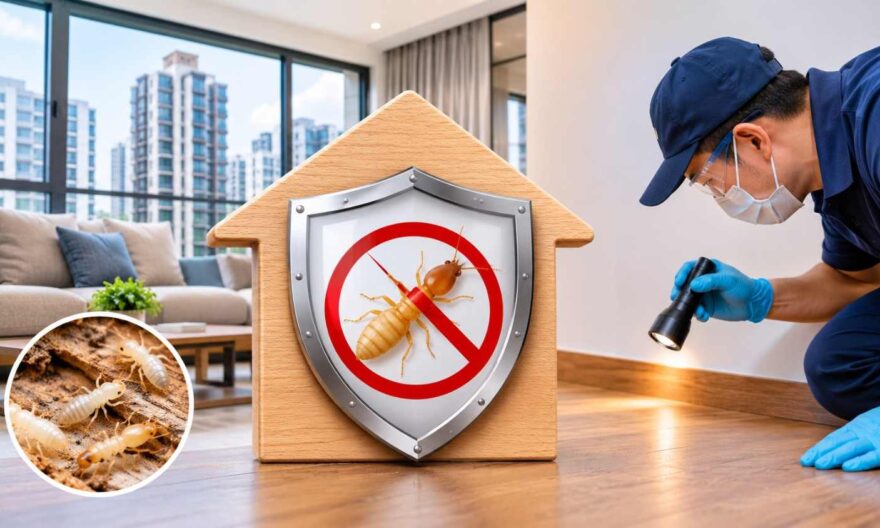
Yes, termite prevention treatment is worth it for apartments and condos. Many residents assume termites only threaten landed homes, but multi-storey buildings are equally at risk. Termites travel through shared walls, flooring, utility ducts, and wooden fixtures. Prevention treatment protects your unit, your belongings, and your renovation investment before an infestation takes hold.
If you live in a condo or apartment in Singapore, you have probably heard your neighbour mention termites and assumed it had nothing to do with you. No garden. No soil contact. No problem, right? Not quite. Termite prevention treatment is just as relevant to high-rise residents as it is to those in landed properties — and skipping it could cost you significantly more down the road.
The Misconception: “Termites Are a Landed Property Problem”
This is one of the most common and costly myths among condo owners in Singapore. Subterranean termites, the most destructive species found locally, build colonies underground and travel upwards through concealed mud tubes. They have been found in units on the fifth floor, the tenth floor, and beyond.
Drywood termites, another species common in Singapore, do not need soil contact at all. They infest timber directly — furniture, door frames, wooden flooring, built-in wardrobes, ceiling boards. Your renovation investment is exactly what they are after.
How Termites Enter Apartments and Condos
Understanding entry points makes the case for prevention clearer. Termites do not knock on the front door — they move through structures silently and are often discovered only after significant damage.
Common entry routes in high-rise units include:
- Shared walls with adjacent units or common corridors
- Utility ducts and pipe chases running vertically through the building
- Wooden flooring, parquet, or laminate laid directly over structural slabs
- Infested second-hand or antique furniture brought into the unit
- Building-wide infestations that spread floor by floor
A termite infestation in Singapore can originate at ground level and travel upward across multiple units before anyone notices. By the time visible damage appears — hollow-sounding timber, bubbling paint, mud tubes along skirting boards — the colony is already well established.
What Does Termite Prevention Treatment Actually Involve?
Pre-Construction Treatment
If you are purchasing a new development or doing a major renovation, pre-construction soil treatment can be applied to create a chemical barrier beneath and around the structure. This is the most proactive form of protection and is often specified by developers under Singapore’s building regulations.
Post-Construction Treatment for Existing Units
For occupied apartments and condos, the most practical options are:
- Baiting systems — Installed at strategic points around the unit or building perimeter, these attract foraging termites and eliminate colonies over time.
- Localised liquid treatment — Applied to affected or at-risk timber, walls, and flooring cavities to create a contact and residual barrier.
- Wood treatment sprays and borates — Applied directly to timber surfaces during renovation to deter termite feeding and nesting.
A professional pest control assessment will determine which treatment suits your unit’s construction type, renovation materials, and risk profile.
The Real Cost of Skipping Prevention
Prevention treatment typically costs a fraction of what remediation and repair work demands. In Singapore, renovation costs for a standard 3-bedroom condo can run between SGD 50,000 and SGD 100,000 or more. Termite damage to timber flooring, built-in cabinetry, door frames, and ceiling boards can render a significant portion of that investment unusable within a few years.
Beyond material costs, a declared termite infestation in Singapore can affect the resale value of your unit. Buyers and their agents are increasingly aware of the signs, and disclosure obligations can complicate a sale if damage is evident.
Is Termite Risk Higher in Older Condos?
Yes, older buildings carry a higher risk for several reasons. Original timber fixtures may have never received chemical treatment. Previous infestations in adjacent units may have been only partially addressed. Ageing building infrastructure creates more concealed entry points.
That said, newer developments are not immune. Many modern condos use engineered wood, parquet, and timber cladding extensively in interior design — all of which are attractive to drywood termites in particular.
What Singapore Residents Should Know About Termite Infestations
Singapore’s tropical climate — consistently warm and humid year-round — creates near-ideal conditions for termite activity. The National Environment Agency (NEA) recognises termites as a significant pest concern for both residential and commercial properties in Singapore, and professional pest management remains the recommended approach for treatment and control.
Unlike some other pests, termites do not respond to DIY sprays or surface-level treatments in any meaningful way. Their colonies can number in the hundreds of thousands, with queens capable of laying thousands of eggs daily. Surface application without professional assessment rarely reaches the colony source.
How to Assess Whether Your Unit Needs Prevention Treatment
Not every condo owner needs an emergency treatment today. But a professional inspection is worthwhile if any of the following apply to your situation:
- Your building is more than 10 years old
- You have heard of termite activity in neighbouring units or floors
- You are planning or have recently completed a renovation
- You have timber flooring, built-in timber furniture, or wooden false ceilings
- You have noticed hollow-sounding walls, fine sawdust-like deposits, or mud tubes near skirting boards
An inspection gives you a clear picture of your actual risk level before you decide on a treatment plan. It costs far less than remediation.
Termite Prevention vs. Reactive Treatment: A Quick Comparison
| Factor | Prevention Treatment | Reactive Treatment
|
|---|---|---|
| Timing | Before infestation occurs | After damage is discovered |
| Cost | Lower upfront investment | Higher — includes repair costs |
| Disruption | Minimal | Often requires hacking, replacement |
| Effectiveness | High — stops colony before damage | Variable — damage already done |
| Resale impact | Protects property value | May require disclosure |
The case for prevention is straightforward when you look at it this way. Reactive treatment is never cheaper in the long run — it simply adds a remediation bill on top of the treatment cost.
If you are unsure where to start, Action Pest offers professional termite inspections and tailored prevention plans for condo and apartment units across Singapore — with solutions matched to your renovation type and unit profile.
Frequently Asked Questions
Can termites really reach high-floor condo units in Singapore?
Yes. Subterranean termites build mud tubes and can travel upward through walls, pipe chases, and building structures to reach units several floors high. Drywood termites infest timber directly without needing ground contact, making any floor level a potential target.
How often should I get termite prevention treatment done for my apartment?
Most professional treatments provide protection for two to five years depending on the method used. Baiting systems may require annual monitoring and replenishment. A licensed pest control professional can recommend a schedule based on your unit’s specific risk factors.
Will my condo’s building management handle termite treatment for my unit?
Building management typically handles common areas only. Individual units are the owner’s responsibility. If a termite infestation in Singapore spreads from a common area into your unit, liability and treatment coverage will depend on the management corporation’s policies.
Is termite prevention treatment safe for families and pets?
Modern termite treatments used by licensed professionals in Singapore are formulated to be low in toxicity to humans and animals when applied correctly. Pest control companies will advise on any precautions needed during and after treatment, including ventilation periods and re-entry times.
What are the early signs of a termite infestation in a condo unit?
Watch for hollow-sounding timber when tapped, fine powdery deposits resembling sawdust near wooden fixtures, mud tubes along skirting boards or walls, and paint that bubbles or peels without a moisture source. Any of these signs warrant an immediate professional inspection.
Does termite prevention treatment affect my renovation or existing fittings?
When done by a qualified professional, termite prevention treatment is applied to minimise disruption to existing fittings and surfaces. For renovations in progress, treatment can be integrated at the right stage to offer long-term protection without compromising your finished interiors.

