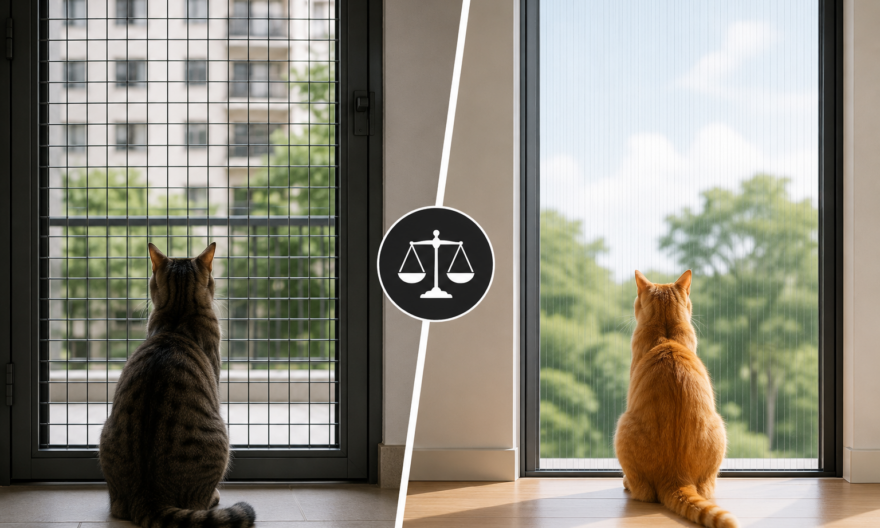
When comparing door mesh for cats against invisible mesh, door mesh is generally the more reliable safety option. It provides a physical barrier that prevents cats from squeezing through gaps, is highly durable, and works on most door types. Invisible mesh offers a cleaner aesthetic but may not withstand determined or heavy cats. The right choice depends on your cat’s behaviour, your door type, and how much you value visual minimalism.
If you share your home with a curious cat, you already know the anxiety of leaving a door or window slightly open. One second they’re napping the next, they’re gone. Choosing the right door mesh for cats is one of the most practical decisions a pet owner in Singapore can make, especially in high-rise apartments where open doors pose a serious safety risk.
This comparison breaks down both options honestly so you can make the right call for your home.
What Is Door Mesh for Cats?
Door mesh is a physical screen typically made from fibreglass, aluminium, or stainless steel mesh installed on doors or grilles to block cats from exiting while still allowing airflow. It is the traditional, proven solution used in homes across Singapore.
Most door mesh systems are fitted into a frame that attaches directly to the door or door frame. Some are retractable; others are fixed panels. They come in various mesh densities depending on the size and agility of your cat.
Common materials used in door mesh:
- Fibreglass mesh — Lightweight, affordable, and easy to install
- Aluminium mesh — More rigid, resistant to scratching and clawing
- Stainless steel mesh — Premium durability, corrosion-resistant, ideal for humid Singapore weather
What Is Invisible Mesh?
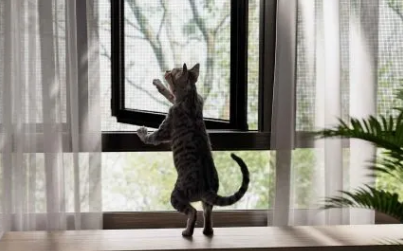
Invisible mesh (also marketed as “clear mesh” or “transparent pet mesh”) uses ultra-fine, nearly transparent netting often made from nylon or polyester that blends into the background visually. From a distance, it’s barely noticeable, which is the key selling point.
It’s particularly popular among homeowners who want to preserve their interior aesthetics or maintain unobstructed views common priorities in Singapore’s design-forward HDB and condo market.
However, “invisible” doesn’t always mean indestructible. The transparency comes at the cost of material strength in some products.
Door Mesh vs. Invisible Mesh: Head-to-Head Comparison
| Feature | Door Mesh | Invisible Mesh
|
|---|---|---|
| Visibility | Visible grid pattern | Near-transparent |
| Durability | High (especially aluminium/SS) | Moderate — depends on product grade |
| Cat-scratch resistance | Strong, especially metal mesh | Varies — fine nylon can tear |
| Airflow | Good, depending on mesh density | Good to excellent |
| Aesthetics | Functional, industrial look | Minimalist, near-invisible |
| Installation complexity | Moderate — frame required | Low to moderate — adhesive or frame |
| Price range (SGD) | $80–$300+ | $60–$250+ |
| Best for | Active, large, or scratch-prone cats | Calm cats, design-focused interiors |
Which Is Safer for Cats?
Safety comes down to two things: containment reliability and structural integrity under stress.
Door mesh particularly aluminium or stainless steel variants holds up far better against a cat that claws, headbutts, or throws its weight against the barrier. Cats that are escape-motivated or have a history of breaking through barriers need a physically robust solution.
Invisible mesh made from fine nylon can tear or puncture under repeated clawing. If your cat is persistent, this type may fail faster than expected. That said, high-grade invisible mesh products with reinforced weaves are a different story quality matters enormously here.
Bottom line on safety: If cat containment is your primary concern, standard door mesh wins on reliability. For calmer cats in aesthetics-first households, quality invisible mesh is a reasonable trade-off.
Which Is Better for Singapore Homes?
Singapore’s climate adds another variable. High humidity and frequent rain exposure can degrade certain materials faster. Here’s how both options hold up locally:
- Door mesh with stainless steel or aluminium frames resists rust and warping well-suited to Singapore’s tropical humidity
- Fibreglass mesh is affordable but may sag or loosen over time in humid conditions
- Invisible nylon mesh can weaken with prolonged UV exposure from direct sunlight relevant for east or west-facing homes
For HDB flats with metal gate grilles, a cat mesh Singapore solution that fits over existing grilles is often the most practical. Door mesh panels are typically easier to retrofit onto standard HDB gate designs than invisible mesh, which usually requires a clean flat surface for adhesive or framing.
When to Choose Door Mesh
Door mesh is the right choice if:
- Your cat is a habitual scratcher or climber
- You have multiple cats or large breeds
- You’re installing on an HDB gate or metal grille
- Long-term durability is more important than aesthetics
- You need a solution that survives Singapore’s humidity without degrading
When to Choose Invisible Mesh
Invisible mesh makes sense when:
- Your cat is calm and not prone to clawing at barriers
- You’re working with a condo unit or renovated interior where visuals matter
- The installation surface is smooth and compatible with adhesive framing
- You want minimal visual interruption to natural light or views
- You’re willing to replace the mesh periodically as part of regular maintenance
Can You Use Both Together?
Yes and in some setups, layering makes practical sense. Some pet owners use a door mesh frame for primary protection and add invisible mesh over windows or secondary openings where aesthetics matter more. This gives you containment confidence on high-risk exits while keeping less-used spaces visually clean.
It’s not a common approach, but for multi-cat households in larger condos, a mixed strategy can be worth the investment.
The Verdict: Which Should You Choose?
If you need a dependable, long-lasting barrier that can handle an active or curious cat in Singapore’s climate, door mesh is the stronger choice. It’s been field-tested, works with most door and gate configurations, and the material quality has improved significantly modern aluminium and stainless steel options look far less industrial than older designs.
Invisible mesh earns its place in aesthetics-first homes with gentler cats. Just make sure you’re buying a reinforced, UV-resistant product not the cheapest version available.
For homeowners looking for professionally fitted solutions tailored to HDB gates, condo doors, and custom openings, Luxus offers specialised cat mesh options designed for Singapore homes combining safety, airflow, and clean installation.
FAQ: Door Mesh for Cats in Singapore
What is the best type of door mesh for cats in Singapore?
Stainless steel or aluminium door mesh is generally the best option for cats in Singapore. These materials resist humidity, corrosion, and cat scratching far better than fibreglass or nylon alternatives. They are compatible with HDB gate grilles and most condo door frames, making them a practical, long-lasting safety solution for local households.
Is invisible mesh strong enough to contain cats?
High-quality invisible mesh can contain calm, smaller cats, but it may not hold up against larger or more aggressive breeds that scratch or throw themselves at barriers. The key is material grade reinforced polyester or nylon weaves perform better than basic transparent netting. For peace of mind with escape-prone cats, standard door mesh remains the more reliable choice.
Can cat mesh be installed on HDB gate grilles?
Yes. Many cat mesh Singapore solutions are specifically designed to fit over existing HDB gate grilles without requiring major modifications. Mesh panels or custom-fitted frames can be attached directly to the grille, providing a secure barrier for cats while maintaining the gate’s original function. Always confirm compatibility with your specific grille type before purchasing.
How long does door mesh for cats typically last?
With proper installation and minimal damage, aluminium or stainless steel door mesh can last 5 to 10 years or more in Singapore’s climate. Fibreglass mesh typically lasts 3 to 5 years before loosening or tearing. Invisible mesh lifespan varies widely based on cat behaviour and UV exposure plan for replacement every 2 to 4 years in direct sunlight.
Does cat mesh affect airflow in the home?
Most cat mesh products are designed to allow adequate airflow. Standard door mesh with a moderate weave density provides good ventilation without compromising safety. Invisible mesh with ultra-fine netting may offer slightly better airflow but negligibly so in real-world conditions. Both options are significantly better than keeping doors fully closed to contain cats.
What should I look for when buying cat mesh in Singapore?
Look for corrosion-resistant materials (aluminium or stainless steel), appropriate mesh density for your cat’s size, UV resistance for sun-facing doors, and compatibility with your specific door or gate type. Professional installation ensures a secure, gap-free fit. Avoid products with large mesh openings kittens and small cats can squeeze through gaps wider than 5 cm.
Read More: Why Digital Door Locks Are Popular in Singapore Homes