

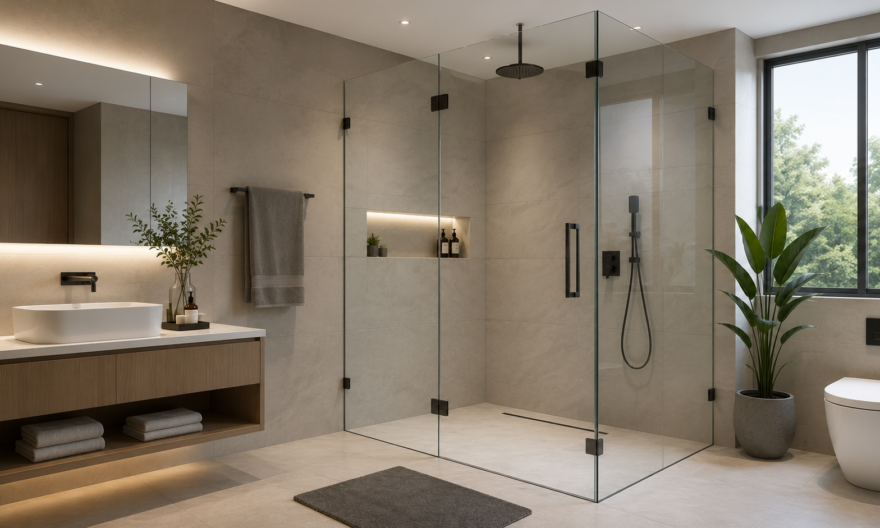
Frameless shower glass offers a sleek, open look with minimal hardware, making bathrooms feel larger and more modern. Framed shower screens use metal borders for added structural support and typically cost less upfront. For Singapore homeowners weighing cost, maintenance, aesthetics, and durability, the right choice depends on your bathroom size, budget, and long-term priorities.
If you’ve recently renovated or are planning a bathroom makeover, this question comes up almost every time. Whether you’re in an HDB flat in Tampines or a condo in Tanjong Pagar, choosing between framed and frameless comes down to more than just looks. Let’s break it down properly so you can make an informed call.
What’s the Actual Difference Between Framed and Frameless Shower Screens?
Before comparing, it helps to understand what each option actually is.
Framed shower screens have an aluminium or metal frame running along all four edges of the glass panel. The frame provides structural support and keeps the glass in place. The glass used is usually thinner — typically 4mm to 6mm.
Frameless shower glass uses thicker tempered glass — usually 8mm to 12mm — and relies on minimal or no metal framework. The glass itself carries the structural load, held in place with discreet hinges and wall channels.
Aesthetics: Which One Actually Looks Better?
There’s no debate here for most homeowners. Frameless designs win on visual appeal, almost universally.
Without bulky metal borders, frameless screens create a seamless, spa-like finish. They work exceptionally well in smaller Singapore bathrooms — a common reality in HDB flats — because the uninterrupted glass visually expands the space. Natural light passes through freely, making the entire bathroom feel airier.
Framed screens can look dated in modern interiors, though they hold their own in practical or budget-driven renovations. If your bathroom has a more utilitarian design, the framing becomes less of a visual issue.
Verdict: Frameless wins for contemporary aesthetics. Framed works fine when design isn’t the priority.
Cost Comparison: Framed vs Frameless in Singapore
This is where framed screens have a clear advantage — at least upfront.
| Feature | Framed Shower Screen | Frameless Shower Glass
|
|---|---|---|
| Average Cost (SGD) | $300 – $700 | $800 – $2,000+ |
| Glass Thickness | 4mm – 6mm | 8mm – 12mm |
| Installation Complexity | Low | Moderate to High |
| Long-term Maintenance Cost | Higher (frame corrosion) | Lower (no frame to corrode) |
| Lifespan | 5 – 10 years | 10 – 20+ years |
In Singapore’s humid climate, aluminium frames on cheaper shower screens tend to corrode, discolour, or develop mould along the seals within a few years. That means earlier replacement costs. Frameless glass, when properly installed with quality hardware, can last significantly longer with minimal upkeep.
Maintenance: Which Is Easier to Keep Clean?
Frameless glass is easier to maintain day-to-day. Here’s why:
- No metal tracks or grooves where soap scum and mould accumulate
- Smooth surfaces wipe down quickly after each shower
- Many frameless panels come with nano-coating or easy-clean glass treatments that repel water and soap residue
Framed screens have rubber seals and metal grooves that trap moisture. In Singapore’s year-round humidity, this becomes a real maintenance headache. Mould builds up in the frame channels, and the rubber gaskets degrade over time — requiring replacement or professional cleaning.
If low maintenance matters to you (and for most busy homeowners, it does), frameless is the smarter long-term choice.
Durability and Safety: Is Frameless Glass Safe?
A common concern is whether thick glass without a frame is actually safe. The short answer: yes, when it meets the right standards.
In Singapore, shower glass must comply with the Singapore Standard SS 312, which governs the use of safety glass in buildings. Reputable suppliers use fully tempered or laminated safety glass that, if it breaks, shatters into small blunt pieces rather than dangerous shards.
Frameless glass at 10mm or 12mm thickness is actually more impact-resistant than thin framed glass. The frame on a cheaper screen doesn’t add structural glass strength — it mainly holds the panel in place.
Key point: Always verify that your supplier uses certified tempered safety glass. This applies to both framed and frameless options.
Which Works Better for HDB Flats vs Condos?
HDB Flats
Most HDB bathrooms are compact — typically under 4 square metres. Frameless shower glass is particularly effective here because it makes the space feel larger without adding visual weight. A simple one-panel or two-panel frameless enclosure can transform a small bathroom entirely.
Budget-conscious HDB homeowners sometimes opt for semi-frameless designs — a middle ground that keeps hardware minimal but costs less than a fully frameless setup.
Condos
Condo bathrooms often have more floor space and higher design expectations. Fully frameless glass enclosures, walk-in wet areas, and custom configurations are common choices here. The investment is easier to justify given higher property values and renovation budgets.
Framed vs Frameless: Quick Decision Guide
Choose frameless shower glass if you:
- Want a modern, minimalist look
- Have a smaller bathroom and want it to feel larger
- Prefer low maintenance over the long term
- Are renovating for resale value or design-forward living
Choose a framed shower screen if you:
- Have a tight renovation budget
- Need a quick, functional solution
- Are renting out the unit and don’t need premium finishes
The Bottom Line for Singapore Homeowners
For most HDB and condo homeowners in Singapore, frameless shower glass is the better investment when you look beyond the initial price. The combination of cleaner aesthetics, easier maintenance, longer lifespan, and the visual effect of opening up a compact bathroom makes it the more practical choice over a 5–10 year horizon.
Framed screens still serve a purpose — particularly in rental units or where upfront budget is a hard constraint. But if you’re renovating your own home and want something that looks great and holds up well in Singapore’s humid conditions, frameless is worth the premium.
For a quality range of frameless shower glass options suited to Singapore homes, Vindar offers customisable solutions built for local conditions — from HDB-friendly single panels to full condo enclosures.
Frequently Asked Questions
Is frameless shower glass more expensive than framed in Singapore?
Yes. Frameless shower glass typically costs between SGD $800 and $2,000 or more, while framed screens range from $300 to $700. However, frameless options last longer and require less maintenance, making them more cost-effective over time for Singapore homeowners.
Is frameless shower glass safe to use?
Yes. Frameless shower glass uses tempered safety glass — typically 8mm to 12mm thick — that complies with Singapore Standard SS 312 for safety glazing. If it breaks, it shatters into small, blunt fragments rather than sharp shards, making it safe for bathroom use.
Which shower screen is easier to clean in Singapore’s humidity?
Frameless shower glass is easier to clean. Without metal tracks or rubber seals, there are fewer spots for mould and soap scum to build up — a significant advantage in Singapore’s humid climate. Many frameless panels also come with water-repellent nano-coatings.
Can I install frameless shower glass in a small HDB bathroom?
Absolutely. Frameless shower glass is particularly well-suited to small HDB bathrooms. The transparent, hardware-minimal design makes compact spaces feel larger and allows light to pass through freely, which is exactly what a tight bathroom layout needs.
What is a semi-frameless shower screen?
A semi-frameless shower screen is a middle-ground option where only part of the glass panel — typically the fixed sections — has framing, while the door itself is frameless. It costs less than a fully frameless setup but still offers a cleaner look than traditional fully framed screens.
How long does frameless shower glass last?
With proper installation and basic maintenance, frameless shower glass can last 10 to 20 years or more. Framed shower screens typically have a shorter lifespan of 5 to 10 years due to frame corrosion and seal degradation, especially in Singapore’s humid conditions.