

Manufacturers lose millions each year through wasted raw materials. Traditional production methods often remove large amounts of material before a final part takes shape. As a result, scrap levels can rise quickly, especially in complex projects.
At the same time, companies face growing pressure to reduce costs and meet sustainability goals. Material waste affects both profit margins and environmental performance. Therefore, many manufacturers are looking for smarter production methods.
This is where 3D printing and manufacturing are changing the game. By building parts layer by layer, manufacturers can use only the material they need. The result is less waste, lower production costs, and greater design freedom.
What Is 3D Printing in Manufacturing?
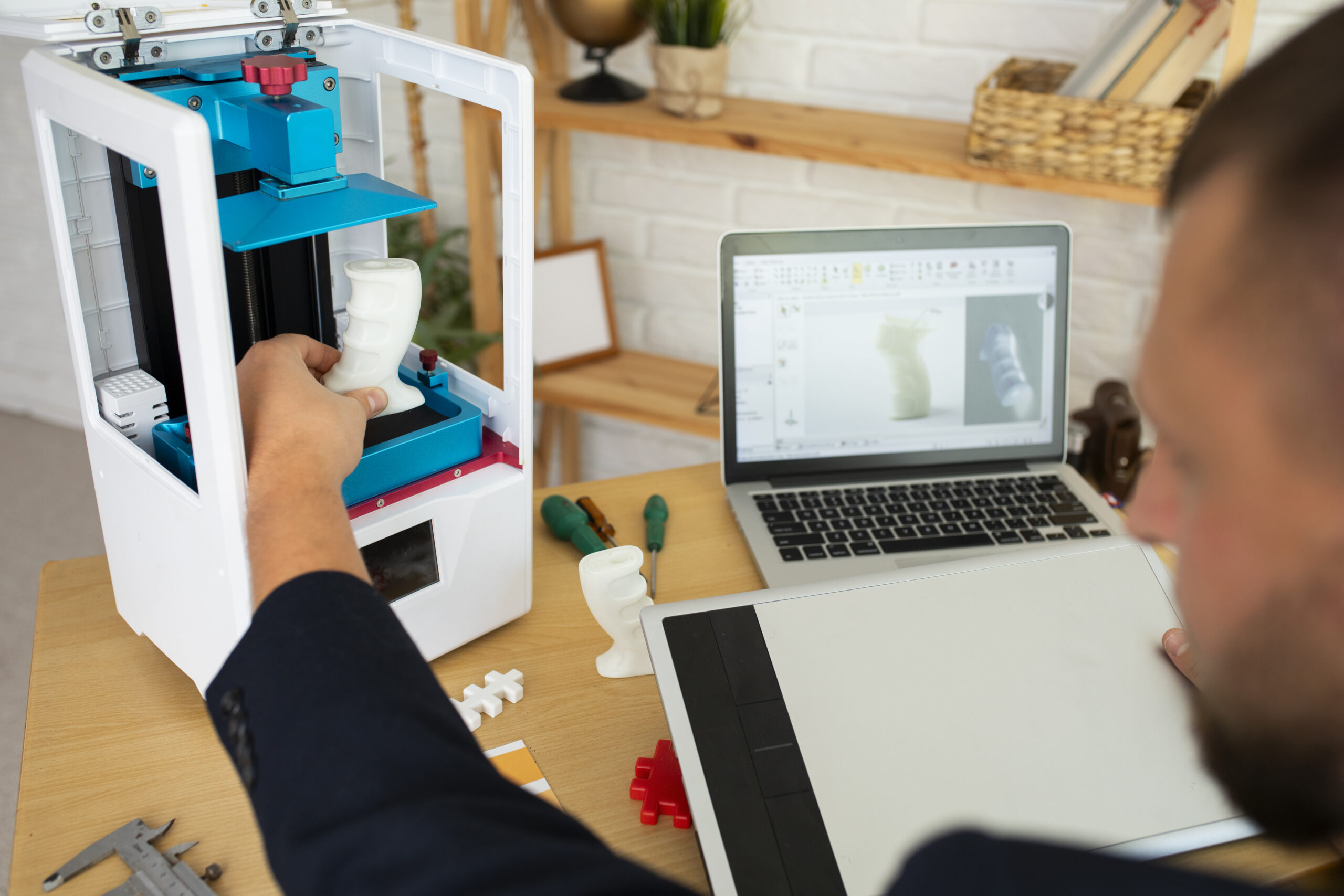
3D printing is also called additive manufacturing. This involves building up material layer by layer till the final object is formed.
Additive manufacturing differs from traditional manufacturing processes in the sense that in the latter, material is usually removed from a block of material.
In the modern world, 3D printing is used to manufacture:
- Prototype parts
- Tools of production
- Custom parts
- Aerospace parts
- Medical devices
- Automotive parts
With the advancement in technology, its use in large-scale manufacturing is increasing day by day.
Why Traditional Manufacturing Creates More Waste
Conventional manufacturing entails the removal of material to make finished products. It leads to more waste generation and higher production costs.
Problem with Machining Processes
Many parts manufacturers for machining use CNC machining and milling. Although this process is accurate, it results in a lot of waste material.
Material Removal
The parts are made from solid chunks of metal, and excess material is removed. The process makes the cost of raw materials higher.
Complex Designs
Complicated parts require more cutting and finishing. Waste and time required for production increase with the complexity of the design.
How 3D Printing Reduces Material Waste
The biggest advantage of additive manufacturing is its ability to use material efficiently. Instead of removing excess material, the process builds exactly what is needed.
Layer-by-Layer Production
The 3D printer puts materials down only where necessary according to the design.
It has many advantages, including:
- Less use of raw materials
- Less waste production
- Saving on disposal
- More sustainable
Consequently, the manufacturers are able to make components that generate much less waste than before.
Material Is Used More Efficiently
Several industrial processes result in loss of material before completion of the process. In the case of 3D printing, there can be tremendous improvement in the rate of material utilisation since almost all the material gets converted into the final product.
The importance of such an efficient process is even greater in the case of costly material like:
- Titanium
- Stainless steel
- Nickel alloys
- Carbon fibre composite
Every gram saved can make a meaningful difference to production costs.
Cost Savings That Go Beyond Material
Reducing waste is better for the environment. It is also beneficial for your bottom line.
Savings on Material Costs
If less material is used in production per component, it costs less to manufacture. The cost savings really add up when dealing with materials such as titanium.
Less Expense in Handling Scrap
The disposal of scrap does not occur for free. Scrap has to be sorted, stored and recycled. All of which costs time and money. Less scrap reduces expenses in these areas, too.
Cost-Efficient Prototype Production
Regular prototype production involves cutting prototypes from expensive stock material. With 3D printing, prototypes can be tested quickly without wasting expensive material.
How Industries Benefit from Waste Reduction
Various industries use additive manufacturing due to the same factors.
Aerospace Manufacturing
The aircraft industry uses high-cost material, which is expensive to machine. Additive manufacturing helps minimise waste and manufacture lightweight parts.
Automotive Manufacturing
Additive manufacturing is used by automotive companies in the manufacturing of prototypes, tooling, and specific parts.
Medical Manufacturing
Medical implants and devices usually have unique designs. Additive manufacturing allows the manufacturing of unique parts with little waste.
Consumer Goods
Manufacturers use additive manufacturing in manufacturing customized goods without holding huge stocks of inventory.
How Machining Parts Manufacturers Can Use Both Methods
There’s no need to abandon machining altogether. Many machining parts manufacturers combine machining with 3D printing to improve efficiency, reduce material waste, and produce high-quality components.
Here’s how:
- Printing followed by machining: Print a component almost to the desired specification. Afterwards, machine those areas requiring a perfect fit
- Machining difficult shapes: Leave the machining process to simple shapes, while the printing process does the complex inner structures
- Printing tooling: Employ printed tooling to facilitate the machining process. In doing so, there will be minimal wastage in all stages
How to Get Started
Transitioning to 3D printing does not necessarily have to be a complete one. Some simple changes can assist in lowering your waste and improving manufacturing processes.
Identify High-Waste Components
Analyse your manufacturing process and identify those components which create more waste. This will be the ideal component for 3D printing.
Try Out Simple Component
Try out a simpler component to see how much waste, costs and quality differences there are when compared.
Find the Right Manufacturing Provider
Select a supplier who can provide both 3D printing and machining services. They will advise which is the right method to use on which part.
Challenges Manufacturers Should Consider
The process of 3D printing holds a number of advantages, yet it is not always the ideal solution.
- Production speed: Conventional manufacturing could still be faster when large amounts of products are produced.
- Material availability: Certain industrial materials might not be appropriate for additive manufacturing.
- Equipment cost: Industrial 3D printers cost more up front than many traditional pieces of equipment.
- Part specifications: Certain parts still have to be machined to obtain the smallest tolerances and surface finishes.
The Future of 3D Printing and Manufacturing
The future for 3D printing and manufacturing is positive. Machines are getting faster; there is an expansion of materials used; and the cost of production keeps on decreasing.
With the development in technology, there will be an increased number of manufacturers using additive manufacturing to cut wastage, cost, and improve efficiency in production. This will help improve sustainable manufacturing practices.
It is important to note that many machining parts manufacturers have turned to hybrid production processes that allow precision in manufacture without wastage of materials.
Conclusion
Material waste continues to be the greatest concern when it comes to production processes in contemporary times. The conventional method of manufacturing uses the process of taking away a lot of material before the final product can be obtained, which is not the case with 3D printing and manufacturing because of the way it works by depositing layers.
In addition to material conservation, they have other benefits, such as design flexibility, fast prototyping, and improved sustainability. Even though the conventional machining process is still used in production, the majority of machining manufacturers make use of both technologies together to get optimal outcomes.
FAQs
How much savings in material is there in 3D printing as against machining?
The answer depends on the part. However, several manufacturers have cited a saving of 50-90% of the material needed in 3D printing when making parts that would take much effort in terms of machining.
Can 3D printing replace machining?
No, at least not for now. For some applications, machining offers superior accuracy and finishing. However, most manufacturers use a combination of both.
Is 3D printing more costly than regular manufacturing?
It depends on the part. In many cases, printing is cheaper after adding the cost savings from reduced materials and lower tools.
What materials are used by manufacturers in 3D printing?
Titanium, aluminium, stainless steel, and tough plastic materials are among those commonly used in 3D printing.