

Choosing the right entry system for your home or office can be a challenge. You want something that works well, but you also don’t want to waste money on the wrong technology. Two popular choices are long-range card readers and wireless doorphones. Both bring something useful, but they serve different needs. The key is knowing which one fits your daily life better.
This article explains each option clearly. We will look at how they work, where they shine, and where they might let you down. By the end, you will have a clear picture of what suits your entrance setup. No technical jargon, no tricky sales talk—just practical advice.
How Each System Works
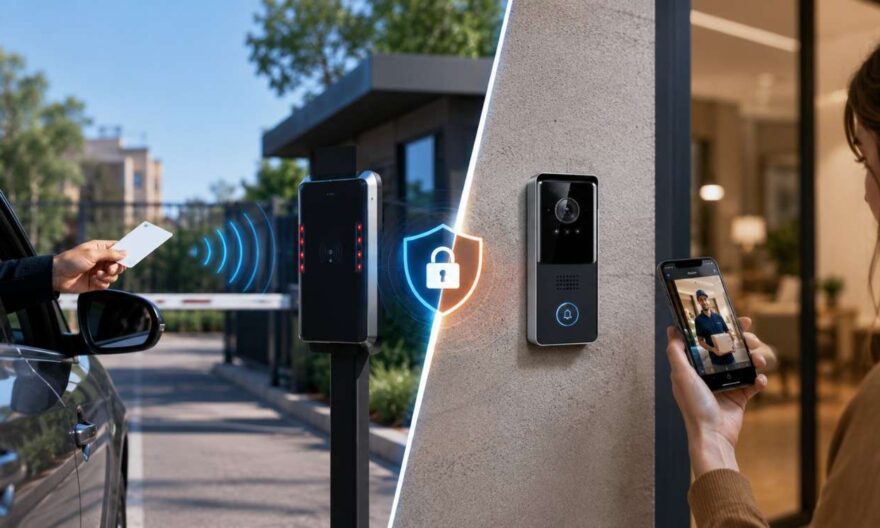
A long-range card reader uses a small tag to unlock gates or doors from a distance. You hold it near a sensor, and the lock opens. These setups are common in parking areas, office complexes, and gated communities. You do not have to step out of your car.
A wireless doorphone connects to your mobile through Wi-Fi or radio signals. When someone presses the bell, you get a call or video feed. You can see who is outside and unlock the entrance without moving. This type fits apartments and single-family homes really well. Both systems remove the need for physical keys. Yet they approach the issue in two different ways. One focuses on quick vehicle access; the other centres on visitor communication.
Signal Range
Long-range setups can detect a tag from several metres away, which suits driveways perfectly. Doorphones depend on your Wi-Fi strength inside the building. If your network drops, the call may not reach you.
Power Needs
Long-range devices often run on batteries or direct power from the gate. Doorphones need a constant electricity supply and a working internet connection. Power cuts can disable both, but doorphones lose more features when the net goes down.
Where They Work Best
Long-range card devices shine where cars flow in and out frequently. Think of office parking lots, housing society gates, or warehouse entries. Your vehicle slows down, you wave the card, and the barrier lifts. No talking, no dialling, no waiting.
Wireless doorphones fit better where foot traffic is high. They allow you to screen guests before letting them inside. You can talk to delivery staff or visitors without opening the door. The video option adds extra safety.
For Homeowners
Families often pick doorphones because they want to see who rings the bell. The video feed lets them confirm identity before unlocking the front door. This simple check brings a sense of safety.
For Offices
Corporate buildings usually prefer long-range gear for their parking zones. Employees can enter quickly without stopping their cars. This cuts down queues during morning rush hours.
Core Differences
Let’s break down the main points that separate these two.
- A long-range card works without direct contact. You do not press buttons or speak. Doorphones need interaction—someone rings, you answer, then you unlock.
- Doorphones let you chat with visitors. Card-based setups offer no such exchange. They simply grant or deny access based on the tag.
- Long-range gear often needs outdoor mounting near driveways. Doorphones require wiring near your entrance plus a network connection.
- Card devices handle many users easily. Doorphones manage fewer callers at once. If too many people ring, the system may get overloaded.
What About Security?
A long-range card offers decent safety, but tags can get lost or stolen. Most systems let you cancel lost tags right away. Still, you must handle distribution carefully.
Wireless doorphones come with encryption and password protection. They allow two-way talk, which helps you screen unknown visitors. Some models even record video clips of each call. Families often prefer this level of monitoring.
Neither option is 100% safe from tech issues. Yet doorphones give you more control because you see and hear visitors first.
Tag Management
Handling tags for a long-range system requires some organisation. You need to keep a list of active users and remove those who leave. Replacement tags must be programmed individually.
Call Logs
Doorphones keep a record of every visitor who rings you. This feature helps track delivery timings or unexpected guests. Families find this log useful for monitoring comings and goings.
Ease of Use
Long-range cards are simple to operate. You keep the tag in your glovebox or bag. Hold it near the sensor, and you are through. There is no screen, no menu, and no call to answer.
Doorphones need a bit more effort. You must set up the app and connect to Wi-Fi. But once that is done, they run smoothly. You can unlock doors with a tap on your phone screen.
Setup Time
Installing long-range equipment takes less time than doorphones. You mount the sensor, connect power, and register the tags. Doorphones require app downloads, network pairing, and camera adjustments.
Daily Operation
Using a card becomes second nature after a week. You barely think about it. Doorphones demand more attention because each visitor triggers a response.
Comparing Side by Side
Here is a quick look at how the two stack up against each other.
| Feature | Long Range Card | Wireless Doorphone |
| Primary use | Vehicle entry | Visitor entry |
| Interaction needed | None | Answer call |
| Internet-dependent | No | Yes |
| Video support | No | Yes |
| Multi-user | Excellent | Moderate |
| Setup complexity | Low | Medium |
This table helps you weigh what matters most. If speed and vehicle flow are your priority, the card system wins. If visual verification is key, the doorphone takes the lead.
Conclusion
Your final decision rests on your entrance needs. If you operate a business with many cars coming and going, a long-range card setup saves time and reduces congestion. The tags are easy to hand out and replace.
If you want to know who is at your door before opening it, a wireless doorphone is a good choice. It brings clear communication, visual checks, and remote unlocking. Families and flat owners benefit from this added oversight. Some people even mix both. They use the card for the main gate and the doorphone for the front door. That combo covers all angles, but it costs more and takes longer to install.
FAQs
Can I use a long-range system in a multi-storey building?
Yes, but it works best for ground-level gates. For upper floors, the signal might not travel well. Doorphones are more reliable for apartments.
Do doorphones need special wiring?
Most wireless models only require power and a stable Wi-Fi connection. You skip the complex cabling used in old intercoms.
Which option is better for rental properties?
Doorphones give tenants control over who visits. Owners can also revoke access easily. Long-range cards are harder to manage for rotating renters.
Can both systems work together?
Absolutely. Many modern setups combine them. The card handles vehicles, while the doorphone manages foot visitors. Each covers a distinct need.