CNC fixture fabrication improves machining accuracy by holding workpieces in a precise, repeatable position during cutting operations. A well-designed fixture eliminates movement, reduces locating errors, and allows the same setup to be reproduced consistently across multiple parts or production runs — directly lowering scrap rates and cutting down on operator intervention between cycles.
If you work in a machine shop, you already know that even a 0.002-inch shift in workpiece position can throw a part out of tolerance. Fixture fabrication is one of the most effective ways to prevent that from happening. Yet fixturing is often treated as an afterthought — something to figure out after the program is written. That’s a costly habit.
This article breaks down how precision-engineered fixtures affect real-world machining outcomes, and what machinists and CNC programmers should consider when designing or specifying them.
What Is CNC Fixture Fabrication?
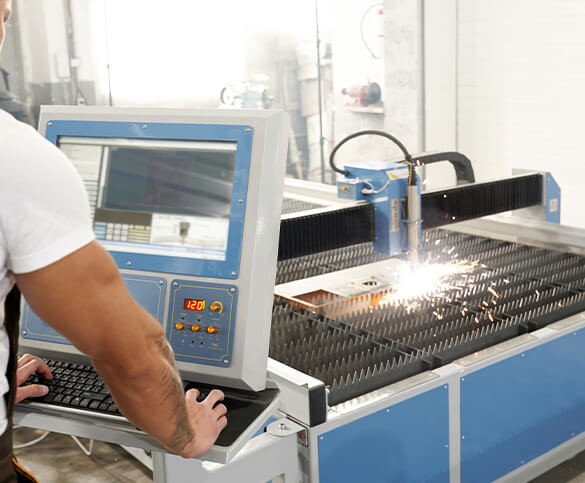
Fixture fabrication is the process of designing and building dedicated workholding devices tailored to a specific part geometry and machining operation. Unlike standard vises or clamps, a fabricated fixture locates the workpiece using precision datums — pins, pads, and stops — that align it exactly the same way every time it’s loaded.
The fixture becomes part of the process. It defines where the part sits, how it’s clamped, and which surfaces are accessible to the tool. That level of control isn’t possible with generic workholding.
How Fixtures Directly Impact Machining Accuracy
Accuracy in CNC machining depends on three things: the machine, the tooling, and the workholding. Most shops invest heavily in the first two and underinvest in the third. Here’s where fixture design makes a measurable difference.
Eliminating Positional Error at Setup
Every time an operator loads a part into a vise and tramming it manually, there’s room for human error. A precision fixture removes that variable. The part drops into a known location — referenced off hardened locating pins or a machined nest — and the machine coordinate system doesn’t need to be re-established for every cycle.
This is especially critical in multi-axis work where the part must be repositioned between operations. A fixture with multiple stations or a tombstone-style setup maintains datum consistency across every face being machined.
Reducing Vibration and Tool Deflection
Chatter is often blamed on speeds and feeds, but inadequate clamping force and poor support are just as likely the cause. When a fixture supports the workpiece close to the cutting zone and applies clamping force in the right direction, it stiffens the entire setup and reduces the micro-movement that leads to poor surface finish and tool wear. This level of precision is often supported by reliable building engineering services that help maintain a stable and efficient manufacturing environment.
Thin-walled parts and complex castings benefit the most here. Without adequate support, the part flexes under cutting forces, and the resulting geometry is never quite right.
Maintaining Tolerances Across a Production Run
Batch machining is where fixture quality shows up most clearly. A fixture that holds ±0.001-inch repeatability across 500 parts delivers consistent results from the first part to the last. Without that repeatability, tolerances drift as operators reload parts and re-indicate positions manually.
Key Elements of a Well-Designed Machining Fixture
Not every fixture is created equal. The difference between a fixture that improves accuracy and one that causes problems comes down to design decisions made before a single chip is cut.
- 3-2-1 locating principle: The foundation of fixture design. Six degrees of freedom are constrained using three points on the primary datum, two on the secondary, and one on the tertiary. Deviating from this without good reason invites over-constrained setups and unpredictable behavior.
- Clamping force direction: Clamps should push the part toward locators, not away from them. Applying force incorrectly lifts the part off its datum and introduces the exact error the fixture was meant to eliminate.
- Material selection: Tool steel or hardened inserts at contact points prevent wear over time. A fixture that was accurate at part one and drifted by part 5,000 is worse than no fixture at all — you don’t know when it failed.
- Chip clearance: Chips packed under a workpiece will lift it off its locators. Fixture design must account for evacuation, especially in deep pockets or blind bores.
- Accessibility for tooling: The fixture should expose the surfaces that need to be machined without requiring repositioning if avoidable. Every time you re-clamp, you introduce a potential error.
Fixture Design and Setup Time Reduction
Setup time is non-cutting time — it’s cost without output. In high-mix, low-volume environments, setup can represent 30–50% of total job time. A well-built fixture compresses that significantly.
When a machinist can load a part in under a minute with no indicating, no tramming, and no trial cuts, the machine runs more. Multiply that across a shift or a week, and the productivity gain is substantial. This is where the ROI of fixture fabrication becomes easy to quantify.
Dedicated vs. Modular Fixtures: Which Makes More Sense?
| Fixture Type | Best For | Accuracy | Setup Speed | Cost
|
| Dedicated Fixture | High-volume, single part | Highest | Fastest | Higher upfront |
| Modular Fixture | Prototype, varied parts | Good | Moderate | Lower per job |
| Standard Vise/Clamp | Simple parts, one-offs | Operator-dependent | Slow | Lowest |
Where Fixture Fabrication Fits in the CNC Workflow
Fixture design should happen in parallel with CNC programming — not after it. When both are developed together, the programmer knows exactly how the part is located and can set work offsets accordingly. The machinist knows what to expect when loading. There are no surprises at the machine.
This integrated approach is particularly valuable in aerospace, medical device, and defense manufacturing, where first-article inspection results and process traceability matter as much as the parts themselves. Getting fixturing right the first time avoids costly engineering changes mid-production.
For shops looking to strengthen their fixturing capability, SuperAdv Technologies offers precision fixture fabrication services built around the specific requirements of each part — from initial design consultation through final validation.
Common Fixture Mistakes That Kill Accuracy
Even experienced shops make fixturing errors that quietly erode part quality. Watch for these:
- Over-constraining the part: Adding more locators than the 3-2-1 principle calls for creates conflicting datums. The part rocks or distorts under clamping.
- Ignoring thermal expansion: Aluminum fixtures and steel parts expand at different rates. On long production runs, this can shift critical dimensions by several thousandths.
- Using soft contact points: Un-hardened locating surfaces wear quickly in production. Once they wear, every part after is located differently — but you won’t know until inspection.
- Skipping fixture validation: A fixture should be inspected the same way a part is. Confirm that the locating surfaces are where the drawing says they are before the first production run.
Final Thought
Precision machining starts well before the spindle turns. The fixture you put that part in determines whether your program delivers the geometry it was written for. Investing in properly designed and fabricated fixtures isn’t overhead — it’s quality control built into the process itself.
Shops that treat fixturing as a core competency, not an afterthought, consistently produce tighter tolerances, shorter setup times, and more predictable outcomes. That’s not a coincidence.
Frequently Asked Questions
What is CNC fixture fabrication?
CNC fixture fabrication is the process of designing and building custom workholding devices that locate and secure a part in a precise, repeatable position during machining. Unlike standard vises, fabricated fixtures use hardened locators and engineered clamping arrangements specific to the part geometry and machining operation.
How does a machining fixture improve accuracy?
A machining fixture improves accuracy by eliminating positional variation at setup. When a part references hardened locating pins or a precision nest, it sits in the same position every cycle — removing operator-dependent indicating steps and reducing the chance of tolerance drift across a production run.
What is the 3-2-1 locating principle in fixture design?
The 3-2-1 principle constrains all six degrees of freedom of a workpiece using three contact points on the primary datum surface, two on the secondary, and one on the tertiary. It’s the standard method for achieving deterministic location without over-constraining the part, which would introduce distortion or unpredictable seating.
When should I use a dedicated fixture versus a modular fixture?
Use a dedicated fixture for high-volume runs of a single part where maximum repeatability and fastest cycle time matter most. Modular fixtures are better suited for prototype work or varied part families where setup flexibility outweighs the need for the tightest possible positional accuracy.
How does CNC workholding affect surface finish?
Poor CNC workholding allows micro-movement during cutting, which causes chatter and results in degraded surface finish. A rigid, well-designed fixture that supports the part near the cutting zone and applies clamping force toward the locators significantly reduces vibration and produces a cleaner, more consistent surface.
How early in the process should fixture design start?
Fixture design should begin alongside CNC programming, not after it. When both are developed in parallel, the programmer can set accurate work offsets based on known datum locations, and the machinist has a predictable setup. This reduces first-article failures, engineering changes, and unplanned downtime at the machine.